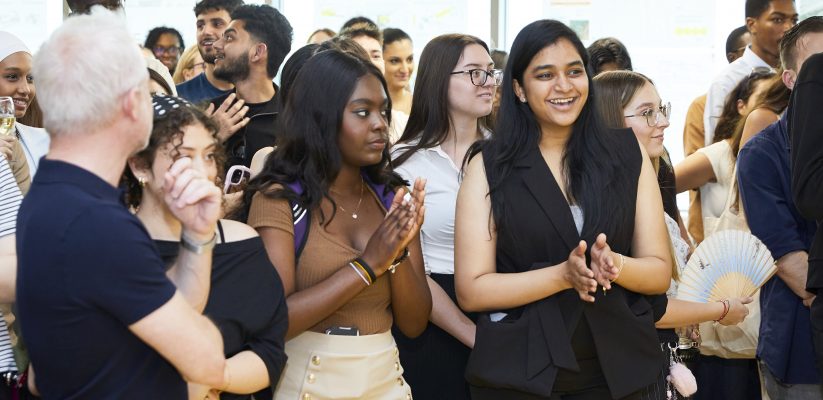
Students from our School of Architecture + Cities were honoured with a wide range of industry sponsored prizes at our annual OPEN 2025 Student Awards. The awards celebrated student talent and dedication across the academic year, with over 30 prizes recognising diverse design approaches across all architecture and planning courses.
The awards highlighted collaborative work addressing urgent societal issues, particularly climate action. The event drew support from industry sponsors including Foster + Partners, JCDecaux, the Rawat Family, Portman Estate, and VOLA.
We caught up with two of our award-winning students to learn more about their projects and experience of studying at Westminster.
Can you tell us a bit about your end-of-year project or the work that contributed to your award?
Fatemeh: My project, The Mobile Institute of Regenerative Materials, is a temporary scaffolding structure designed to empower communities through hands-on, sustainable material innovation. It acts as a hybrid workshop and exhibition space where people bring in plastic waste and transform it into regenerative building materials, like plastic bricks.
The structure is made entirely of metal scaffolding, celebrating its raw industrial aesthetic while remaining adaptable and lightweight. Key views—Hyde Park, Marble Arch, and Oxford Street—were central to the design, framing the context as both a backdrop and participant in the narrative of regeneration. The project merges architecture, activism, and material science, aiming to redefine what a factory can be: not a place of extraction, but of renewal and creativity.
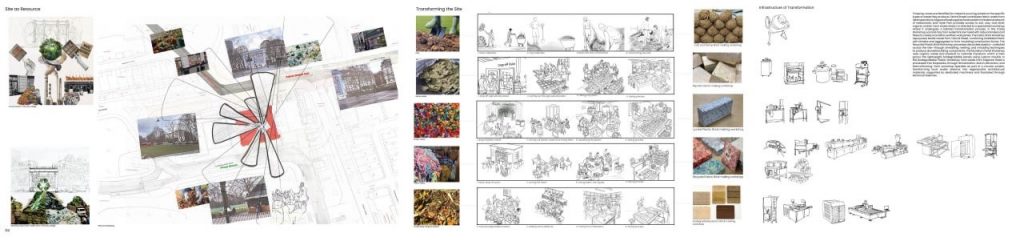

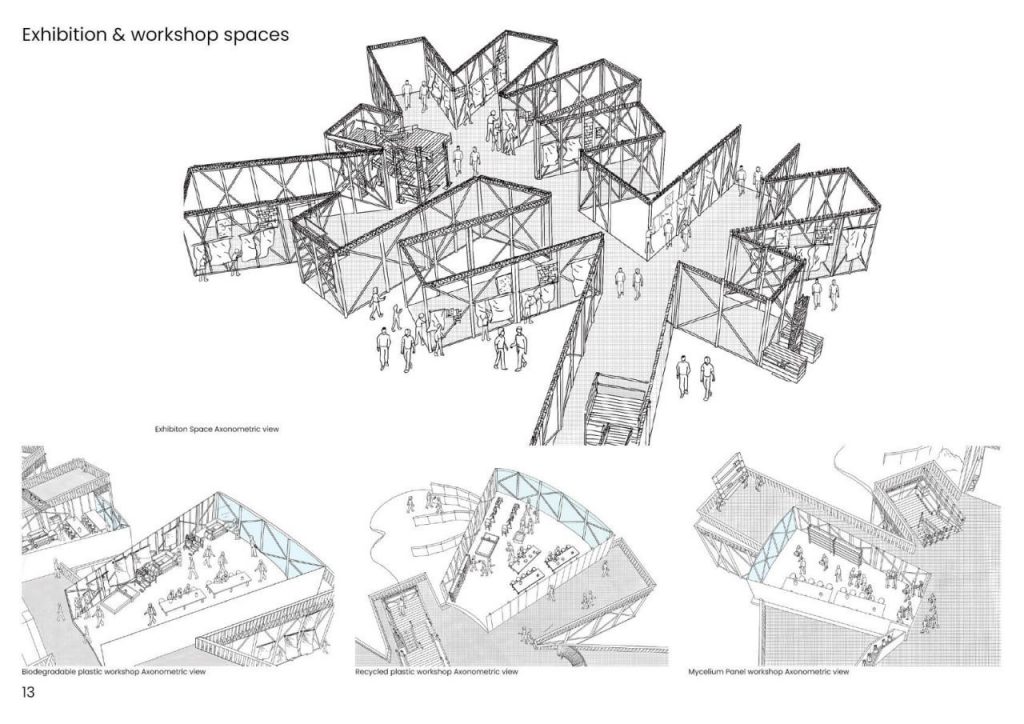
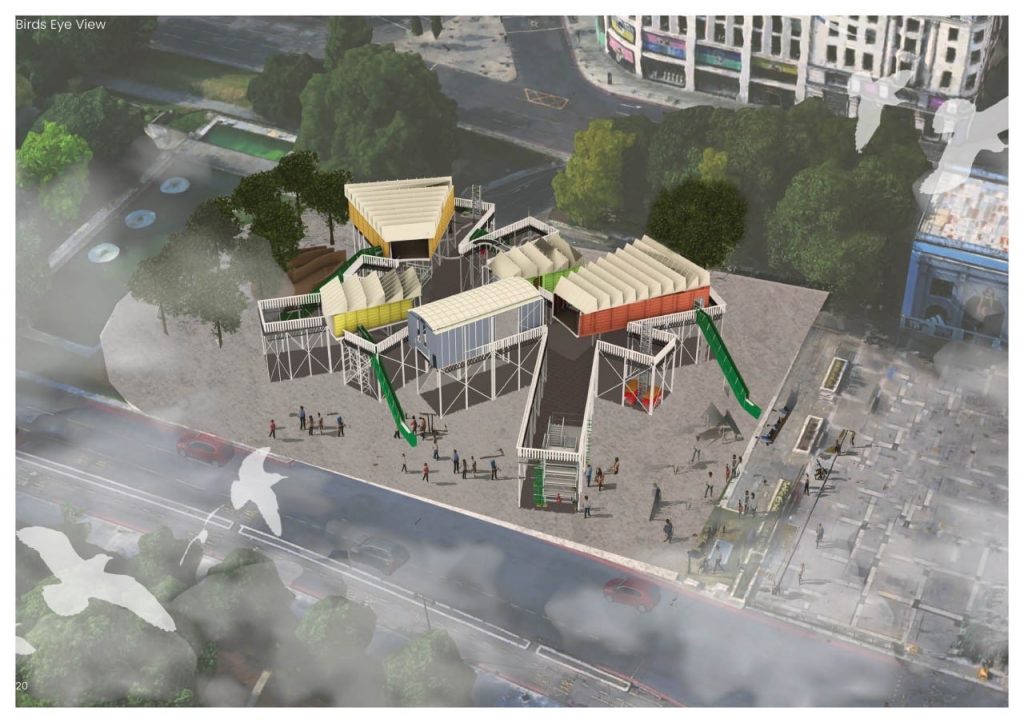
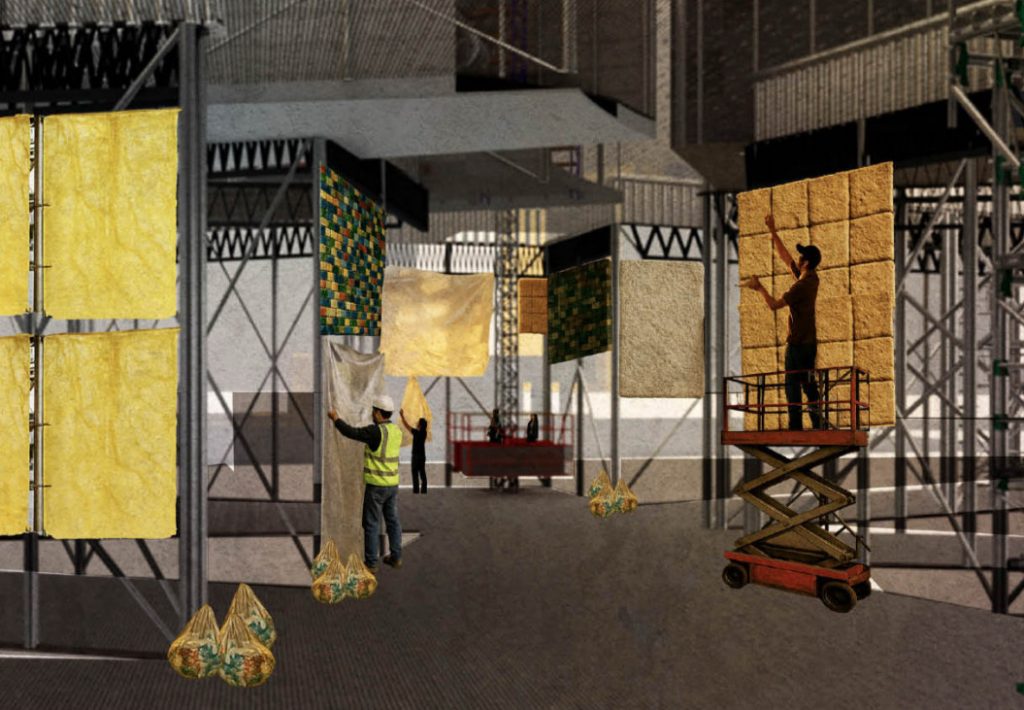
Fatemeh Ghalichehbaf Vosoughi – The Mobile Institute of Regenerative Materials (2025)
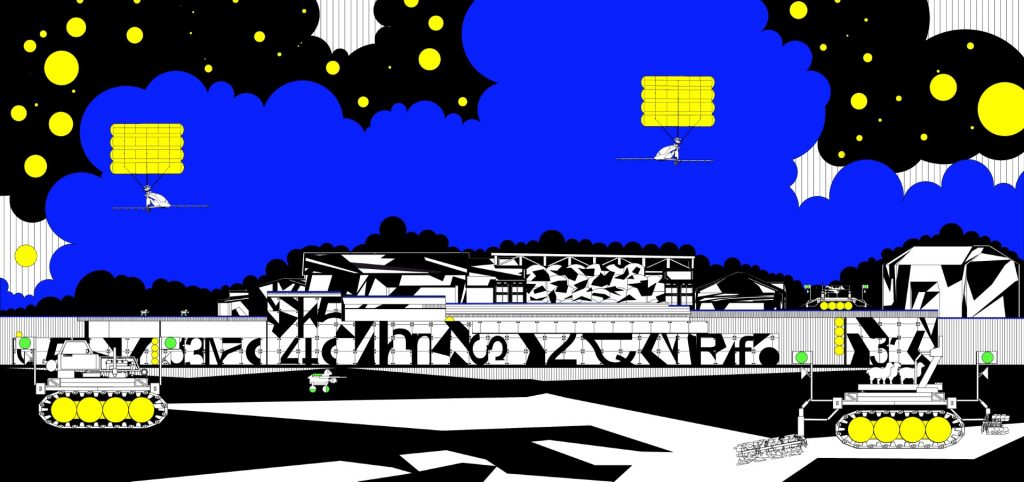
Hattie: My end-of-year project, Imposter Syndrome, explored the quiet transformation of a rural farm through self-replicating machines that mimic, replace and embed themselves into the landscape. The technical studies aspect focused on how the ‘Imposter’s Outpost’ could be constructed from repurposed agricultural parts, with detailed investigations into materials, construction sequences and improvised systems for power and ventilation. I wanted to blur the line between fiction and technical feasibility, grounding a narrative-driven project in real construction logic.
What have been some highlights of your time on the course?
Fatemeh: One of the biggest highlights was being able to translate abstract ideas such as regeneration, temporality, and activism into a built architectural language. Working on site, experimenting with materials, and pushing the boundary between structure and storytelling has been incredibly fulfilling. Collaborating with tutors and peers who challenge your thinking while supporting your vision has helped me grow both as a designer and as a thinker. Also, being exposed to fabrication tools and model-making techniques has allowed me to physically test and communicate complex ideas in powerful ways.
Hattie: One of the biggest highlights has been working with my third-year studio tutors, John Walter and Samantha Hardingham, who created an environment where fun architecture could thrive. It was a space where no idea was too strange, and experimentation was encouraged from the outset. The energy they brought to the studio made it feel like a place where bold, unusual concepts could take root and be taken seriously. Imposter Syndrome grew directly from that atmosphere, what started as a strange idea became a fully resolved project thanks to the space they made.
What are your future plans after graduation?
Fatemeh: After graduation, I want to work on projects that blend design with sustainability and social impact. I’m particularly interested in adaptive reuse, temporary structures, and material experimentation. Eventually, I aim to start my own practice or initiative that creates accessible spaces for learning, making, and building especially in places that are often excluded from architectural conversations. But for now, I’m looking for summer opportunities that can support me financially while still aligning with my values as a designer.
Hattie: After graduating, I hope to join a practice that shares my interest in imaginative and inventive architecture. I’m especially keen to gain hands-on site experience, as I believe it’s essential for developing as a designer. I’m excited by the prospect of learning through making and understanding how ideas evolve through construction.
How did it feel to receive an award and be recognised for your work?
Fatemeh: It felt surreal and deeply validating. This project was incredibly personal and experimental, and it meant a lot to see it resonate with others. The recognition reminded me that architecture isn’t just about buildings, it’s about ideas, about impact, and about challenging systems that no longer serve us. Being seen for something that aimed to do just that is a huge honour.
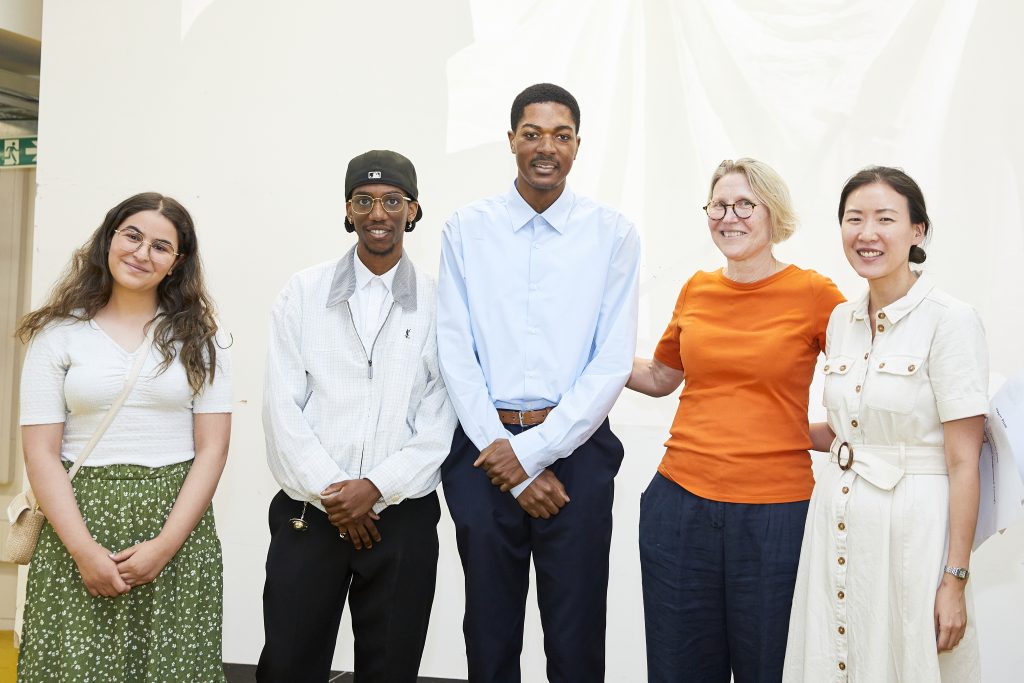
Hattie: It felt amazing to have all the hours and energy of the past three years recognised in that moment, especially alongside so many brilliant projects from my peers. The award was a really special way to mark the end of the course, and it meant a lot to be able to share that moment with the friends and family who’ve supported me throughout.
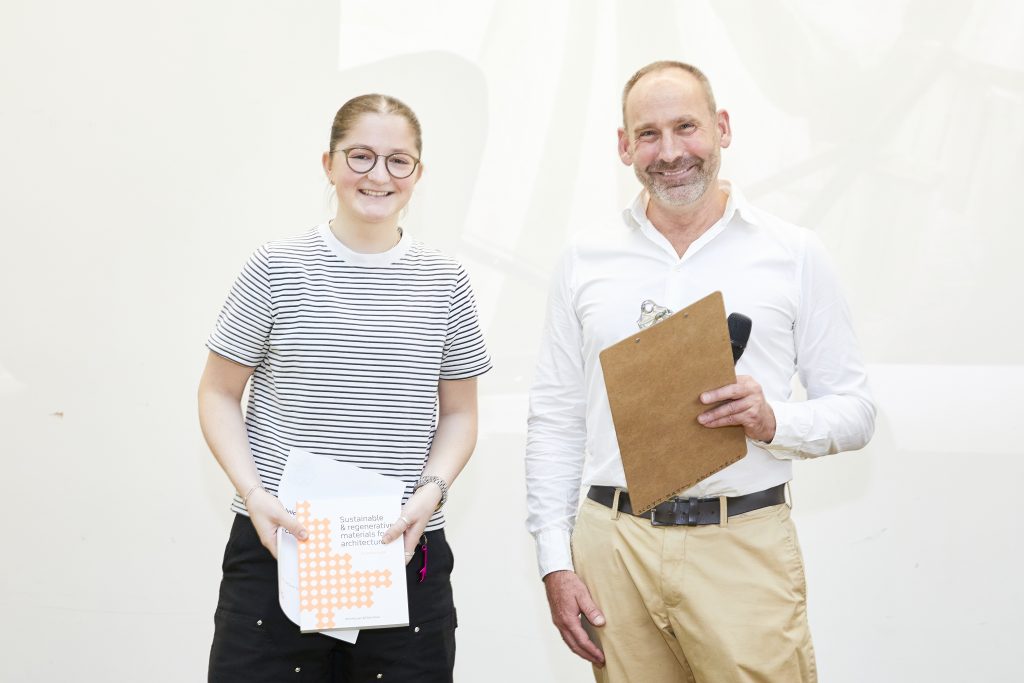
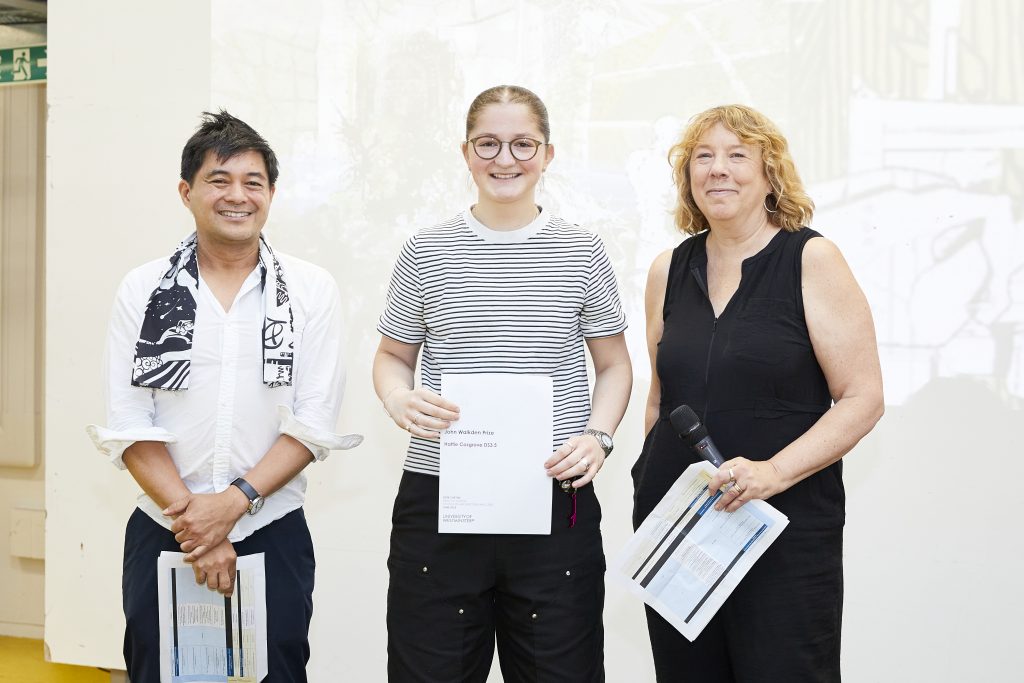
Right: Hattie receiving the John Walkden Prize 2025. Awarded annually to the graduate of the Architecture BA with the best final year design.
Is there anything else you’d like to share about your experience or work?
Fatemeh: This project taught me that architecture can be mobile, collaborative, and emotionally driven. It doesn’t need to be fixed to have impact. I’m excited by how design can act as a catalyst for environmental and social change, especially when we challenge traditional forms and construction methods. My hope is to keep making work that invites participation, sparks curiosity, and leaves behind more than just a footprint, it leaves behind new ways of thinking
Hattie: My final year project hasn’t followed a conventional path, but it’s precisely the creativity and joy in that process that I’ve loved most. While the project is quite unconventional and even a little wild, it still functions effectively, as reflected in the technical studies award. That balance really matters to me: I’ve got my whole life ahead to work within architectural norms, but my time at Westminster was about exploring ideas freely and pushing boundaries. It’s been a joy to work on something imaginative and rigorous in equal measure.
To find out more about our architecture courses and the wide range of exciting student projects, visit the digital exhibition OPEN 2025
About Westminster
As one of the most diverse universities in the UK, we are a global university with London energy, with more than 19,000 students from 169 countries.
To find out more about the University programmes featured in our OPEN exhibition, visit the Architecture, Interiors and Planning page.
