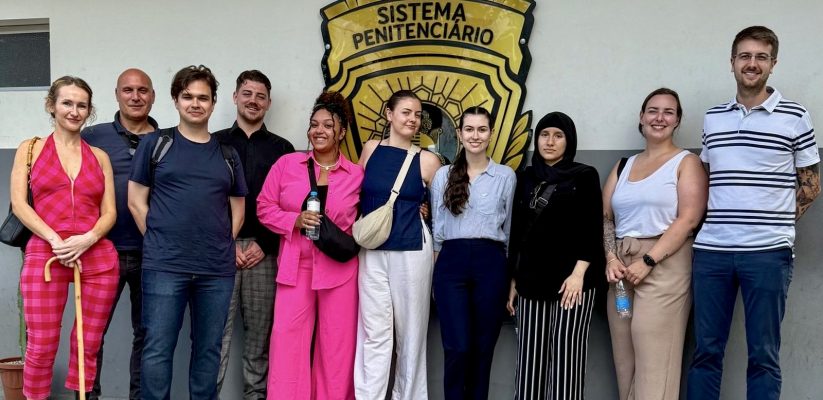
In May, students on the Global Criminology Master’s programme travelled to São Luís, Brazil, for a week, as part of the Convict Criminology module led by Dr Sacha Darke and Dr Andreas Aresti. The trip was designed to allow us to learn more about the Brazilian prison system, prison alternatives, and reform projects, as well as the chance to meet academics and practitioners working in this field.
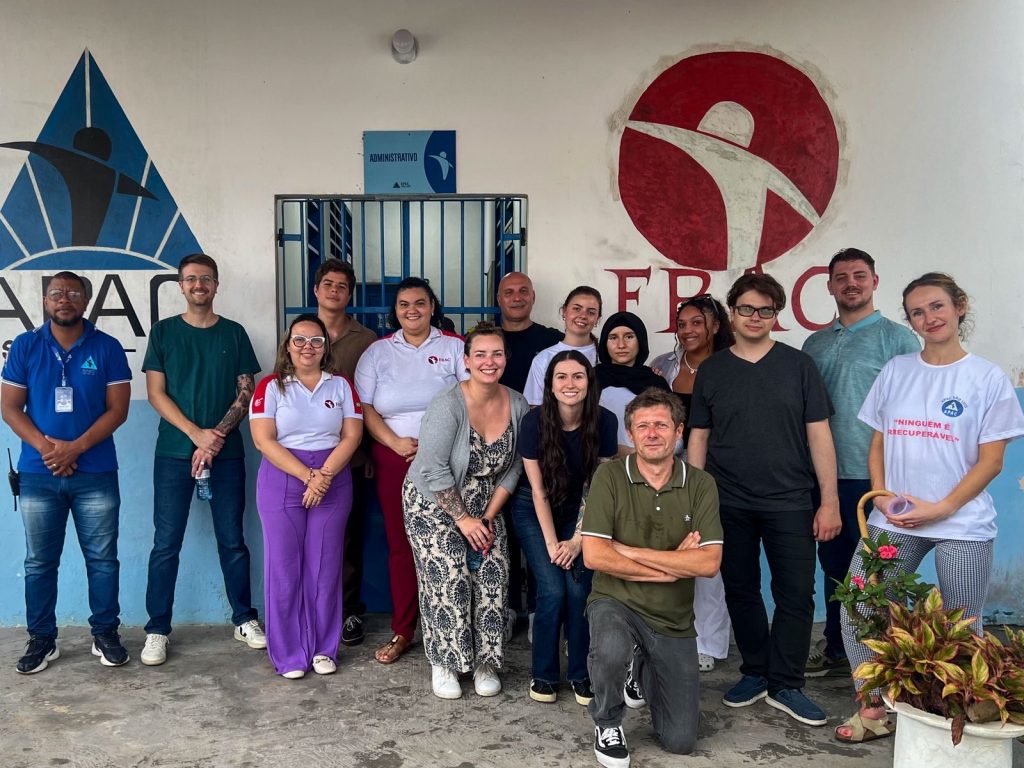
Our first visit was to the Integrated Centre for Penal Alternatives and Social Inclusion, where local judges spoke about their work to revitalise the penal system and increase community-based alternatives to prison. In the afternoon, we visited the Association for the Protection and Assistance of Convicts (APAC), a therapeutic prison which focuses on rehabilitation through education and skills training. These types of prisons have a low recidivism rate due to their self-governance and humanising methods.
On our second day, we visited the Higher School of the Judiciary of the State of Maranhão, the Unit for Monitoring and Supervision of the Detained, the Centre of Inquiries and Custody, and the State Secretariat for Penitentiary Administration in São Luis. Each of these facilities is dedicated to certain areas in the criminal justice system in Maranhão, and we met with staff who showed us around each location and explained the various work that they do across alternatives to prison, sentencing, parole and domestic violence monitoring and prison administration.
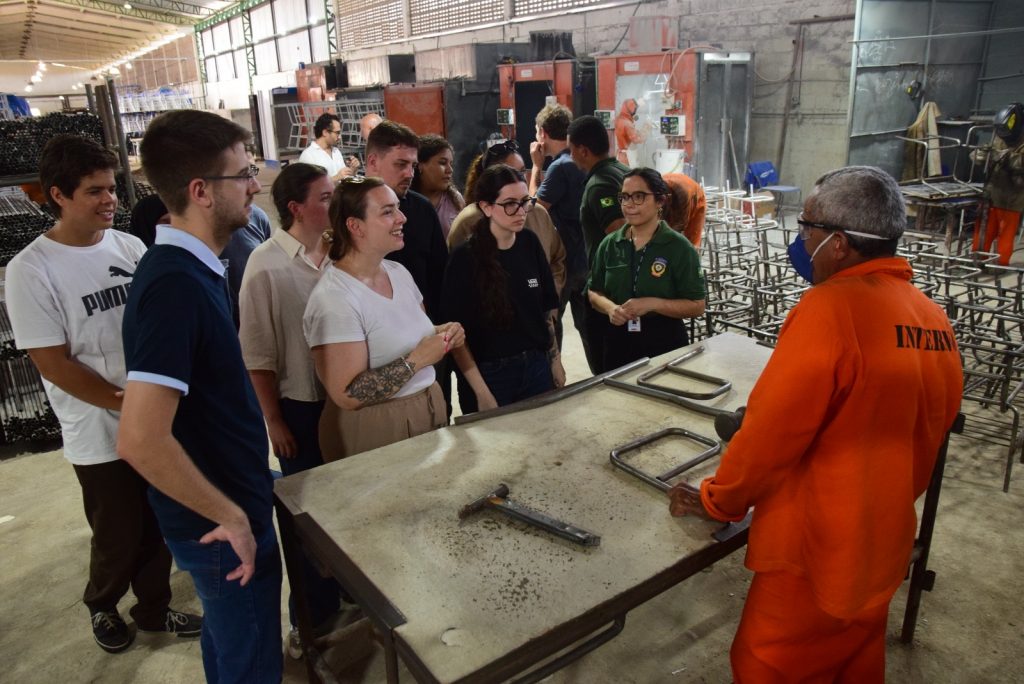
A particularly eye-opening day was spent at the São Luís Prison Complex, where we toured the men’s and women’s facilities. We saw male prisoners taking part in work programmes, including making paving stones and furniture for classrooms. In the women’s prison, we saw female prisoners baking, gardening, and producing clothing. We run a small focus group and have had conversations with women in the workshops and cell blocks, which gave us a deeper understanding of daily life in prison and how education and vocational training are integrated.
Our final day included meetings with the State Secretariat for Penitentiary Administration and a visit to the State University of Maranhão to exchange ideas with students and researchers working on prison reform projects. They spoke about their project ‘Another Vision’, and we shared information about the projects developed by the Convict Criminology Research and Study group at the University of Westminster. We were able to listen to various topics and debates about what some of the differences are between Brazil and England on prisons and penal reform, and we had a lovely time networking with them.
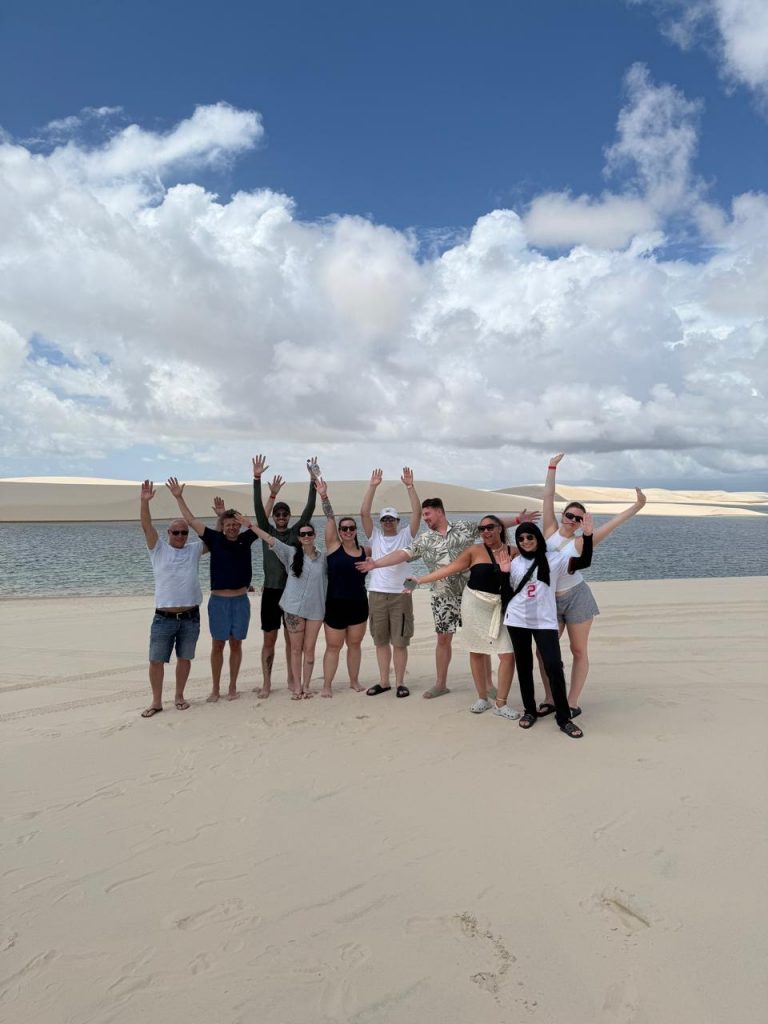
Outside of our academic visits, we had a few days of fun in the sun, which included going to a fishing village in Raposa, exploring some beautiful white sand dunes, swimming, and having amazing grilled fish and shrimp. We were also lucky enough to visit the Parque Nacional dos Lençóis Maranhenses, which is a national park filled with white sand dunes and swimming holes. A stunning and a once in a lifetime experience.
The trip concluded our Convict Criminology module and gave us a deeper understanding of prisons and reform, not only in Brazil but worldwide. It challenged our assumptions that prisons in the West are automatically “better.” We saw that, while every system has its challenges, there are innovative, human-centred approaches worth learning from and sharing – especially around work and education opportunities, and family visitation.
Overall, the trip was a great success. For many of us, it was both academically and personally transformative – an experience we will carry with us into our future criminology careers.
Written by: Lachlan Dorey, Global Criminology MA
Contributions by: Louis Vickers, Renata Souza Almeida, Victoria Lebrec and Taylor Mainwood-Cox, Global Criminology MA
About Westminster
As one of the most diverse universities in the UK, we are a global university with London energy, with more than 19,000 students from 169 countries. To find out more about our Criminology and Sociology courses, visit our website.