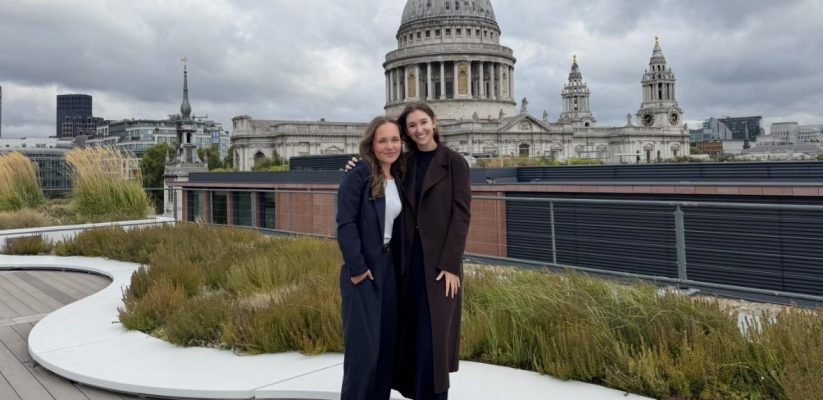
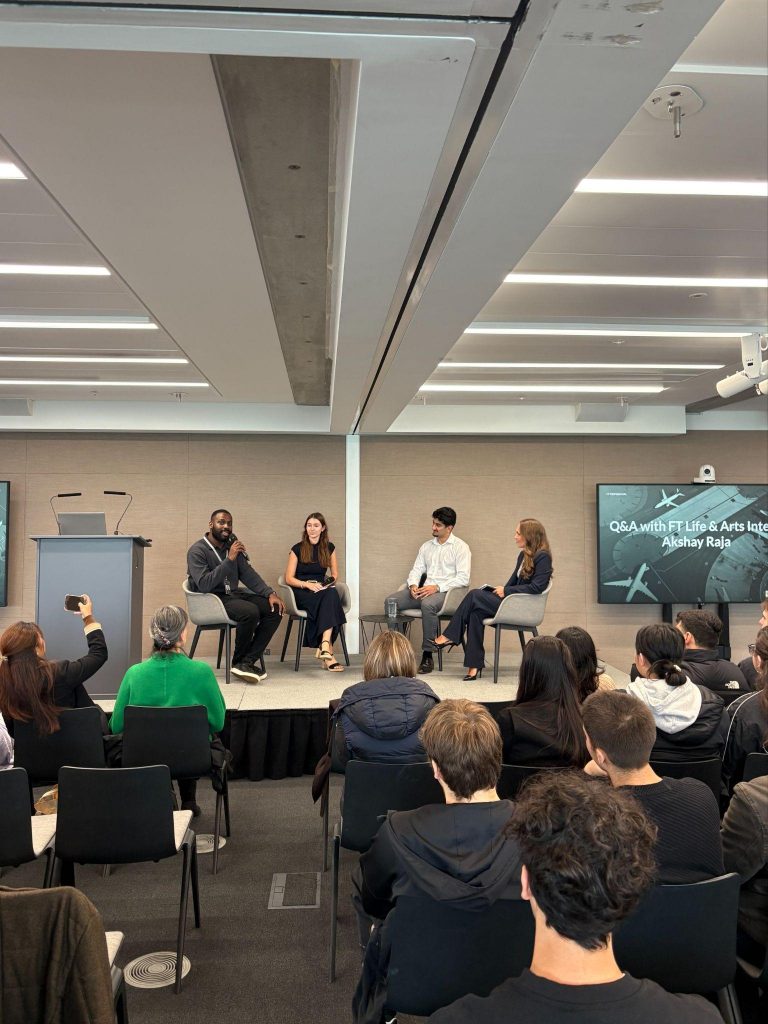
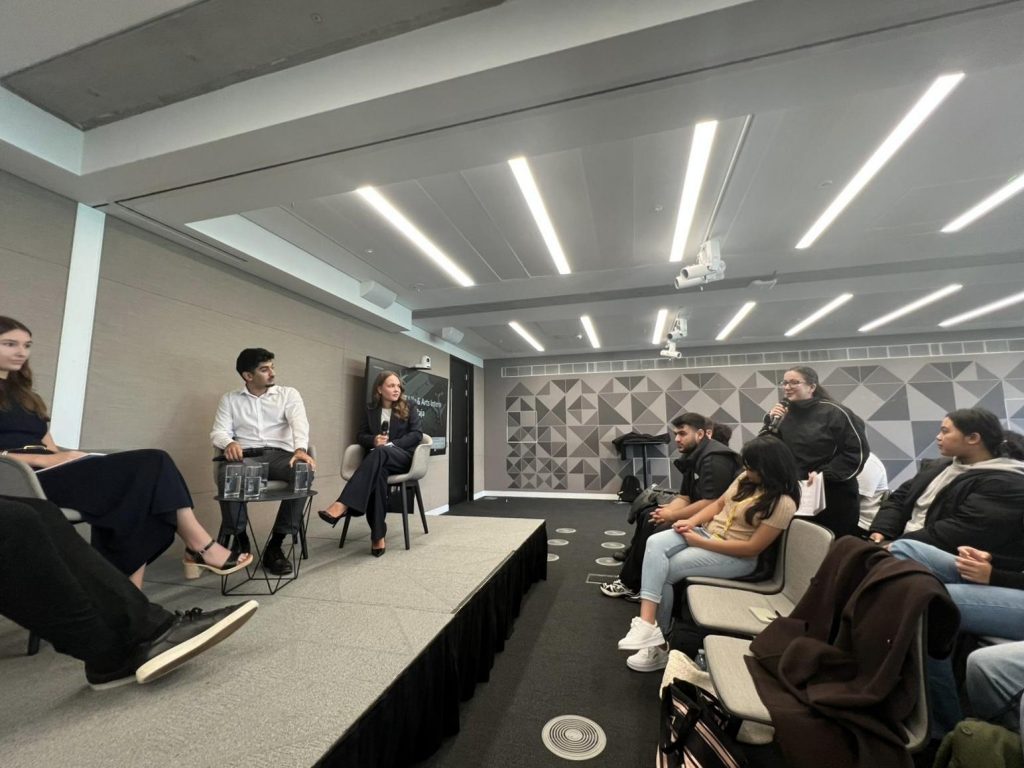
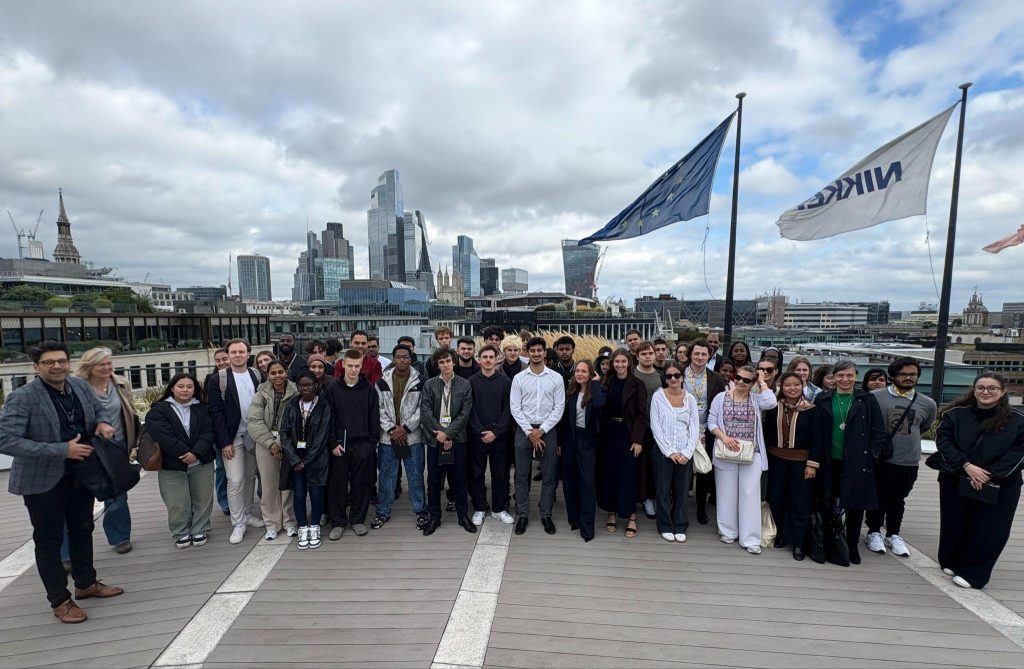
Earlier this term, fellow course representatives for International Business BA, Jessica Jacobs and Daniele Griniute had the opportunity to visit the Financial Times headquarters in London. As part of Westminster Business School’s initiative to give students real-world insights and connections, the visit offered an insider’s look into how one of the world’s most respected news organisations is embracing change in the digital age.
This experience gave us a new perspective on how business, media and technology intersect and how these industries are evolving together.
A First Look at the FT: Tradition Meets Innovation
Stepping into Bracken House, the historic home of the Financial Times, felt like walking into a space where tradition and innovation coexist. The building’s architecture reflects the newspaper’s identity. The familiar salmon-pink stone exterior acknowledges its iconic pages, while the interior feels open, collaborative and modern.
As we moved through the headquarters, what struck us the most was the sense of purpose. Every part of the space seemed designed for connection and creativity. We spoke with staff members who described how the newsroom has transitioned in recent years, not just in terms of technology but in mindset.
Rather than seeing themselves solely as print journalists, FT reporters today are multimedia storytellers. They think in headlines, videos and podcasts, they work across digital platforms, and they aim to make complex ideas accessible to global audiences. It was inspiring to see how a legacy brand like the FT continues to reinvent itself while keeping journalistic integrity at its core.
For us as students of business, finance and communication, it was a reminder that adaptability and creativity are key professional skills. Whether we end up in finance, marketing or media, the ability to tell stories that connect with people will always matter.
Insights from a Rising Journalist: Akshay Raja on Storytelling for a New Generation
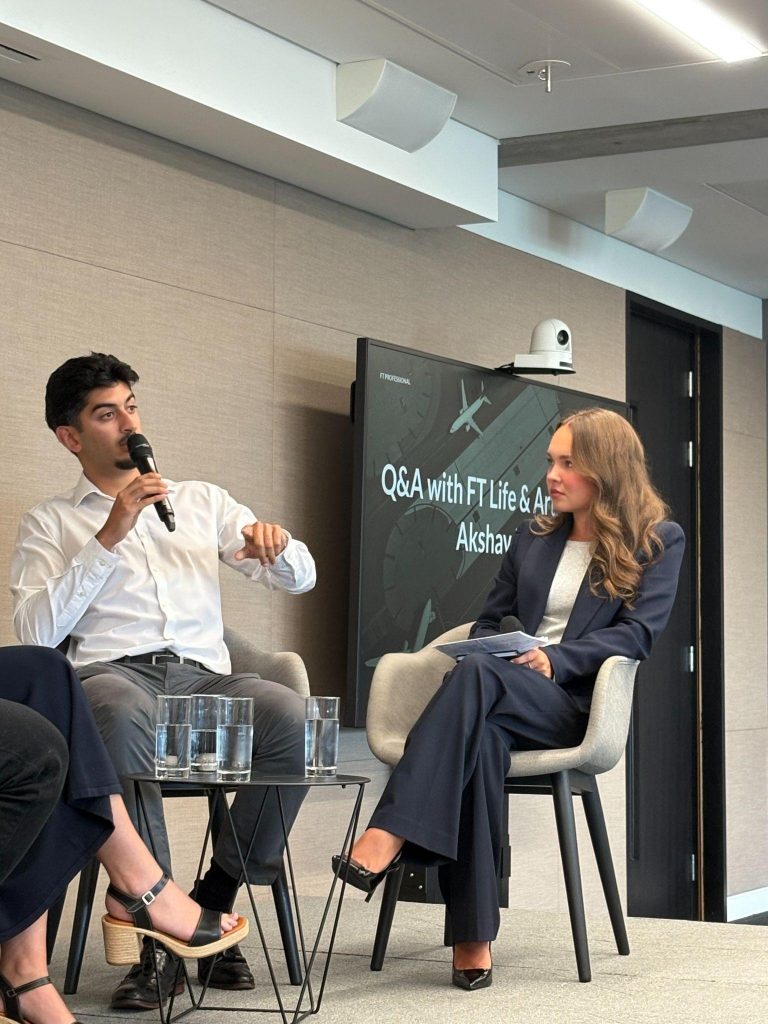
One of the highlights of the visit was our interview with Akshay Raja, a talented and fast-rising journalist at the FT. Akshay’s work spans multimedia reporting, social media storytelling and exploring topics that resonate with younger readers. From viral trends and digital culture to how new generations engage with business and current affairs.
Akshay spoke to us about his career journey, explaining how he began writing for various other big news outlets such as The Times and ITV before joining the FT. He described his early experiences covering community and cultural stories and how these shaped his understanding of what makes news meaningful. His path reminded us that success rarely follows a straight line; it’s built on curiosity, persistence and learning from each opportunity.
When we asked what inspires his reporting, Akshay shared that his goal is to make news engaging and relevant for younger audiences. He believes that while the world of finance and economics seems distant or intimidating, it becomes more approachable when connected to real people, everyday choices and digital spaces we all inhabit.
For instance, he pointed to his recent articles exploring how internet culture shapes public conversations about money, technology and lifestyle. His piece on viral trends and online identity, for example, shows how the FT is broadening its focus to include stories that bridge traditional business journalism and modern digital life.
Akshay also discusses how storytelling formats are changing. The modern journalist, he explained, is often part reporter, part content creator. A story might start as a written article but evolve into a video, social media thread or podcast episode. Understanding how audiences consume information and how to capture their attention ethically and creatively, is now part of the craft.
Our conversation with Akshay left a lasting impression. It showed us that journalism today is not just about reporting facts, it’s about connecting with audiences in new, meaningful ways. The boundaries between media, business and technology are increasingly blurred and that creates exciting opportunities for students like us who want to work in dynamic, forward thinking industries.
The visit also highlighted the importance of lifelong learning. Akshay’s advice to “stay curious and keep evolving” resonated deeply. Whether analysing markets or managing a brand, being adaptable and open to change is essential. This mindset mirrors what we’re encouraged to practice at Westminster Business School – exploring ideas from multiple perspectives and learning how global trends shape professional practice.
We also left with a renewed appreciation for the role of communication in business success. Watching the FT’s collaborative environment reminded us that even the most analytical industries rely on storytelling, that is the ability to turn complex data or ideas into clear, engaging messages that people can understand and act on.
Reflections: How Real-World Experiences Shape Our Future
Walking out of the FT building, Jessica and I felt energised. The visit had given us a new sense of purpose in our studies. It reminded us that university isn’t only about theory, it’s about connecting knowledge to the real world, learning from professionals and seeing where our passions might lead.
Personally, I left inspired to explore how media and business interact and how digital storytelling can drive meaningful conversations about global issues. Experiences like this encourage us to think bigger, ask better questions and prepare for careers that might not even exist yet.
The visit to the Financial Times reaffirmed what makes Westminster Business School special – its commitment to preparing students for the future by connecting them with industry leaders and innovative thinkers. Every experience, whether it’s a global trip, a company visit or talking with professionals like Akshay, helps us grow as learners and as future experts.
These opportunities are what turn classroom learning into confidence, curiosity and ambition – the real tools for success.
About University of Westminster
As one of the most diverse universities in the UK, we are a global university with London energy, with more than 19,000 students from 169 countries. To find out more about our Business and Management courses, visitour website.
University of Westminster
309 Regent Street, London W1B 2UW
General enquiries: +44 (0)20 7911 5000
Course enquiries: +44 (0)20 7915 5511
The University of Westminster is a charity and a company limited by guarantee. Registration number: 977818 England