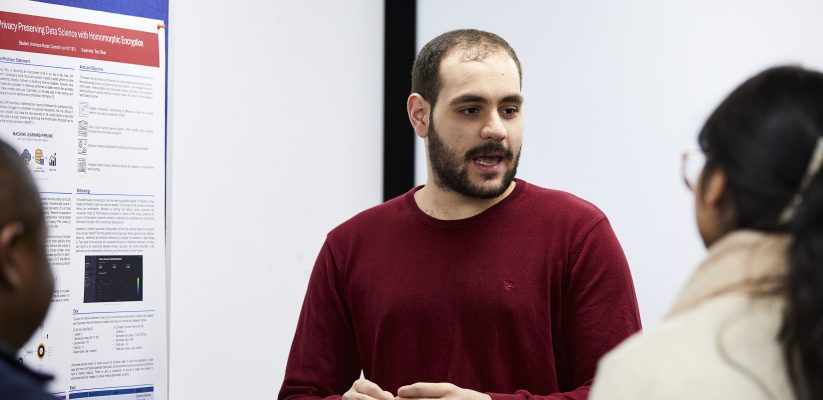
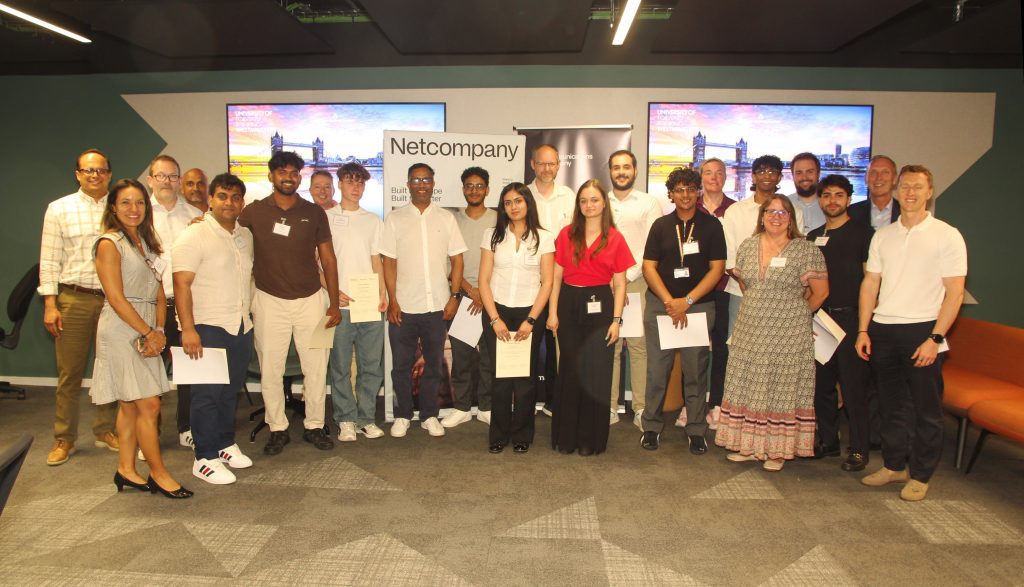
Bringing together creativity, technology and industry expertise, this year’s Computer Science and Engineering Final Year Project (FYP) Showcase celebrated the exceptional achievements of our graduating students. In partnership with IT services company Netcompany, the annual event provided a platform for students to showcase their original technology-based solutions, developed throughout their final year. Their projects explored ways to address real-world challenges, with students presenting their ideas to industry professionals from Netcompany and Smart DCC. Now in its fifth year, the showcase highlights the breadth of talent across the School and gives students the opportunity to gain valuable industry insight, receive expert feedback and showcase projects with real-world applications.
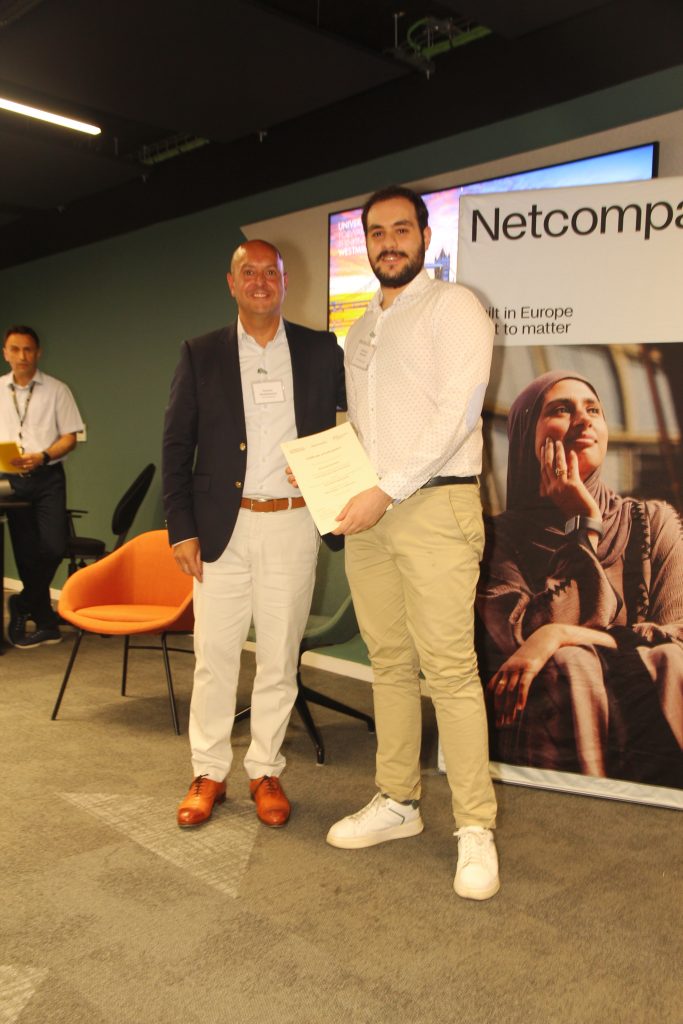
From more than 400 final-year project submissions across the School, ten outstanding projects were selected to be showcased. The finalists were recognised for their achievements and invited to present their work to a panel of industry experts. All ten students received prizes ranging from £100 to £1,000 in addition to competition categories for 1st, 2nd, 3rd and Social Impact prizes.
This blog series will highlight some of the finalist projects, sharing their experiences of developing their ideas, presenting their work to industry professionals and reflecting on their journey studying at Westminster.
We spoke to Data Science and Analytics BSc, Amirreza, one of this year’s finalists, about his final year project, his Westminster experience and career ambitions.
Could you tell me a bit about your course and what aspects you have particularly enjoyed?
My course Data Science and Analytics BSc, has given me a broad range of skills across several areas. The course is structured around three key areas: programming and coding, mathematics and statistics, and communication and presentation skills.
What I particularly enjoyed was the variety of the course and how these different areas worked together. While I naturally gravitated more towards the programming side, developing my understanding of statistics, analytical methods and how to communicate insights effectively has been equally valuable. The combination of these skills has helped shape my professional development and prepared me for a career in data science.
Could you share some of the skills you have developed during the course and how these skills have prepared you for your final project and future career?
When I started the course, I had no previous programming experience, so I developed my technical skills from the ground up. Throughout my degree, I learned different programming languages, the theory behind software development, database management, and how to design and build machine learning models.
However, one of the most valuable skills I developed was critical thinking. Whether it was debugging code, solving technical challenges, or deciding how to structure a data pipeline, the course taught me how to approach complex problems logically and find effective solutions.
My placement year experience at AXA Investment Managers also helped me develop important professional skills. I learned that technical work is rarely done in isolation, and effective communication with colleagues is essential to understand the wider goals of a project and ensure the solution meets the needs of the end user.
The course also helped me build confidence in communicating complex ideas clearly, particularly when presenting technical information to non-technical audiences. These communication, collaboration and problem-solving skills have been invaluable during my final-year project and will continue to support me in my future career.
Could you tell us about your final project and what inspired this project?
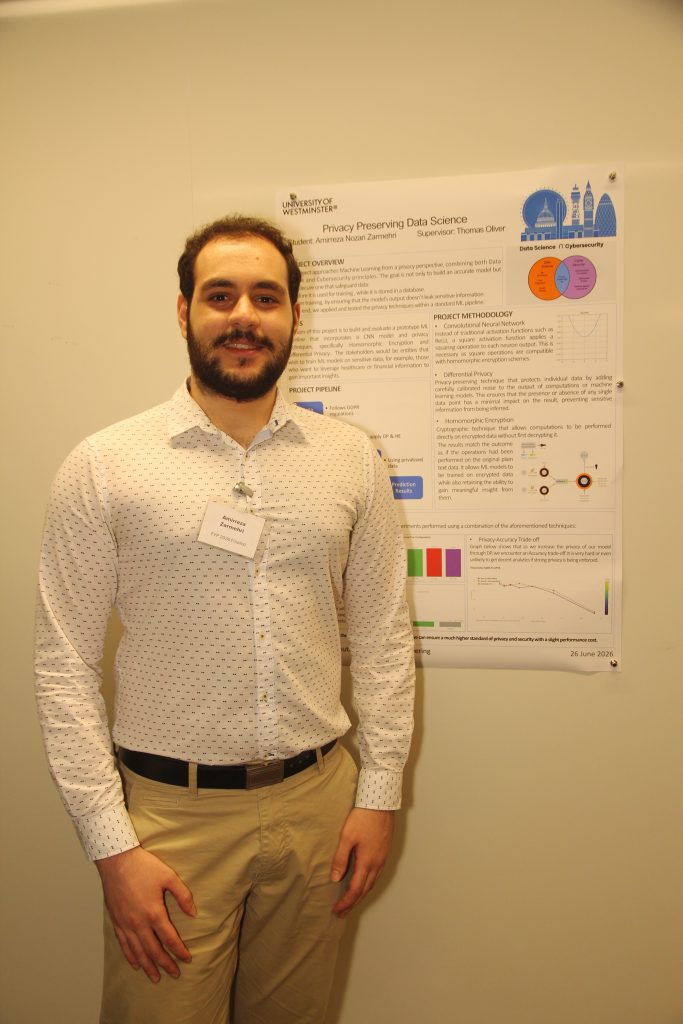
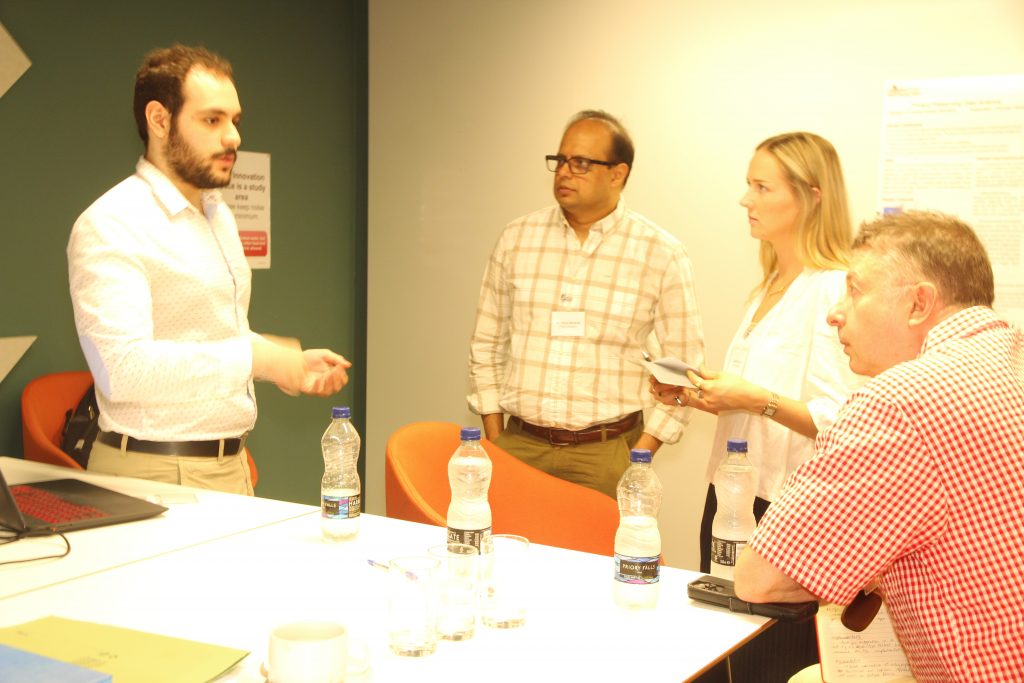
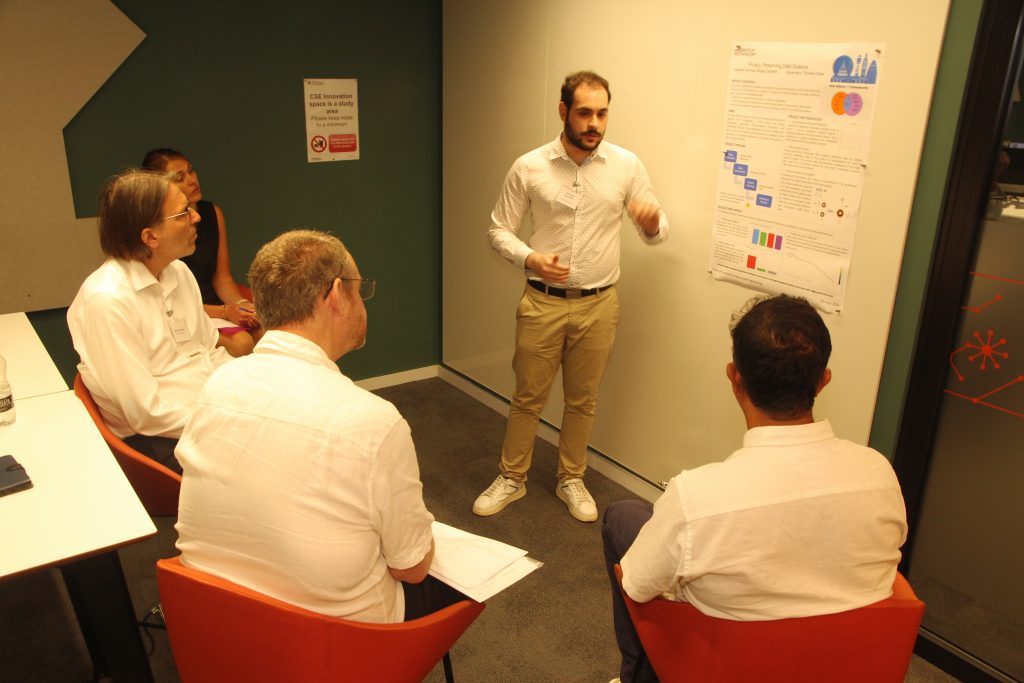
My final-year project explores the relationship between machine learning and privacy, particularly focusing on the data used to train machine learning models.
The project combines the modelling skills and algorithms I developed throughout my course with cybersecurity techniques I researched during the project. I wanted to explore how we can continue to develop powerful AI systems while also considering how personal and sensitive data is protected.
The inspiration came from the rapid growth and widespread adoption of AI. With the increasing focus on making AI models as accurate and capable as possible, I started to question whether enough attention was being given to privacy. My project explores the idea that as AI continues to evolve, protecting the data behind these systems should be just as important as improving their performance.
How does it feel to present your project to industry professionals?
It feels incredibly rewarding to have been selected for this opportunity, and I’m proud to be able to showcase the work I have developed throughout my final year.
I feel confident in both my project and my ability to present it, and I’m excited to receive feedback and insights from industry professionals. It’s a great opportunity to share my work with people working in the field, learn from their perspectives and see how my project could be viewed from an industry standpoint.
What are your career aspirations and how do you think your course has prepared you to help achieve this?
My career aspiration is to secure a full-time role in Data Science, ideally continuing in a similar area to my placement experience.
I feel that my course has provided me with a strong foundation that can be applied across a wide range of industries where data plays an important role. While different roles may use different tools, software or techniques, the core principles and analytical skills I have developed allow me to adapt and continue learning.
The combination of technical knowledge, problem-solving skills and practical experience gained throughout my degree and placement has given me the confidence to approach new challenges and build a successful career in data science.
What has been the highlight of your time studying at Westminster?
I have had many highlights during my time at Westminster, but if I had to choose, I would say my placement year and my experience as a Student Ambassador have been the most rewarding.
I am naturally quite goal-oriented, so both experiences gave me the opportunity to develop professionally while applying the skills I had gained throughout my degree. My placement year felt like the culmination of my studies so far, allowing me to put my technical knowledge into practice while also learning valuable skills beyond my course, from industry knowledge and financial awareness to communication and professional skills.
Being a Student Ambassador was also a highlight, as it helped me develop my confidence, communication skills and work ethic. It also gave me the opportunity to connect with other students, build strong relationships and contribute to the wider university community.
Empowering Students Through Industry Engagement
Huseyin Dagdeviren, Senior Lecturer and Director of Employability in Computer Science and Engineering, shared:
“The Final Year Project Showcase continues to be a fantastic opportunity to celebrate the creativity, technical expertise and dedication of our students. Now in its fifth year, our partnership with Netcompany, alongside the involvement of Smart DCC, has allowed us to strengthen the connection between academia and industry, giving our students the opportunity to showcase their work, receive valuable feedback and build confidence in presenting their ideas to professionals.
The quality and diversity of this year’s projects demonstrate the incredible talent within our School and the ability of our students to apply their learning to address real-world challenges. These experiences are an important part of preparing our graduates for successful careers in the technology sector.”
Mariella Chapman, Supplier Relationship Manager at Smart DCC shared:
“The DCC team found the projects incredibly interesting and were genuinely inspired by the level of talent across the University. It was a real privilege to be part of the day, and we look forward to continuing to build on this through future collaboration and co-creation with Westminster.”
Graham Robinson, Chief Technology Officer at Smart DCC and judge at the event commented:
“It was inspiring to see the creativity, innovation and technical excellence on display, with students consistently focusing on how their ideas could deliver real value for end users.”
The showcase reflects Westminster’s strong commitment to employability and real-world learning, providing students with opportunities to develop industry connections, gain professional experience and graduate as confident, skilled contributors in the ever-evolving technology sector.
About Westminster
As one of the most diverse universities in the UK, we are a global university with London energy, with more than 19,000 students from 169 countries. Visit our website to find out more about our Computer Science and Engineering courses.
