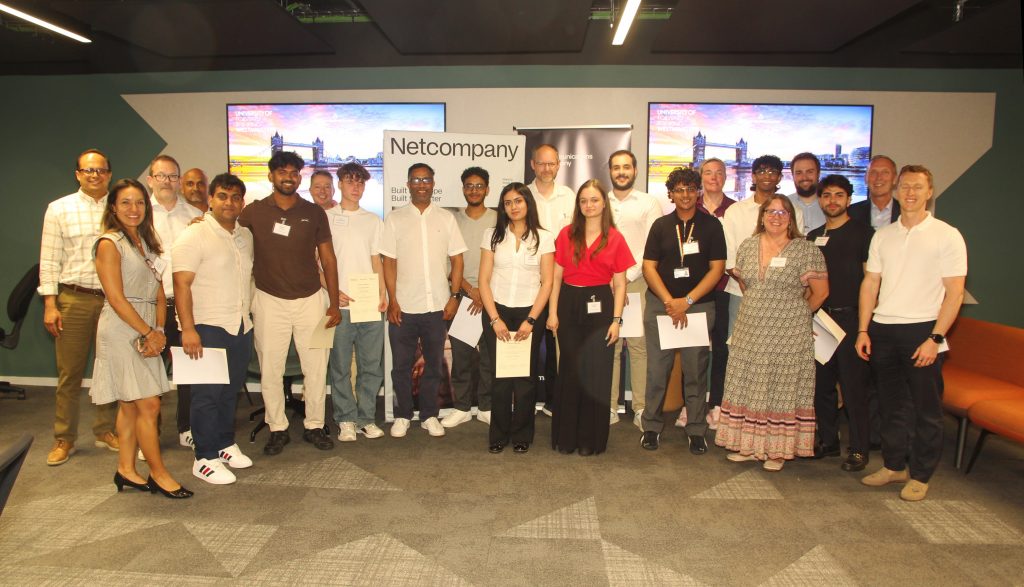
Bringing together creativity, technology and industry expertise, this year’s Computer Science and Engineering Final Year Project (FYP) Showcase celebrated the exceptional achievements of our graduating students. In partnership with IT services company Netcompany, the annual event provided a platform for students to showcase their original technology-based solutions, developed throughout their final year. Their projects explored ways to address real-world challenges, with students presenting their ideas to industry professionals from Netcompany and Smart DCC. Now in its fifth year, the showcase highlights the breadth of talent across the School and gives students the opportunity to gain valuable industry insight, receive expert feedback and showcase projects with real-world applications.
From more than 400 final-year project submissions across the School, ten outstanding projects were selected to be showcased. The finalists were recognised for their achievements and invited to present their work to a panel of industry experts. All ten students received prizes ranging from £100 to £1,000 in addition to competition categories for 1st, 2nd, 3rd and Social Impact prizes.
This blog series will highlight some of the finalist projects, sharing their experiences of developing their ideas, presenting their work to industry professionals and reflecting on their journey studying at Westminster.
We spoke to Computer Science BSc student Yurii, one of this year’s finalists and winner of the Social Impact Prize, about his final year project, his Westminster experience and career ambitions.
Could you tell me a bit about your course and what aspects you have particularly enjoyed?
The Computer Science BSc combines strong theoretical foundations with a lot of practical, hands-on experience, which really suited the way I like to learn.
One of the highlights for me was the second-year group project, where we developed software that was used by other students on the course. It was the first time I had created something where other people genuinely depended on my work, and it changed the way I viewed software development. It made me realise that building good software is not just about writing code, but also about creating something reliable and useful for others.
The final-year individual project provided a completely different challenge. Without a team to share responsibilities or solve problems with, it required a much higher level of independence, organisation, and ownership. Completing that project successfully and graduating with First Class Honours in June 2026 was a huge achievement and something I am very proud of.
Could you share some of the skills you have developed during the course?
The course helped me develop a combination of technical, communication, and problem-solving skills that I know will be valuable in my future career.
The second-year group project taught me how to collaborate effectively, work with other people’s code, communicate different ideas, and handle disagreements within a team. In contrast, my final-year project required complete independence, spending seven months taking ownership of one project from start to finish. I found that both experiences were equally important, as software development requires the ability to work well both as part of a team and independently.
Working on my final project also strengthened my ability to solve problems and make decisions independently. There were times when I had to question whether I was taking the right approach, and my supervisor helped by challenging my reasoning and encouraging me to justify my decisions rather than simply providing answers. This helped me become a more confident and critical thinker.
Having IBM engineers involved in our progress meetings throughout the year also helped me develop my communication skills. They focused on understanding what I had built, the limitations of the system, and the reasons behind my technical choices. Learning to explain my work clearly, respond to challenging questions, and communicate complex ideas effectively was an important part of the experience.
Most importantly, the project taught me the importance of persistence and seeing a product through to completion. Achieving 85% for my final project, the highest mark on my transcript, reflected not only the technical outcome, but the commitment to treating the project as a real-world solution rather than just an academic assignment.
Could you share some details about your final project and what inspired this project?
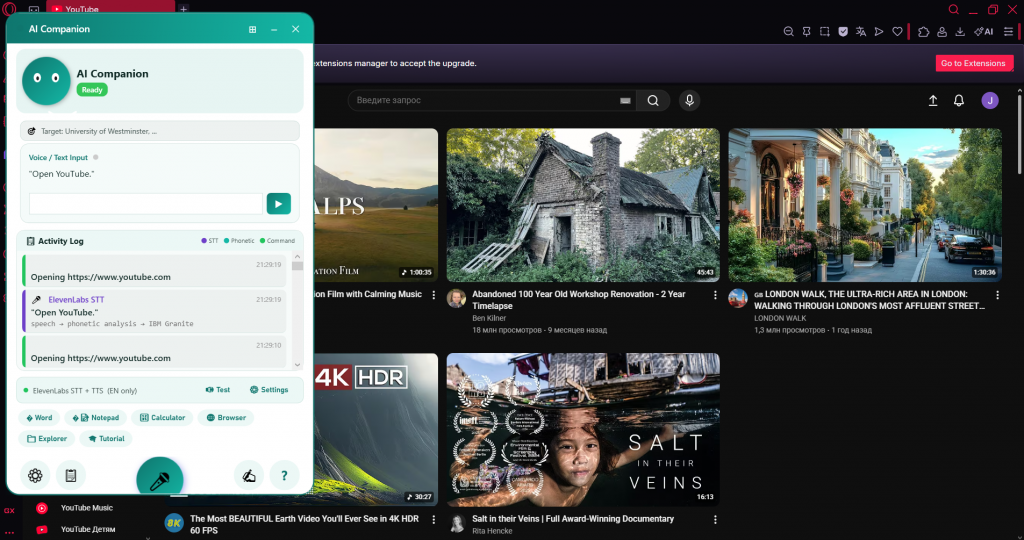
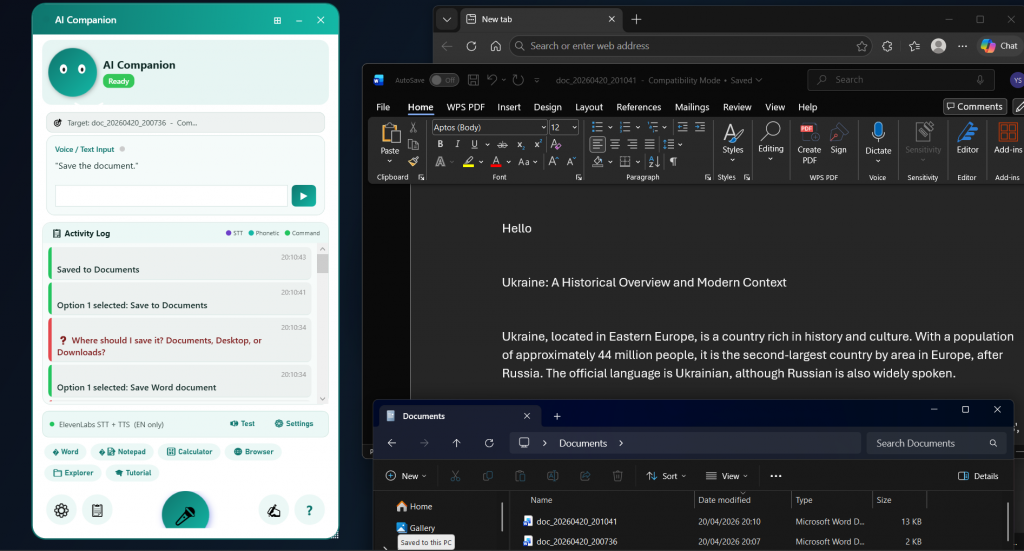
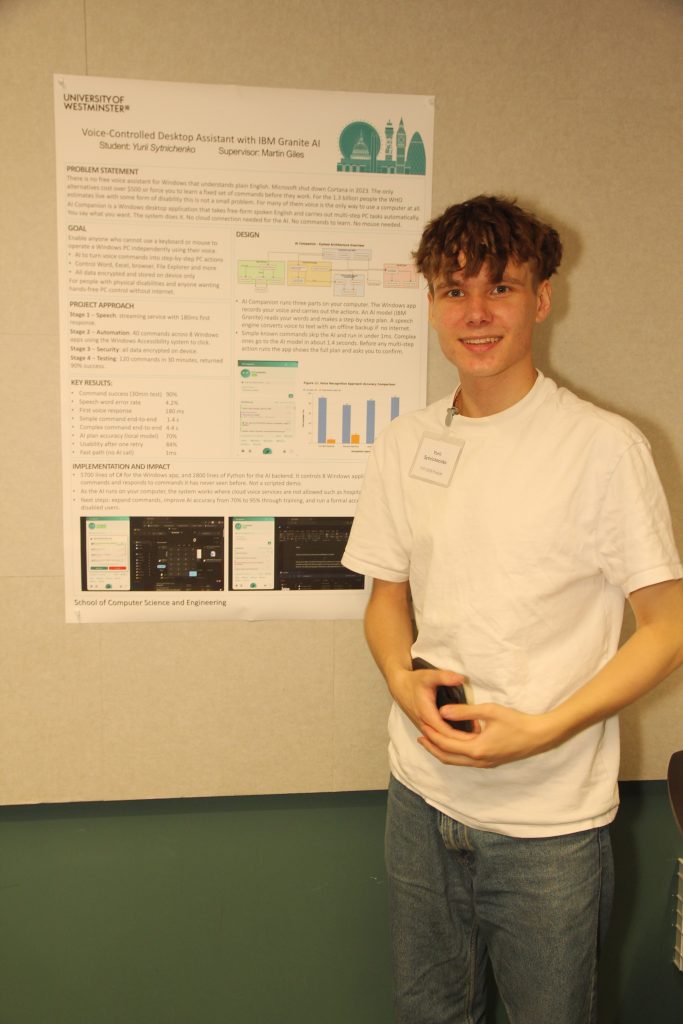
For my final-year project, I developed a voice assistant for Windows that allows users to interact with their computer using natural language. Instead of requiring users to memorise specific commands, the system allows them to simply say what they want to do, such as opening applications, typing text, searching the web, navigating documents, or controlling the mouse. A key feature of the project is that it works without requiring an internet connection.
The inspiration behind the project came from seeing a gap in accessible computer interaction. When Microsoft discontinued its free voice assistant in 2023, there was no comparable replacement that offered a simple and accessible way for people to control their computers using their voice. Accessibility was a major motivation, particularly because many people with disabilities rely on alternative methods of interaction to use technology effectively.
The system was designed to work across eight different Windows applications, including Microsoft Word, Excel, web browsers, and File Explorer. Rather than relying on a fixed set of scripted commands, it was built to understand and respond to new commands, making it a more flexible and practical solution.
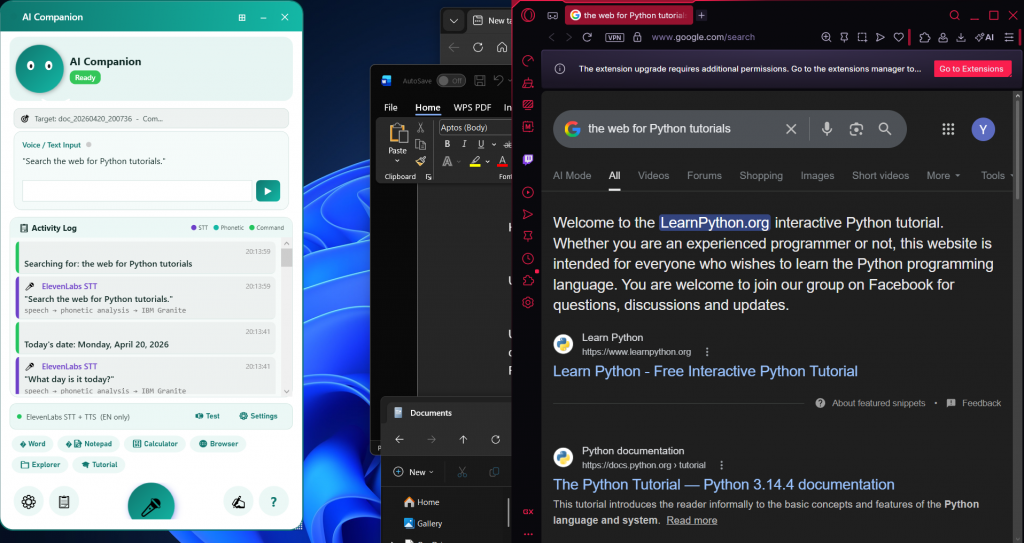
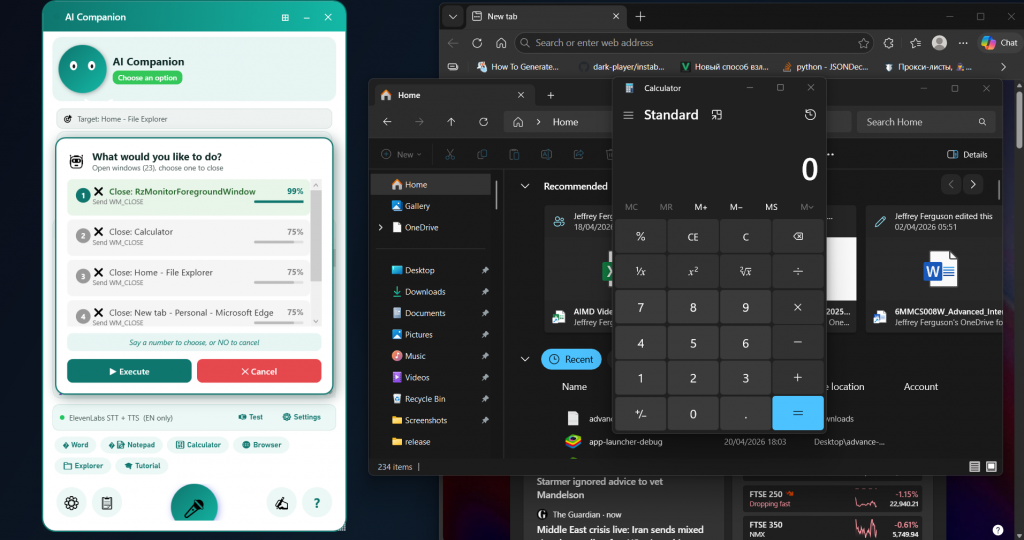
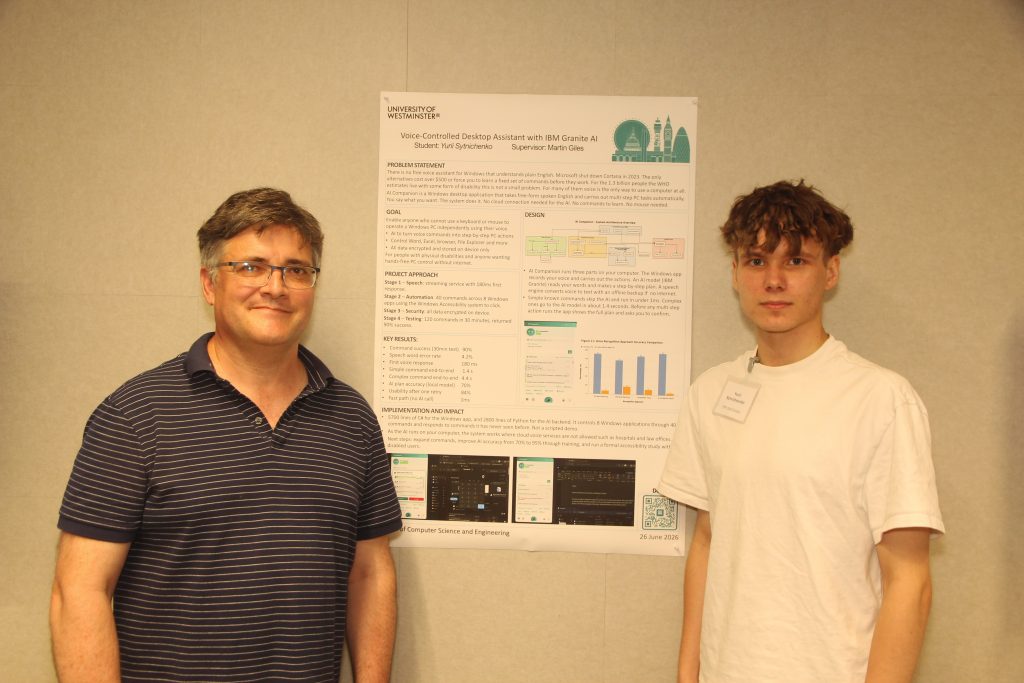
The project was supervised by Martin Giles, who provided valuable support for most of the year. Throughout the development process, I also had the opportunity to work with IBM engineers, who provided feedback on the technical decisions and helped challenge my approach, as my project ran on IBM’s Granite AI. Their input was valuable in ensuring the project was not only a demonstration of an idea, but a solution designed with real-world application in mind.
How does it feel to present your project to industry professionals?
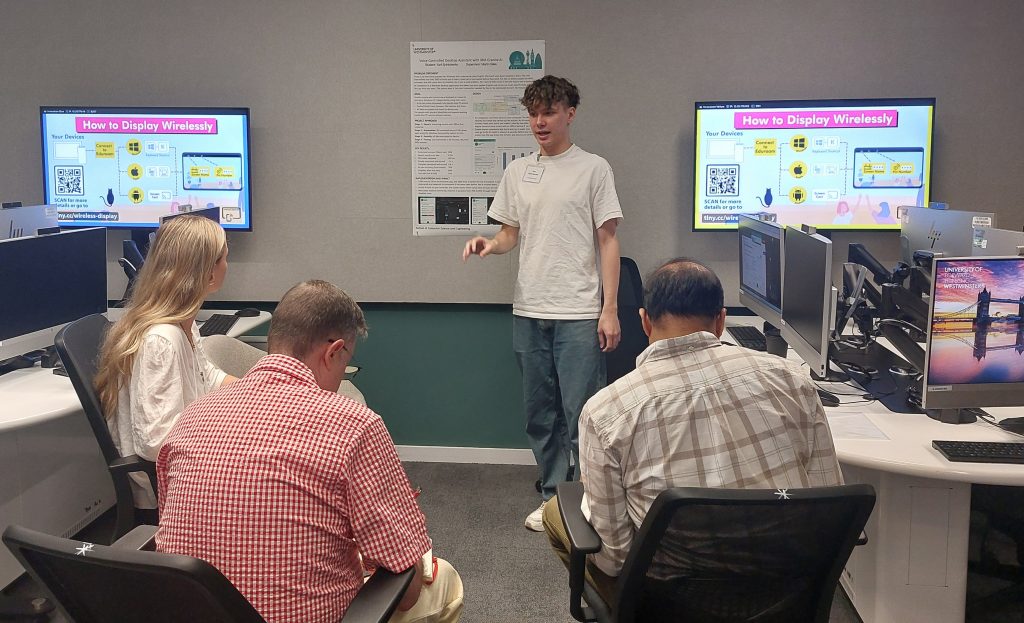
Nerve-wracking but good. At my viva in May, I had fifteen minutes to present, fifteen minutes to demo, then thirty minutes of questions. Standing in front of people who build software for a living and explaining my own decisions made me think harder about why I made them. The Computer Science Final Year showcase feels different, less like an exam, more like introducing something I actually want people to try.
How does it feel to win the Social Impact Prize for your project as part of the showcase?
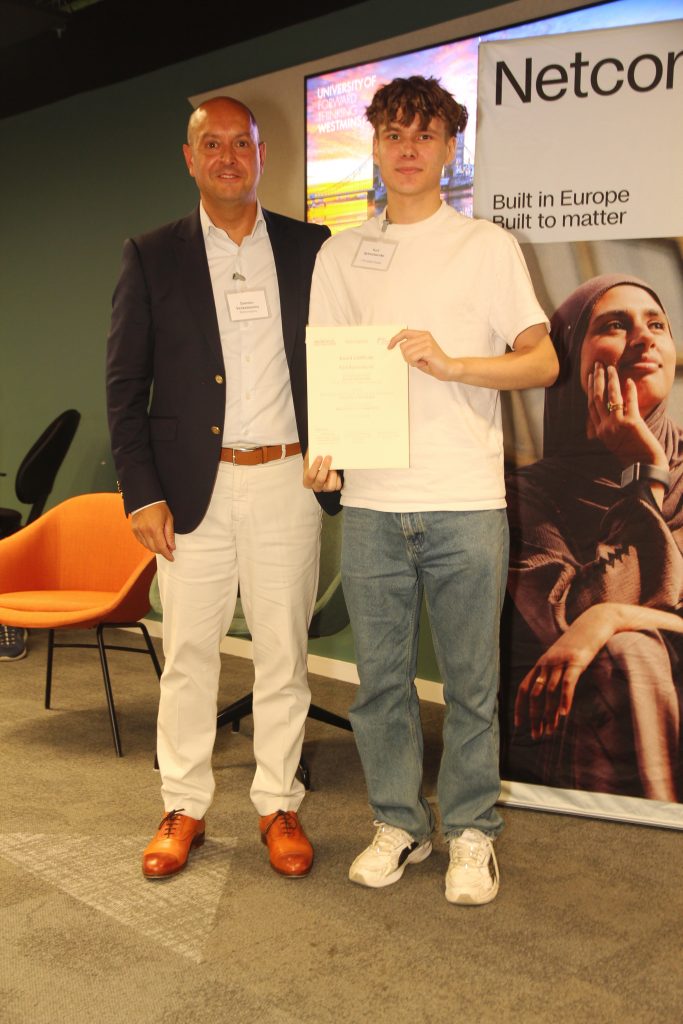
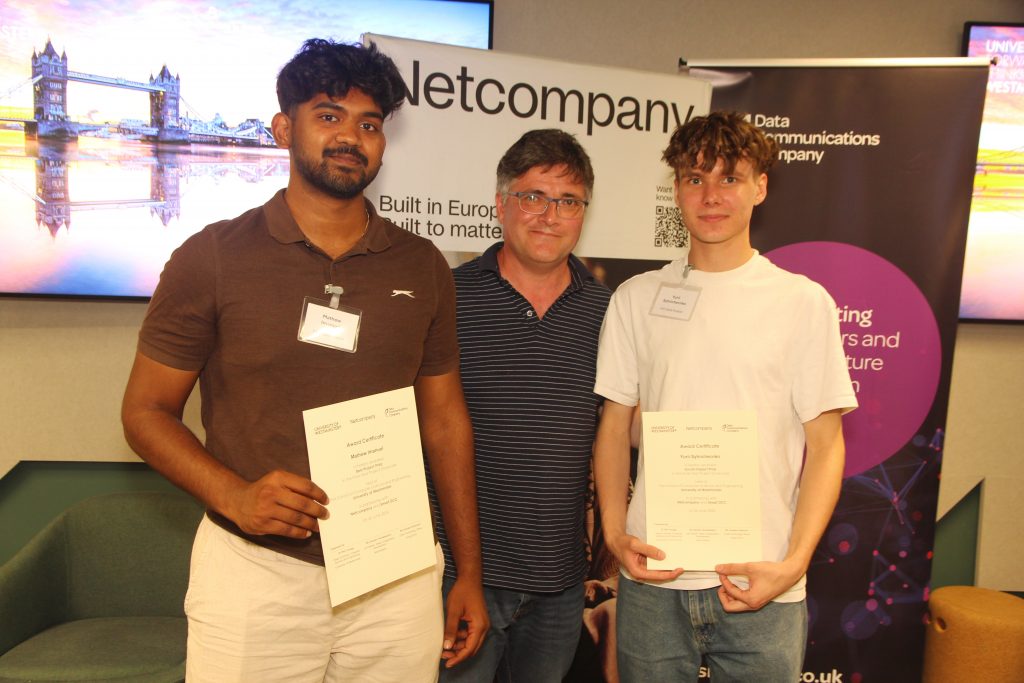
The prize meant that the actual point of the project, not just the code, got noticed. I built it because voice is one of the few ways some people can use a computer at all, so a Social Impact Award specifically felt like confirmation that the problem is real. Having Netcompany and Smart DCC then look at my project and take it seriously felt reassuring in a way no grade ever has. People who build software for a living do not have much reason to be polite about a student project, so that mattered to me.
What are your career aspirations and how do you think your course has prepared you?
My goal is to build AI systems that are reliable, practical, and genuinely useful when people depend on them. Not just systems that perform well in demonstrations but fail when faced with real-world challenges.
Throughout my course, I have developed an interest in looking beyond whether a system works and considering the wider questions around reliability, impact, and responsibility. I have learned to think about what happens when technology fails, who is affected, and how systems can be designed to be improved and maintained effectively. These are the areas I want to continue exploring in my future career.
The course has given me a strong foundation in both technical skills and critical thinking, preparing me to approach AI development with a more complete perspective. I will be continuing my studies at UCL, where I will be undertaking a Master’s in AI and Data Engineering. My aim is to deepen my understanding of the full AI lifecycle, from how data is collected and models are developed, to how those models are deployed as products that create value for real users.
What has been the highlight of your time studying at Westminster?
The biggest highlight of my time at Westminster has been moving to the UK from Ukraine in 2023 and gradually building a new life here. When I first arrived, I did not know many people, so I never expected that the friendships I developed would become one of the things I value most about my university experience.
Through my course, I met people from different backgrounds and cultures who have become close friends. We supported each other through challenging deadline periods, celebrated our achievements together, and eventually started exploring more of the UK beyond London by travelling to different cities.
For me, that sense of community has been one of the most special parts of studying at Westminster. Bringing together people from so many different countries and experiences created opportunities to form connections that I will carry with me beyond university.
Empowering Students Through Industry Engagement
Huseyin Dagdeviren, Senior Lecturer and Director of Employability in Computer Science and Engineering, shared:
“The Final Year Project Showcase continues to be a fantastic opportunity to celebrate the creativity, technical expertise and dedication of our students. Now in its fifth year, our partnership with Netcompany, alongside the involvement of Smart DCC, has allowed us to strengthen the connection between academia and industry, giving our students the opportunity to showcase their work, receive valuable feedback and build confidence in presenting their ideas to professionals.
The quality and diversity of this year’s projects demonstrate the incredible talent within our School and the ability of our students to apply their learning to address real-world challenges. These experiences are an important part of preparing our graduates for successful careers in the technology sector.”
Mariella Chapman, Supplier Relationship Manager at Smart DCC shared:
“The DCC team found the projects incredibly interesting and were genuinely inspired by the level of talent across the University. It was a real privilege to be part of the day, and we look forward to continuing to build on this through future collaboration and co-creation with Westminster.”
Graham Robinson, Chief Technology Officer at Smart DCC and judge at the event commented:
“It was inspiring to see the creativity, innovation and technical excellence on display, with students consistently focusing on how their ideas could deliver real value for end users.”
The showcase reflects Westminster’s strong commitment to employability and real-world learning, providing students with opportunities to develop industry connections, gain professional experience and graduate as confident, skilled contributors in the ever-evolving technology sector.
About Westminster
As one of the most diverse universities in the UK, we are a global university with London energy, with more than 19,000 students from 169 countries. Visit our website to find out more about our Computer Science and Engineering courses.
