The world of marketing has been transformed by digital technology. Brands can now reach customers faster, more affordably, and with greater precision than ever before. Online channels such as search engines, social media, mobile apps and email allow organisations to communicate instantly, track real-time behaviour and adjust their messaging with ease. A small business can now do what only global corporations could afford a decade ago: promote products, measure results and optimise campaigns using nothing more than a laptop and a handful of software tools.
Our Digital Marketing Management MSc has always reflected this ever-evolving landscape. The course is designed around real-world challenges, emerging technologies and the practical skills that employers expect from graduates. Modules such as Social Media and Content Marketing explore how to create optimised content that engages audiences and incentivises conversion through paid or organic strategies, while Web Design and Analytics prepares students to build user-centred websites and analyse behaviour through web analytics.
We regularly update our teaching, tools and case studies to ensure that students are working with the same platforms and approaches used in industry. This year, we took a significant step forward by redesigning our core module assessment, shifting from traditional academic reports to a professional digital marketing portfolio.
This change represents more than a new format — it reflects a new philosophy about how digital marketers should learn, practise and demonstrate their skills. Instead of analysing hypothetical scenarios in a written report, students now create tangible outputs throughout the module.
As lecturer, Annetta Paps-King explains, “The aim was to move away from assessment formats that do not align with workplace expectations and replace them with meaningful, practical tasks. Academic reports are valuable for strengthening theory, but they don’t always help students build the applied, work-ready capabilities employers are looking for.” The new portfolio approach directly responds to this gap, enabling students to produce real digital marketing outputs over 11 weeks rather than submitting a single written report at the end of the semester.
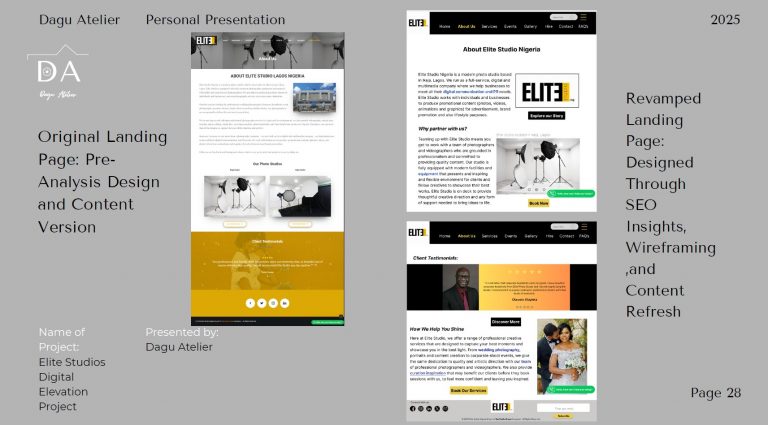
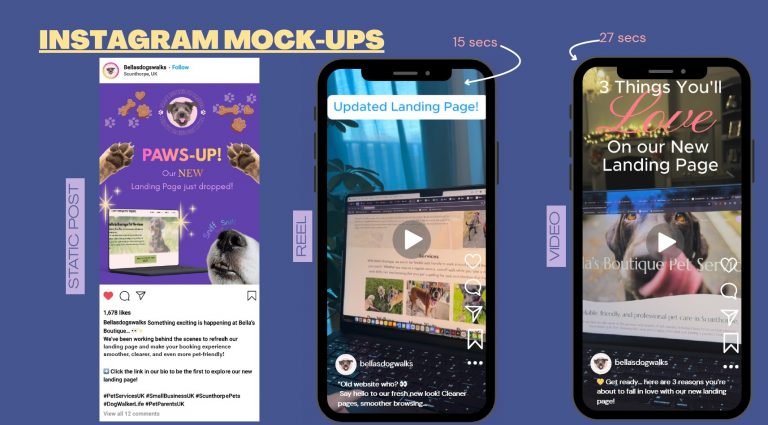
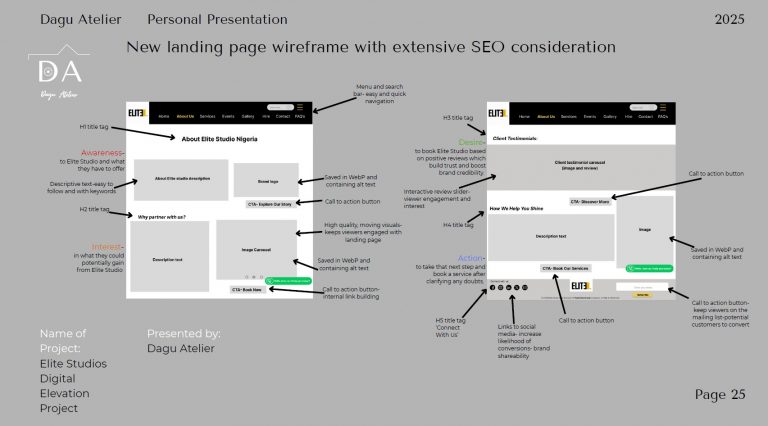
Each week, students work on a different component of their portfolio, gradually building a collection of professional assets. These include SEO audits and landing page refreshes, wireframe design, email creation and broadcasting, social media content repurposing, and reflective practice. The entire structure of teaching and assessment was intentionally designed; weekly lectures and seminars build upon one another, enabling students to progress step-by-step, apply new skills immediately, and grow in confidence. Weekly collaboration is embedded, and three mandatory check-in sessions give students the opportunity to test ideas, ask questions, overcome challenges and receive feedback at a realistic pace.


This distributed structure has also helped reduce the pressure and anxiety often associated with high-stakes, single-deadline assessments. As MSc student David Aguopara notes, “Gaining feedback regarding the different elements of the portfolio was very useful, as it allowed me to keep on top of the tasks I would need to do for the different sections of the assignment. Having clarity along the way made it easier to complete the sections when we were left to work on them independently.”
Authenticity sits at the heart of the portfolio. Rather than working in the abstract, students use real platforms and tools used daily in industry, including Mailchimp, Canva, Miro, Figma, Answer The Public, and a suite of SEO products and Chrome extensions such as MOZ, Ahrefs, SEOquake, PageSpeed Insights and Keyword Everywhere. They also apply current frameworks for campaign planning and optimisation, including SOSTAC, consumer journey mapping and content repurposing models.
Every task, decision and rationale mirrors what digital marketing practitioners must deliver in professional roles, and this alignment is reflected in the marking criteria, which emphasise problem-solving, evidence-based decision-making, technical execution, creativity, and reflective practice.
The results have been highly encouraging. Students recognised that the work they were producing was real and immediately applicable, which led to high engagement and consistently strong attendance across the semester. Instead of waiting for a single deadline, they were creating, building and iterating every week. This made the learning process feel more motivating and less stressful. Sessions became highly collaborative and energetic, with students sharing ideas, providing peer feedback and watching their portfolios develop in real time. Many commented that they plan to use their portfolios for job applications, interviews or even launching their own digital marketing agencies, reinforcing the value of this approach.
MSc student Cynthia Wolff reflected, “Building a portfolio over 11 weeks completely changed the way I engaged with the module. Instead of preparing for one final report, I applied concepts each week, which made the learning feel more practical and creative. Testing new tools, frameworks and digital techniques kept the work dynamic, and I actively practised the skills rather than summarise them academically.”
The portfolio redesign coincided with wider module updates. The Digital Marketing and Innovations module was restructured to be fully practice-based, aligning closely with learning outcomes, employability criteria and weekly teaching content. Students also engaged directly with industry through three key touchpoints: a guest lecture on content repurposing in Week 8, an industry talk by Schparkly Creative on AI and innovation in Week 11, and a final digital marketing event featuring alumni and industry experts in Week 12. These sessions helped students understand current practices, employer expectations, and potential pathways into employment, freelancing or further study.
The module team will continue refining the portfolio assessment, guided by student feedback, industry trends and evolving workplace expectations. Additional analytics-based tasks and further industry involvement are being explored to deepen relevance and strengthen skills. This portfolio model has now been adopted across other courses, including International Development Management MSc, Event Design and Management MA, and Marketing Communications MA programmes, with potential for wider adoption.
Cynthia summarised the value of the experience well, “Across the project, I developed a wide range of transferable skills — from project management and meeting structured deadlines to using digital marketing tools, applying SEO and UX principles, and strengthening my creative problem-solving abilities. I kept finding more and more potential improvements that excited me to keep working on the project.”
The result is a dynamic, contemporary learning experience that supports confidence, employability, and a clear pathway into the profession.
About University of Westminster
As one of the most diverse universities in the UK, we are a global university with London energy, with more than 19,000 students from 169 countries. To find out more about our Marketing courses, visit our website.
- How Portfolio-Based Assessment Is Transforming Digital Marketing Education - December 11, 2025
- January vs September: Finding the Right Postgraduate Start at Westminster - December 9, 2025
- Inside the Financial Times: Westminster Business School Students Explore Modern Journalism - October 13, 2025