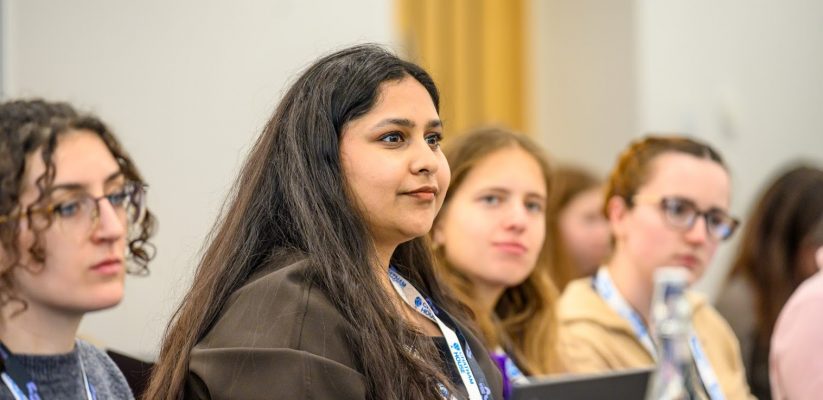
What does it actually feel like to sit across the table from other countries and negotiate global climate policy?
For Politics and International Relations students at the University of Westminster, this isn’t just something they read about in textbooks. Through immersive diplomatic simulations hosted at the Royal Institute of International Affairs (Chatham House), students get the chance to experience first-hand how complex international negotiations really are.
Simulating global climate negotiations
As part of a Model Conference of the Parties (COP) simulation, Westminster students stepped into the role of national delegations within the framework of the United Nations Framework Convention on Climate Change (UNFCCC), the international agreement through which countries work together to tackle climate change.
Hosted at the prestigious Chatham House and organised in partnership with the British International Studies Association (BISA), the event brought together student delegations from universities across the UK to recreate the high-pressure environment of global climate negotiations.
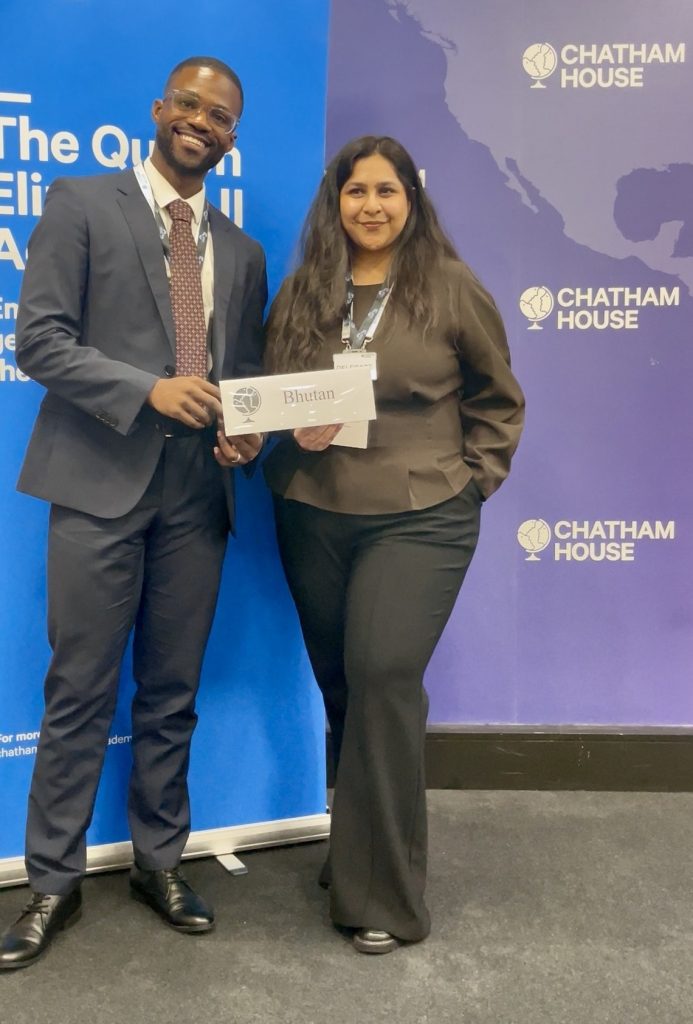
Two Westminster teams represented Bhutan and Norway, countries with very different climate realities. Both rely heavily on hydropower, but while Bhutan has net negative carbon emissions, Norway remains a major exporter of fossil fuels. Representing these nations meant balancing environmental ambition with economic realities and national interests.
Tackling real policy challenges
Throughout the intensive day-long simulation, students worked through a demanding agenda similar to that faced by world leaders at real COP summits. Discussions focused on:
• Setting new deadlines for Nationally Determined Contributions (NDCs), the national plans countries submit outlining how they will reduce greenhouse gas emissions
• Debating the New Collective Quantified Goal, a global target for climate finance to support developing economies
• Negotiating the Global Goal on Adaptation, aimed at strengthening countries’ ability to respond to climate impacts
Just like in real diplomacy, decisions could only move forward if countries could reach consensus. This meant persuading other delegations, building alliances, compromising on positions, and sometimes stepping back to rethink strategies.
Dr Philipp Dapprich, Research Fellow at the University of Westminster’s Centre for the Study of Democracy, said:
“The simulation reproduced many of the tensions and conflicts in real-world climate diplomacy. This represents a valuable lesson for students on how difficult it is to achieve consensus among nations with vastly divergent interests.”
Preparing like real diplomats
In the days leading up to the simulation, students prepared in much the same way real diplomatic teams would. They researched their assigned countries’ domestic politics, economic priorities, and foreign policy positions to ensure their negotiations reflected real national interests rather than abstract debate.
Ella Coleman, International Relations BA, representing Norway, reflected:
“Attending the Climate Simulation Summit at such a prestigious location at Chatham House was an amazing experience. Through the model debate we were able to represent our countries in an authentic way while discussing real issues that arise at COP.”
She added how informal discussions during unmoderated caucuses allowed delegates to explore compromises and test potential solutions, just as real diplomats do.
Learning you can’t get from lectures alone
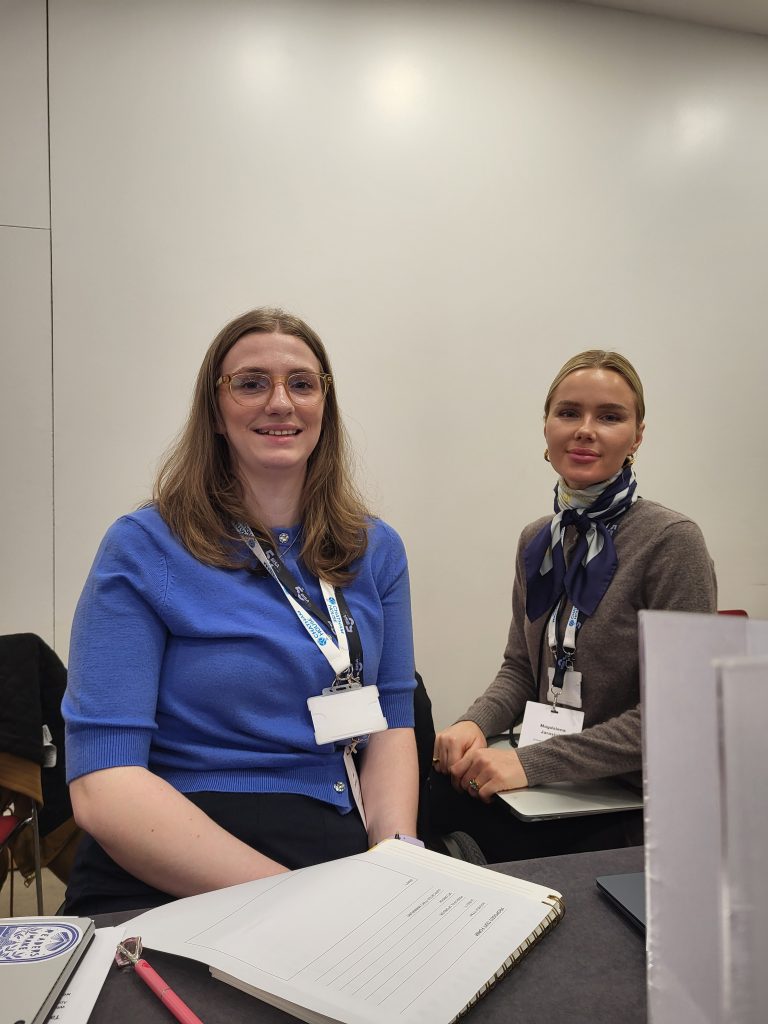
As the day progressed, the room quickly filled with the energy of negotiation. Delegates defended national positions, proposed new compromises, and worked to bring other countries on board. Some discussions moved forward quickly, while others stalled as competing interests collided.
For many students, it was the first time experiencing the pace, pressure, and unpredictability of international diplomacy.
Perci Orasio, Global Development MA, who represented Bhutan, reflected on the complexity of the process:
“The experience helped me understand the pace and pressure of diplomatic negotiations, and the reality that no single solution fits all. What stood out most was how ongoing dialogue fosters genuine understanding: listening to other states’ priorities, recalibrating our own, and recognising how climate finance debates unfold in practice. Representing the Kingdom of Bhutan was a privilege. Even as a small state, it was encouraging to have our voice taken seriously and our climate finance proposal thoughtfully considered. It was an intense but deeply worthwhile experience, one that has strengthened both my confidence and my understanding of multilateral climate diplomacy.”
Ryia Modi, International Relations MA, agreed:
“Taking part in the Chatham House climate negotiation simulation was an enriching experience. Representing Bhutan, a small country with a powerful climate story, taught me more about diplomacy, strategy, and global responsibility than any classroom ever could. I loved the challenge of speaking for a nation whose moral authority often outweighs its size, and it was incredibly rewarding to see our proactive stance recognised by other delegates. By the end, several participants told us they admired how confidently and consistently we defended Bhutan’s position, a proud moment I will definitely carry forward. The entire simulation was equal parts intense, insightful, and unexpectedly fun, and it gave me a deeper appreciation for the complexity and human element behind international climate politics. I walked away with sharper skills, new perspectives, and a renewed sense of why this work matters.”
Through the experience, students strengthened practical skills in negotiation, public speaking, collaboration, and strategic thinking, all within an environment that closely reflects real diplomatic settings.
Seeing global politics from the inside
For International Relations and Security MA student, Egle Magdalena Jarasiute, representing Norway changed the way she thinks about international cooperation:
“Representing Norway showed me how difficult it is to balance ambition, national interests and fairness toward vulnerable states. It gave me a deeper, more human understanding of how hard international climate cooperation really is.”
Experiences like this are a key part of studying Politics and International Relations at Westminster. They allow students to move beyond theory and explore how global politics actually works in practice. Because sometimes the best way to understand international diplomacy is not just to study it, but to step into the negotiation room yourself.
About Westminster
As one of the most diverse universities in the UK, we are a global university with London energy, with more than 19,000 students from 169 countries. To find out more about our Politics and International Relations courses, visit our website.