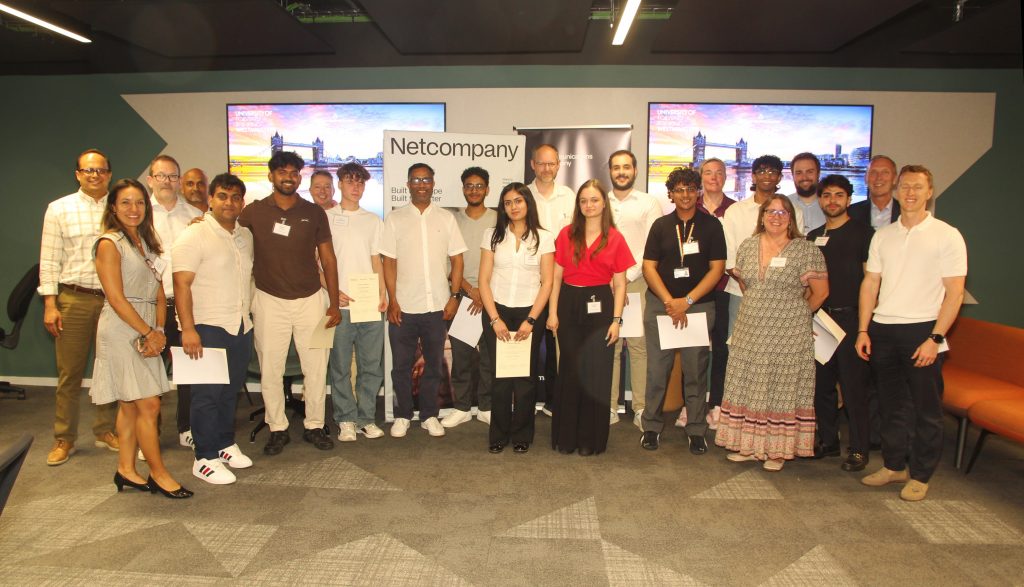
Bringing together creativity, technology and industry expertise, this year’s Computer Science and Engineering Final Year Project (FYP) Showcase celebrated the exceptional achievements of our graduating students. In partnership with IT services company Netcompany, the annual event provided a platform for students to showcase their original technology-based solutions, developed throughout their final year. Their projects explored ways to address real-world challenges, with students presenting their ideas to industry professionals from Netcompany and Smart DCC. Now in its fifth year, the showcase highlights the breadth of talent across the School and gives students the opportunity to gain valuable industry insight, receive expert feedback and showcase projects with real-world applications.
From more than 400 final-year project submissions across the School, ten outstanding projects were selected to be showcased. The finalists were recognised for their achievements and invited to present their work to a panel of industry experts. All ten students received prizes ranging from £100 to £1,000 in addition to competition categories for 1st, 2nd, 3rd and Social Impact prizes.
This blog series will highlight some of the finalist projects, sharing their experiences of developing their ideas, presenting their work to industry professionals and reflecting on their journey studying at Westminster.
We spoke to Cyber Security and Forensics BSc student Vishesh, one of this year’s finalists, about his final year project, his Westminster experience and career ambitions.
Could you tell me a bit about your course and what aspects have you particularly enjoyed?
I’m studying the Cyber Security and Forensics BSc and one of the things I’ve enjoyed most is how practical the course has been. We’ve had the chance to work with industry-standard tools, investigate digital evidence, carry out security testing and tackle realistic scenarios rather than just learning theory.
I’ve especially enjoyed the digital forensics side of the course because I love the investigative aspect of it. Piecing together evidence and understanding what happened from digital traces are something I find genuinely fascinating. The course has also introduced me to areas such as wireless security, cryptography and incident response, which have broadened my interests even further.
Could you share some of the skills you have developed during the course and how these skills have prepared you for your final project and future career?
Throughout the course, I’ve developed both technical and professional skills. From a practical perspective, I’ve gained experience using forensic tools, analysing network traffic, writing Python scripts and working with cybersecurity concepts in hands-on labs.
I’ve also worked on several group projects, which taught me how to collaborate effectively, divide responsibilities and communicate clearly when working towards a shared goal.
Presentation opportunities have improved my confidence as well. I used to be quite shy about public speaking, but now I’m much more comfortable explaining technical ideas to different audiences. Time management has probably been one of the biggest lessons. Balancing coursework alongside part-time roles at the university meant I had to plan my time carefully and stay organised.
All of these experiences helped me approach my final project in a structured way and have prepared me well for a future career in cybersecurity and digital forensics.
Could you share some details about your final project? What inspired this project?
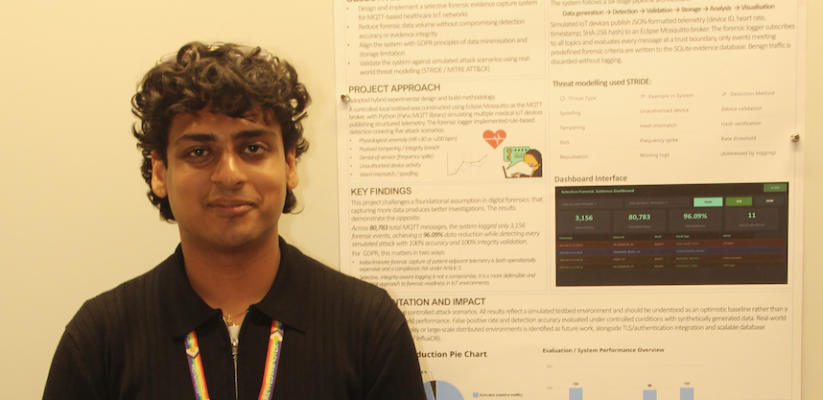
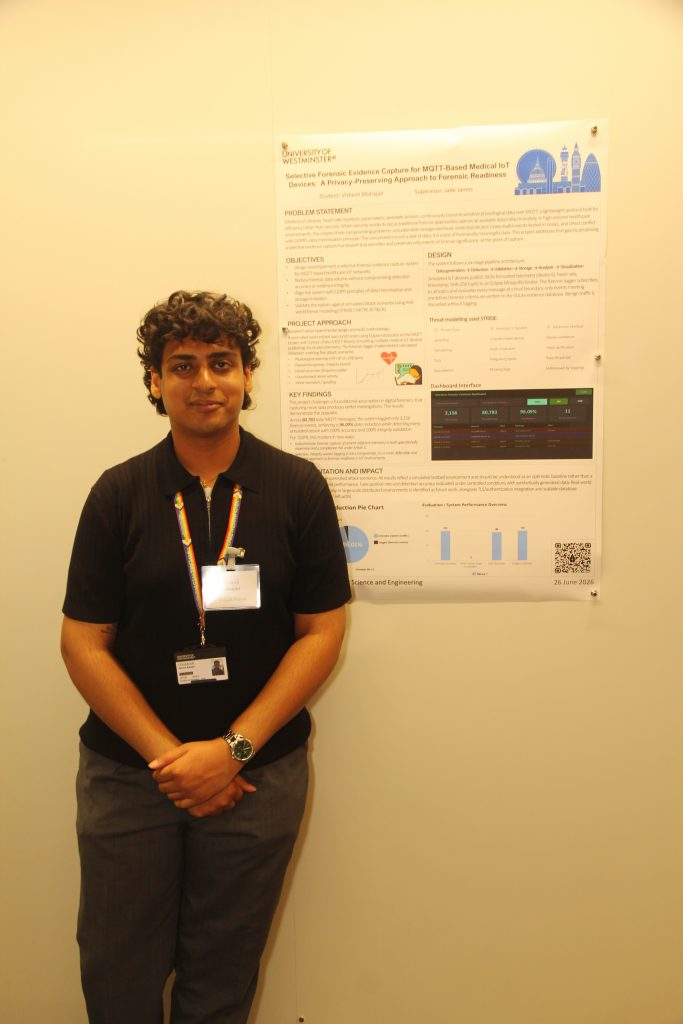
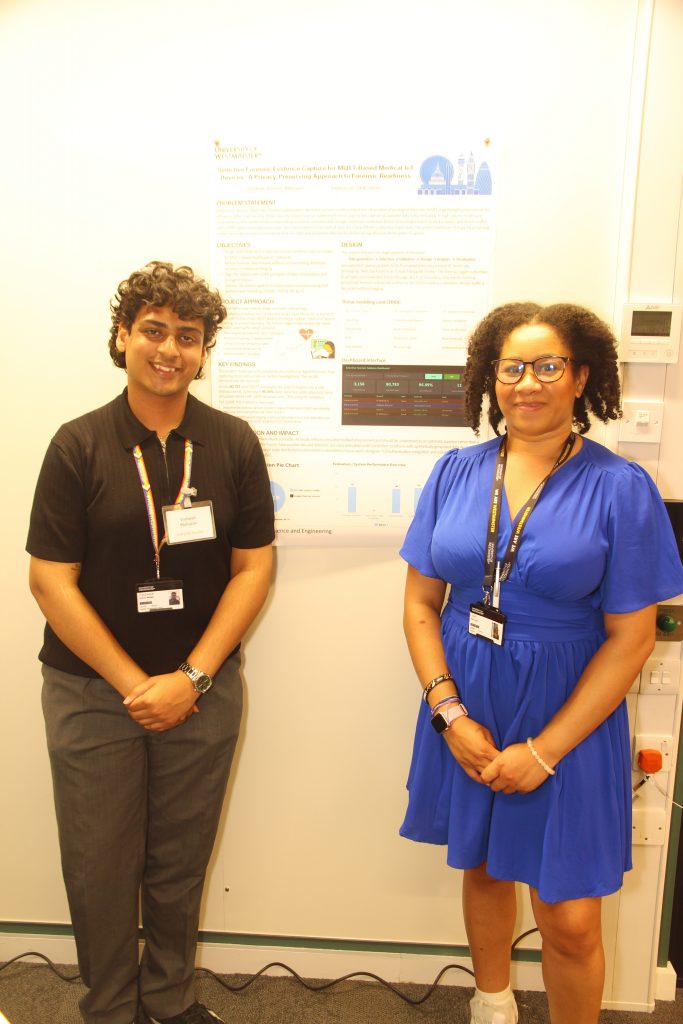
My final project focuses on improving forensic readiness for MQTT-based medical IoT devices through selective evidence capture. In simple terms, instead of logging everything a medical device does, my system only preserves digital evidence when suspicious activity is detected, helping balance forensic investigations with patient privacy.
The inspiration came from my interest in both healthcare and digital forensics. As healthcare systems become more connected, protecting patient data while ensuring investigators have access to reliable evidence is becoming increasingly important. I wanted to explore whether those two priorities could coexist rather than conflict with each other.
Building the project involved working with MQTT communication, Python, databases, hashing techniques and designing detection logic that automatically captures relevant forensic artefacts.
How does it feel to present your project to industry professionals?
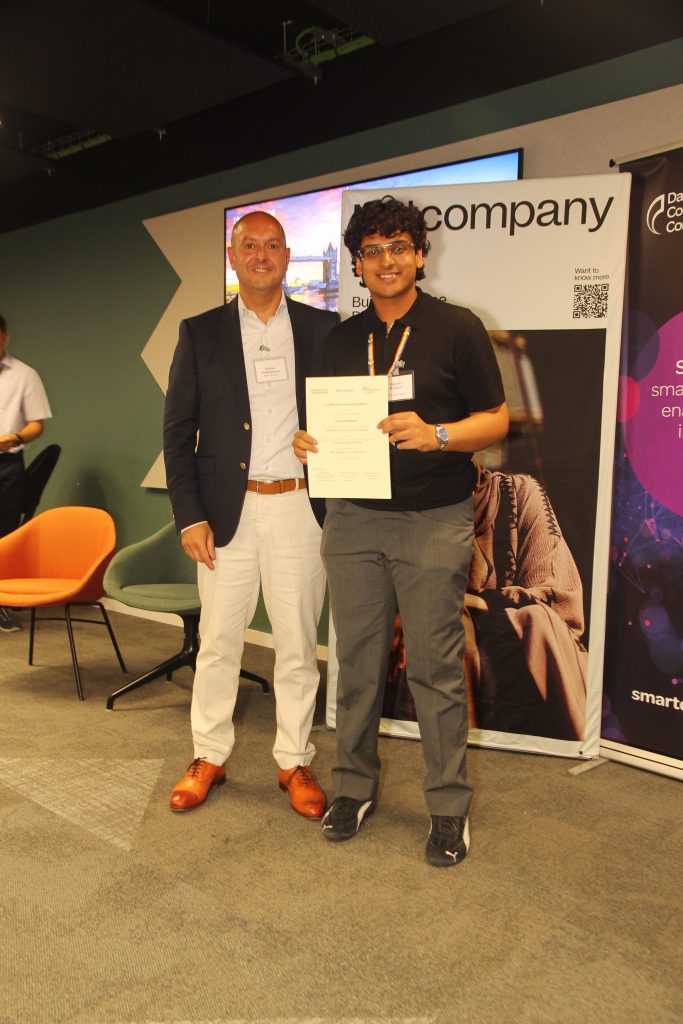
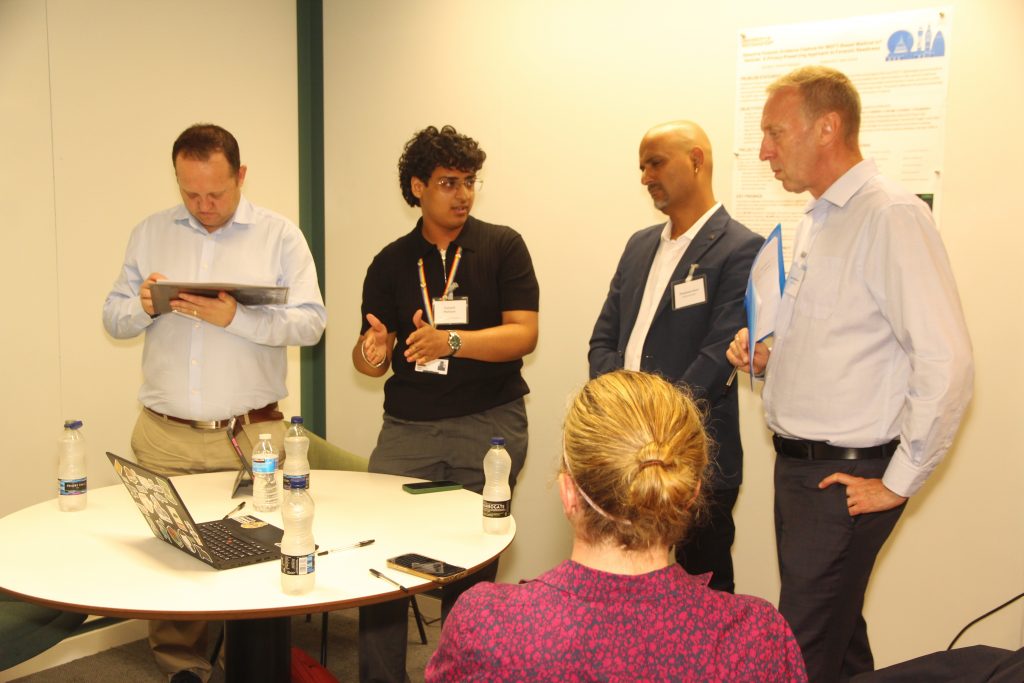
It’s exciting and a little nerve-racking as well. It’s a great opportunity to share something I’ve spent months working on with people who have real industry experience.
What I’m looking forward to most is hearing their perspectives and feedback. As students, we spend a lot of time developing ideas in an academic environment, so being able to discuss them with professionals is incredibly valuable. It’s also a reminder that the work we’re doing can have real-world applications beyond the classroom.
What are your career aspirations and how do you think your course has prepared you to help achieve this?
I’m hoping to build a career in cybersecurity with a particular focus on digital forensics and incident response. I’m passionate about understanding how cyber incidents happen, uncovering digital evidence and ultimately helping protect people and organisations.
The course has given me a strong technical foundation while also encouraging critical thinking and problem-solving. Beyond the technical knowledge, it’s taught me how to communicate findings, work under pressure and approach challenges methodically, all of which are skills that are essential in the industry.
What has been the highlight of your time studying at Westminster?
For me, the biggest highlight has been the opportunities beyond the classroom. Alongside my studies, I’ve been able to work in different roles across the university, get involved with initiatives like Westminster Working Cultures, meet professionals from a wide range of industries and build friendships with people from all over the world.
Academically, having my final year project shortlisted for the showcase has been incredibly rewarding, but more broadly, Westminster has helped me grow as a person. I arrived as someone who was quiet and unsure of myself, and I’m leaving with far more confidence, a stronger sense of direction and experiences that I’ll genuinely carry with me into my career.
Empowering Students Through Industry Engagement
Huseyin Dagdeviren, Senior Lecturer and Director of Employability in Computer Science and Engineering, shared:
“The Final Year Project Showcase continues to be a fantastic opportunity to celebrate the creativity, technical expertise and dedication of our students. Now in its fifth year, our partnership with Netcompany, alongside the involvement of Smart DCC, has allowed us to strengthen the connection between academia and industry, giving our students the opportunity to showcase their work, receive valuable feedback and build confidence in presenting their ideas to professionals.
The quality and diversity of this year’s projects demonstrate the incredible talent within our School and the ability of our students to apply their learning to address real-world challenges. These experiences are an important part of preparing our graduates for successful careers in the technology sector.”
Mariella Chapman, Supplier Relationship Manager at Smart DCC shared:
“The DCC team found the projects incredibly interesting and were genuinely inspired by the level of talent across the University. It was a real privilege to be part of the day, and we look forward to continuing to build on this through future collaboration and co-creation with Westminster.”
Graham Robinson, Chief Technology Officer at Smart DCC and judge at the event commented:
“It was inspiring to see the creativity, innovation and technical excellence on display, with students consistently focusing on how their ideas could deliver real value for end users.”
The showcase reflects Westminster’s strong commitment to employability and real-world learning, providing students with opportunities to develop industry connections, gain professional experience and graduate as confident, skilled contributors in the ever-evolving technology sector.
About Westminster As one of the most diverse universities in the UK, we are a global university with London energy, with more than 19,000 students from 169 countries. Visit our website to find out more about our Computer Science and Engineering courses.
