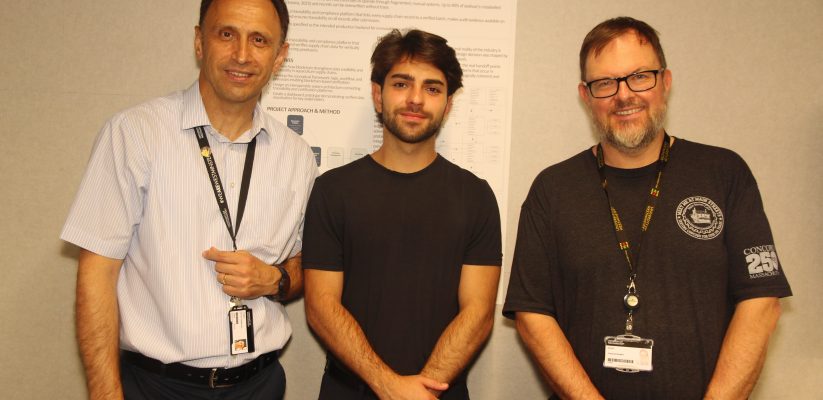
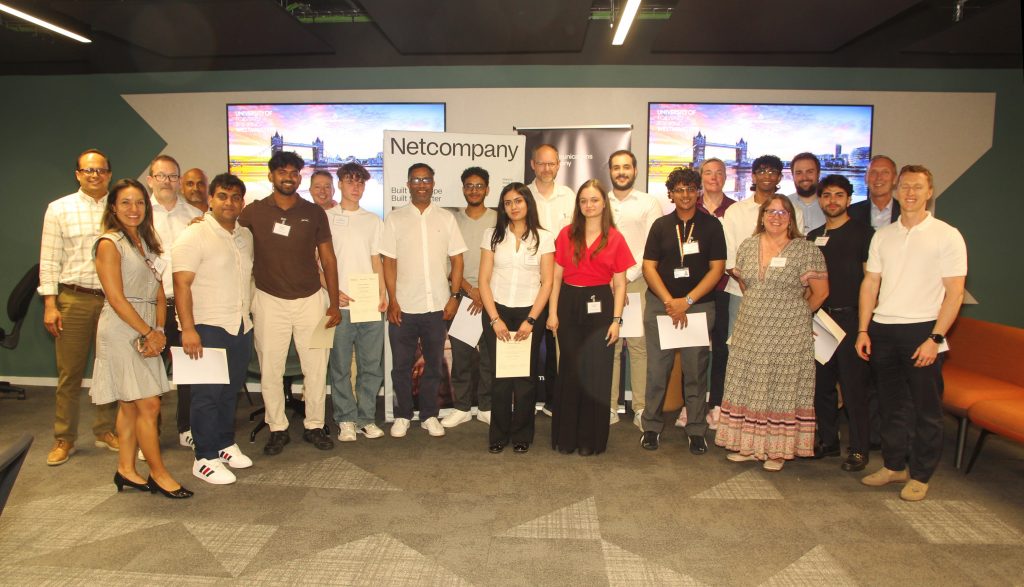
Bringing together creativity, technology and industry expertise, this year’s Computer Science and Engineering Final Year Project (FYP) Showcase celebrated the exceptional achievements of our graduating students. In partnership with leading IT services company Netcompany, the annual event provided a platform for students to demonstrate the innovative solutions they have developed throughout their final year to industry professionals from Netcompany and Smart DCC.
Now in its fifth year, the showcase highlights the breadth of talent across the School and gives students the opportunity to gain valuable industry insight, receive expert feedback and showcase projects with real-world applications.
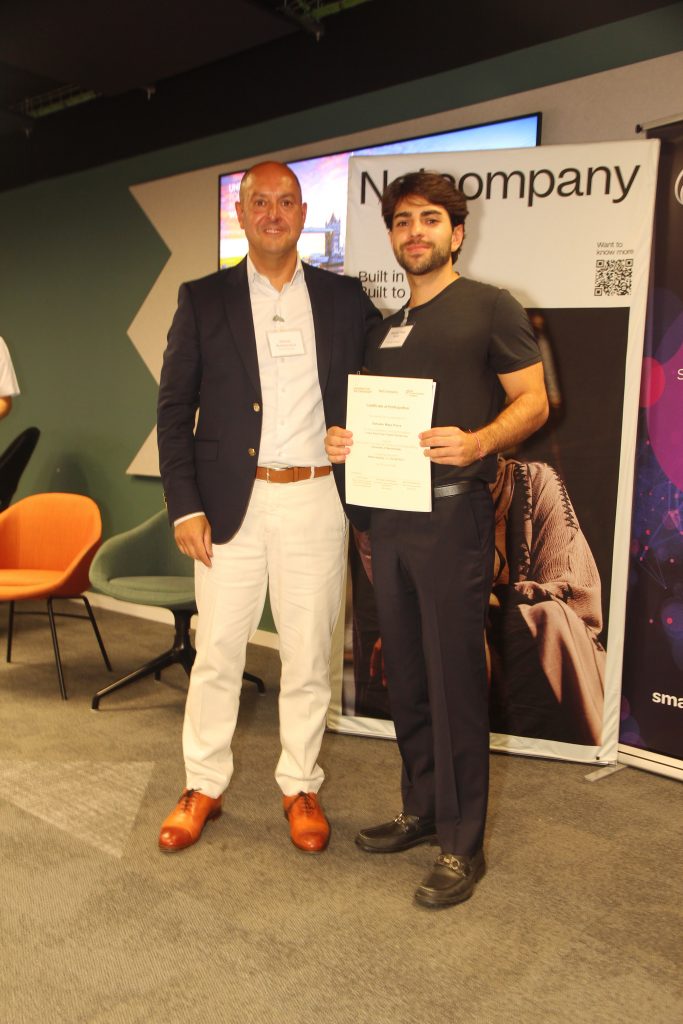
From more than 400 final-year project submissions across the School, ten outstanding projects were selected to be showcased. The finalists were recognised for their achievements and invited to present their work to a panel of industry experts. All ten students received prizes ranging from £100 to £1,000 in addition to competition categories for 1st, 2nd, 3rd and Social Impact prizes.
This blog series will highlight some of the finalist projects, sharing their experiences of developing their ideas, presenting their work to industry professionals and reflecting on their journey studying at Westminster.
We spoke to Business Computing BSc student Salvador, about his final year project, his Westminster experience and career ambitions.
Could you tell me a bit about your course and what aspects you have particularly enjoyed?
I am studying Business Information Systems BSc now the Business Computing BSc, and what I have enjoyed most is how the course was designed as a complete, interconnected experience rather than a set of isolated subjects. Every module felt like a piece of a larger puzzle, covering everything from project management and business strategy to systems analysis and design. By the time you reach the final year, you realise that the course has equipped you with a full, practical toolkit for navigating the different layers of how business and technology work together. That intentional design is something I genuinely appreciated.
Could you share some of the skills you have developed during the course?
The skill I feel most confident about leaving this course with is the ability to manage complex projects with multiple moving parts. This was not something taught in a single module, but something reinforced continuously through project-based coursework across the full three years. Delivering project after project, each with its own scope, methodologies, frameworks, and deadlines, built habits of organisation, prioritisation, and time management that I now apply instinctively. That kind of repeated practical exposure is something no lecture alone can provide.
Could you share some details about your final project and what inspired it?
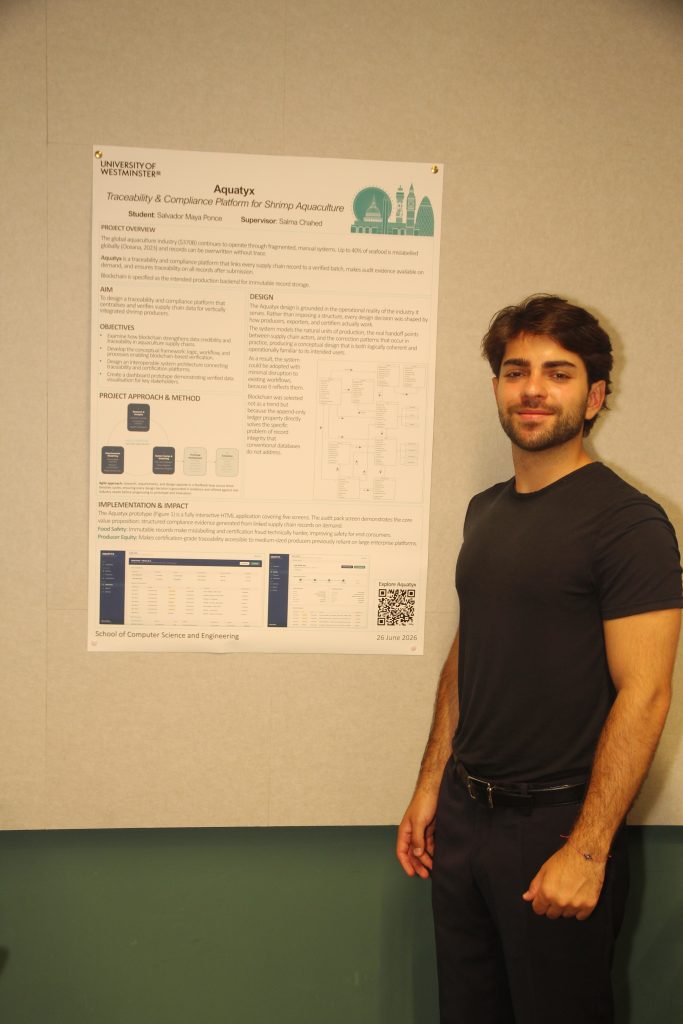
My final project is called Aquatyx, a conceptual traceability and compliance platform designed for the shrimp aquaculture industry. The idea was inspired by my background in agrifood trade. I noticed that, despite being a multi-billion-dollar global industry supplying more than half of the world’s seafood, aquaculture still relies heavily on manual processes, spreadsheets, and disconnected record-keeping. This creates significant challenges for producers trying to meet international certification standards and for buyers seeking to verify the origin, quality, and safety of seafood products.
Aquatyx addresses these challenges by proposing a platform that links every production record to a verified batch from hatchery to export, provides audit-ready evidence on demand, and enables producers to securely share verified traceability data with wholesale buyers. The project combines a comprehensive UML system design with an interactive prototype. What inspired me most was the opportunity to develop a solution grounded in real industry practices, ensuring every design decision reflects how producers operate, rather than how an idealised system might work in theory.
How does it feel to present your project to industry professionals?
Honestly, it is the part I am most looking forward to. My project targets a real pain point in a real industry, so presenting it to professionals who understand the commercial and technical landscape is genuinely exciting. I want to hear their perspective, their questions, and their honest reaction to a proposal that came out of a student project but was designed with industry reality in mind. That kind of exposure and conversation is exactly what makes a showcase like this valuable.
What are your career aspirations and how has the course prepared you?
I currently run an agrifood trade business and my immediate focus is on growing that until it reaches a stable foundation. At the same time, I want to remain connected to the technology world. The course has given me the ability to think across both domains, to understand a business problem deeply and to think through how a system could address it. That combination is exactly what I need for where I am headed, and it is not something I could have developed without a course that took both sides seriously.
What has been the highlight of your time at Westminster?
Being in London as an international student, and specifically at Westminster. The University’s location puts you in the centre of one of the most connected, and opportunity-rich cities in the world. The people you meet, the conversations you have, and the experiences you access because you are in London are things that simply cannot happen anywhere else. Westminster gave me the academic foundation and London gave me everything around it. That combination has been the highlight.
Empowering Students Through Industry Engagement
Huseyin Dagdeviren, Senior Lecturer and Director of Employability in Computer Science and Engineering, shared:
“The Final Year Project Showcase continues to be a fantastic opportunity to celebrate the creativity, technical expertise and dedication of our students. Now in its fifth year, our partnership with Netcompany, alongside the involvement of Smart DCC, has allowed us to strengthen the connection between academia and industry, giving our students the opportunity to showcase their work, receive valuable feedback and build confidence in presenting their ideas to professionals.
The quality and diversity of this year’s projects demonstrate the incredible talent within our School and the ability of our students to apply their learning to address real-world challenges. These experiences are an important part of preparing our graduates for successful careers in the technology sector.”
Mariella Chapman, Supplier Relationship Manager at Smart DCC shared:
“The DCC team found the projects incredibly interesting and were genuinely inspired by the level of talent across the University. It was a real privilege to be part of the day, and we look forward to continuing to build on this through future collaboration and co-creation with Westminster.”
Graham Robinson, Chief Technology Officer at Smart DCC and judge at the event commented:
“It was inspiring to see the creativity, innovation and technical excellence on display, with students consistently focusing on how their ideas could deliver real value for end users.”
The showcase reflects Westminster’s strong commitment to employability and real-world learning, providing students with opportunities to develop industry connections, gain professional experience and graduate as confident, skilled contributors in the ever-evolving technology sector.
About Westminster
As one of the most diverse universities in the UK, we are a global university with London energy, with more than 19,000 students from 169 countries. Visit our website to find out more about our Computer Science and Engineering courses.
