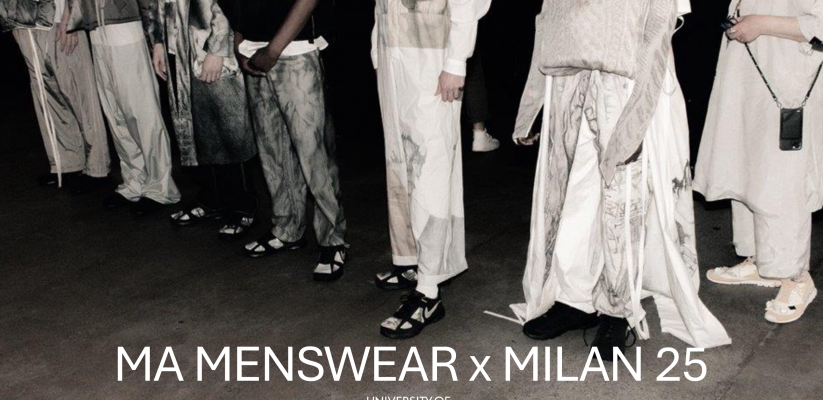
Our Menswear MA and MFA courses made a bold international statement this season with its annual degree show in Milan, one of the world’s most influential fashion capitals. Building on the momentum of previous showcases at London Fashion Week and Paris Showrooms, the Milan presentation served as a major platform for the next generation of menswear designers. Over the course of three days, students presented their final collections, portfolios, and research as part of Milan Men’s Fashion Week.
Presented within a curated showroom space, the exhibition offered an immersive look at the students’ collections through physical garments, fashion films, and dynamic runway projections. Alongside the student work, the space hosted a series of talks and conversations with designers, journalists, archivists, and industry professionals. The program also featured salon-style showcases, model appointments, and private meetings with key industry figures, all aimed at fostering meaningful connections between the graduates and the fashion industry.
We caught up with two students who exhibited their collections, to hear more about their experience in Milan and studying at Westminster.
Can you tell us about your final collection?
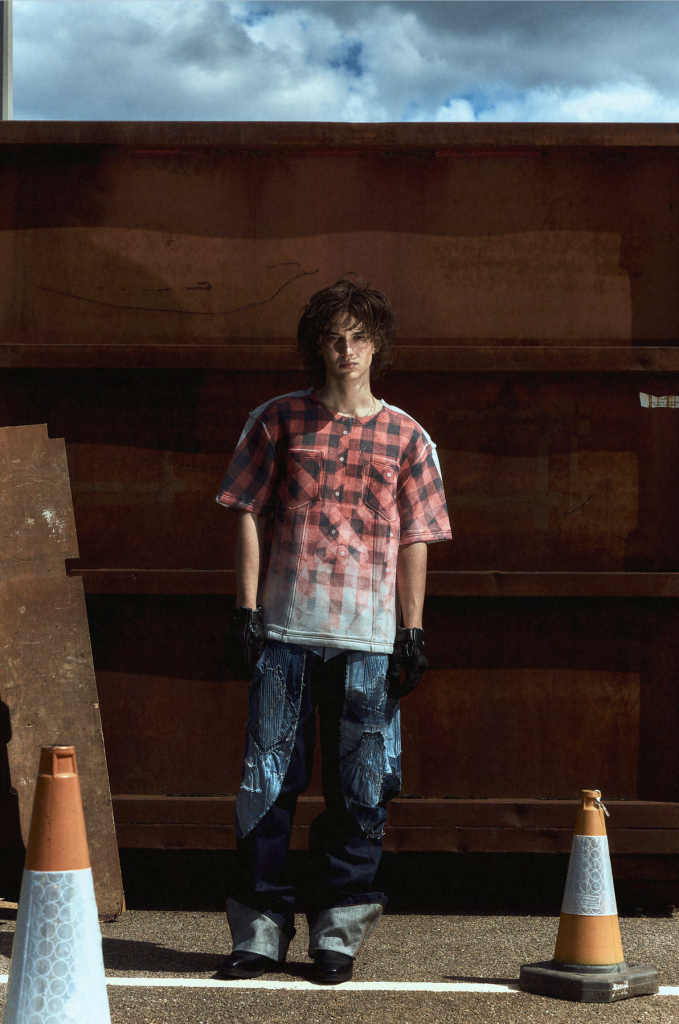
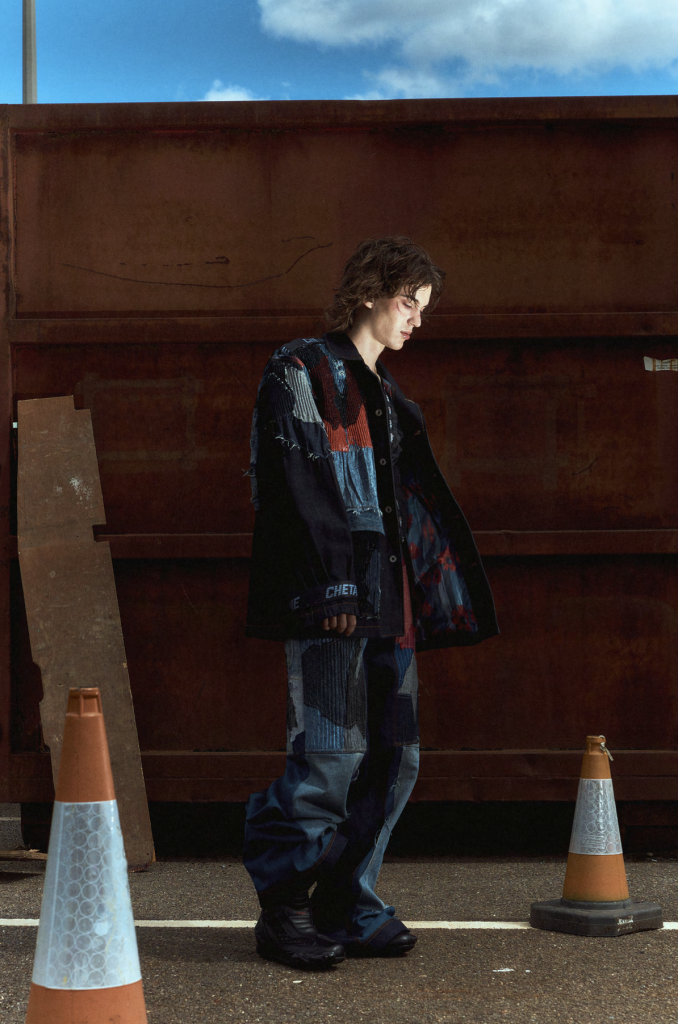
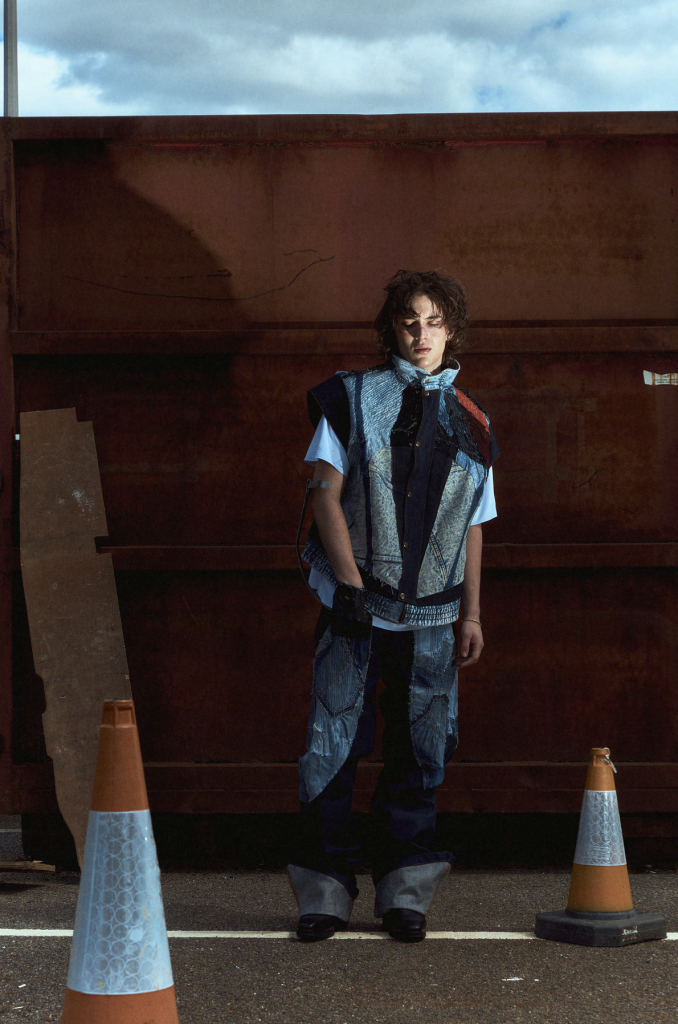
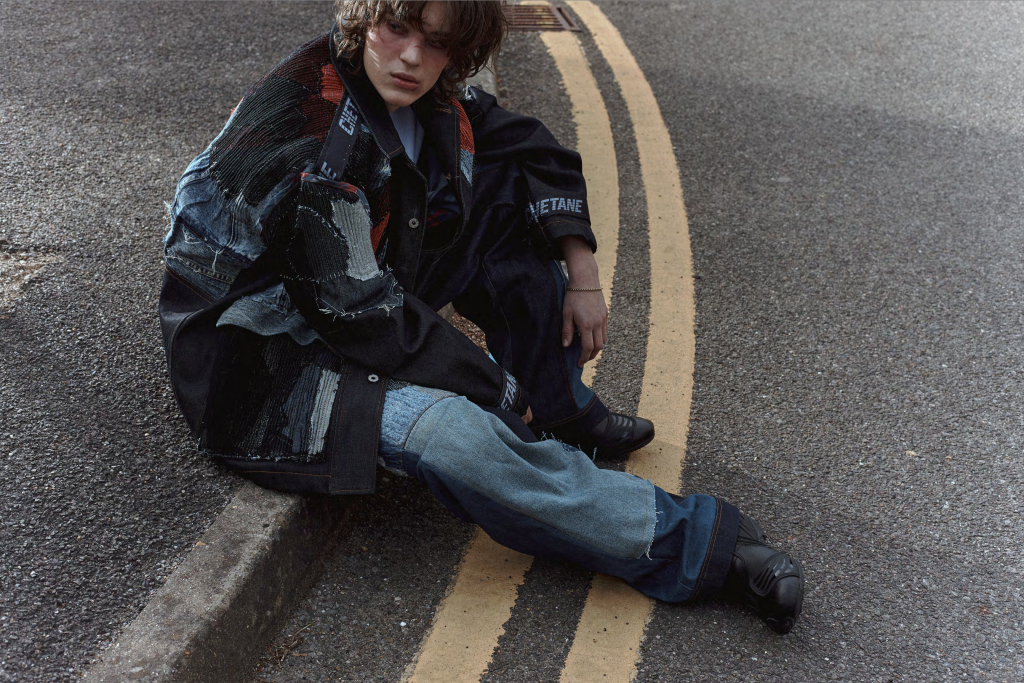
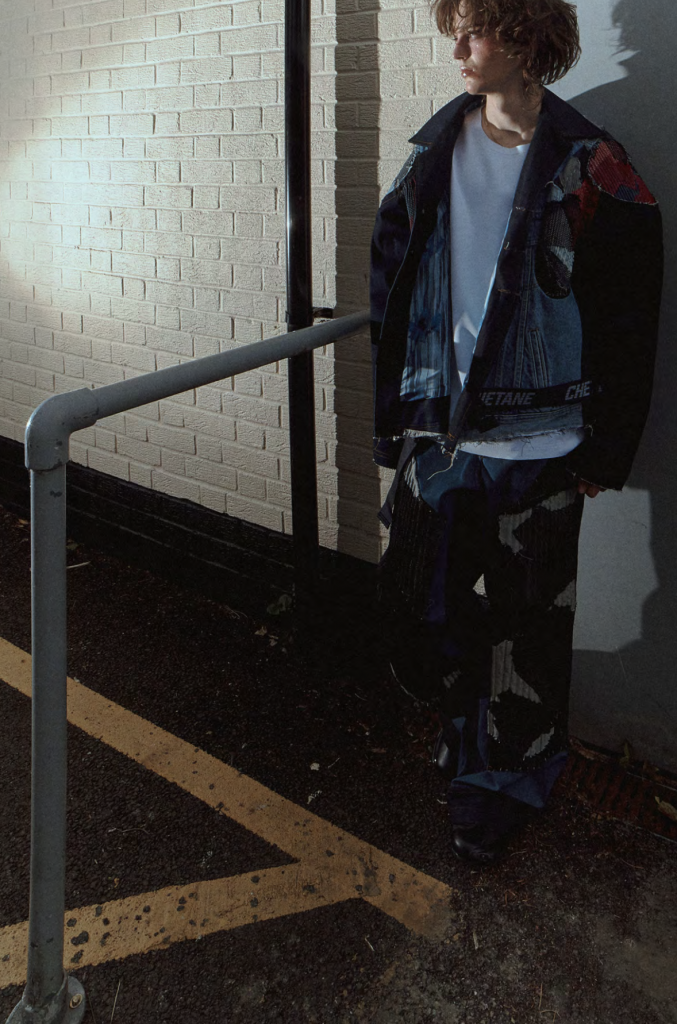
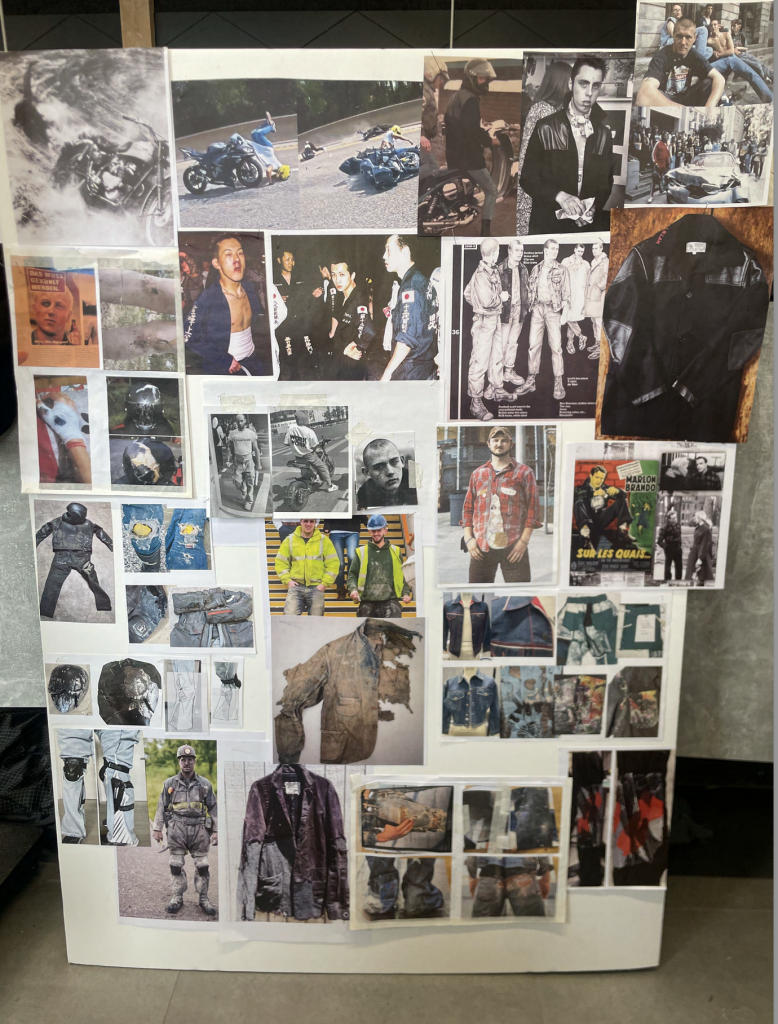
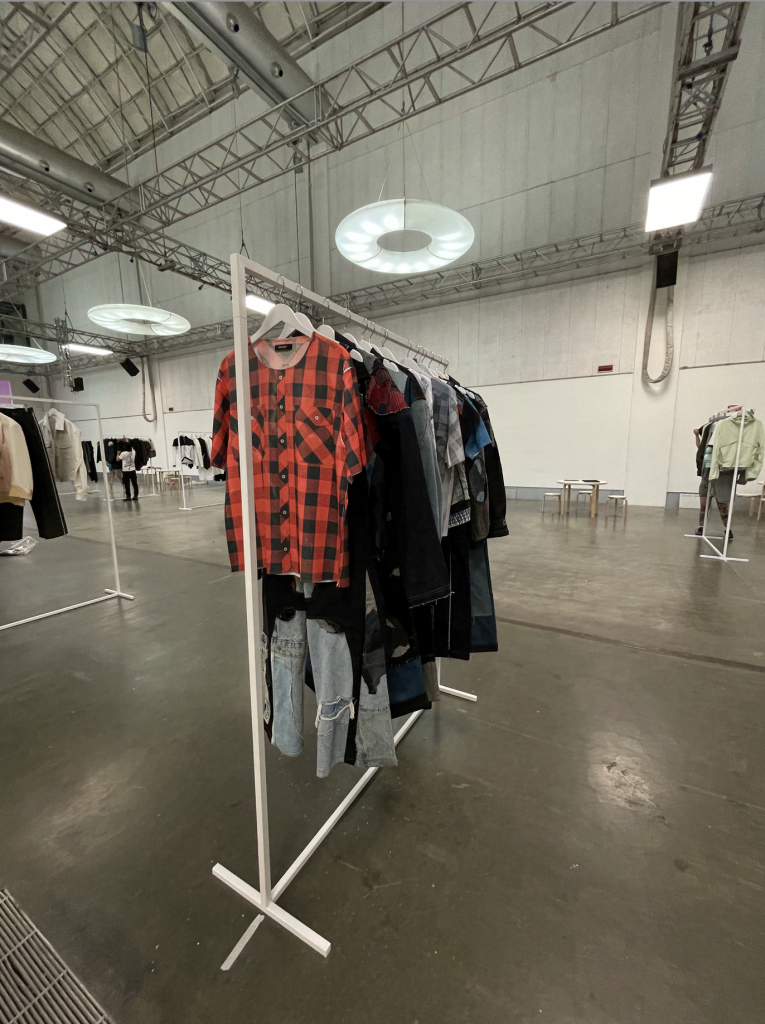
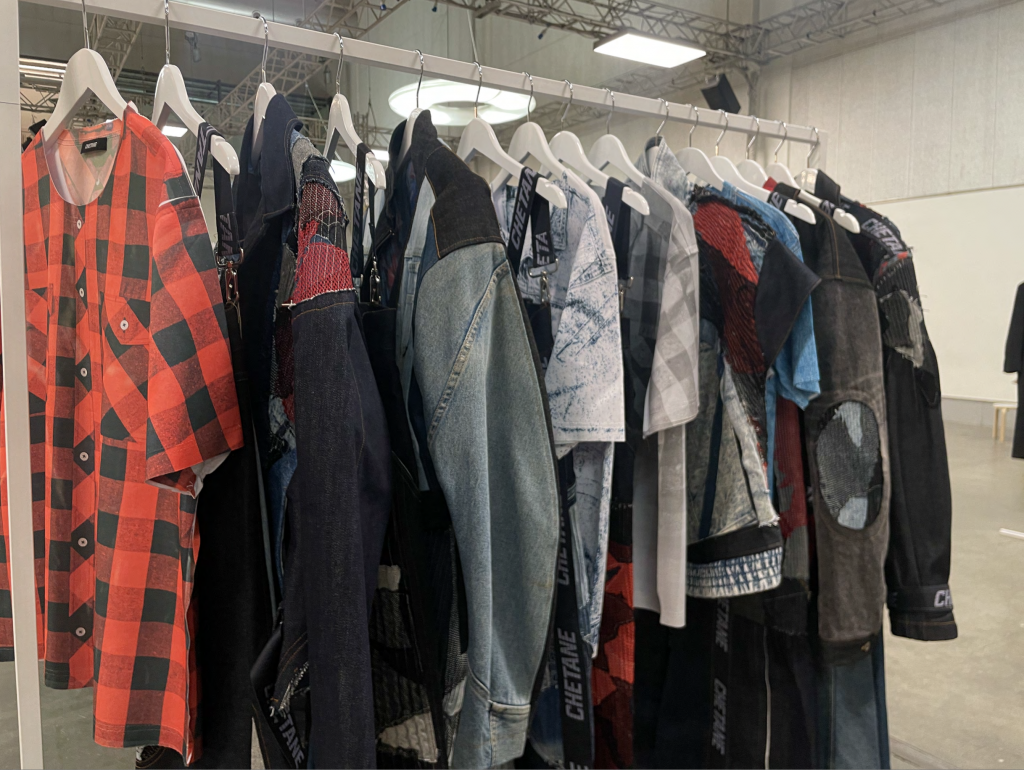
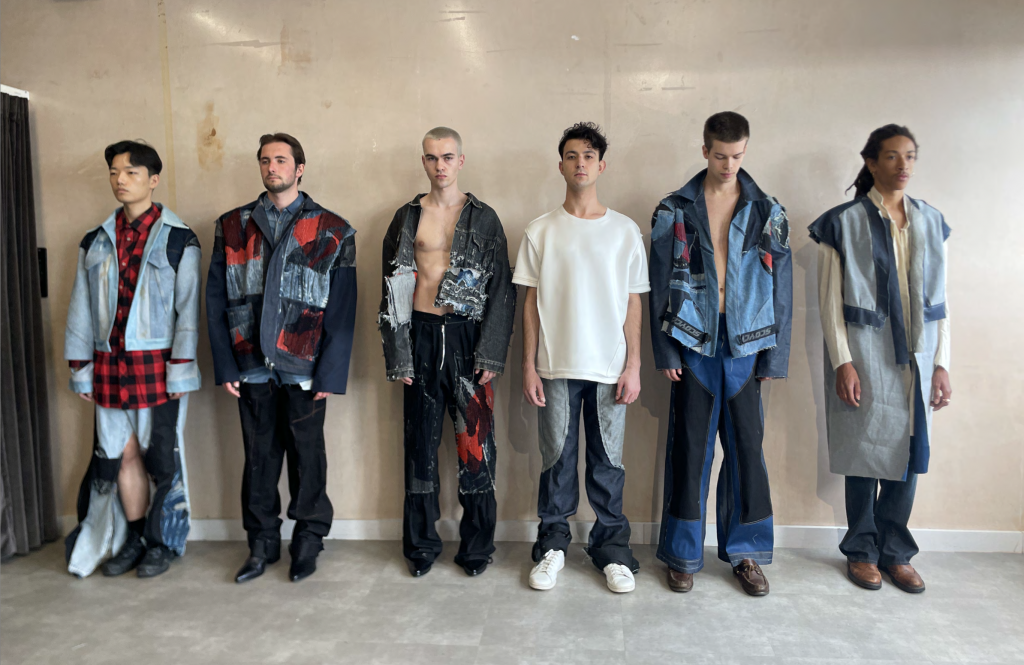
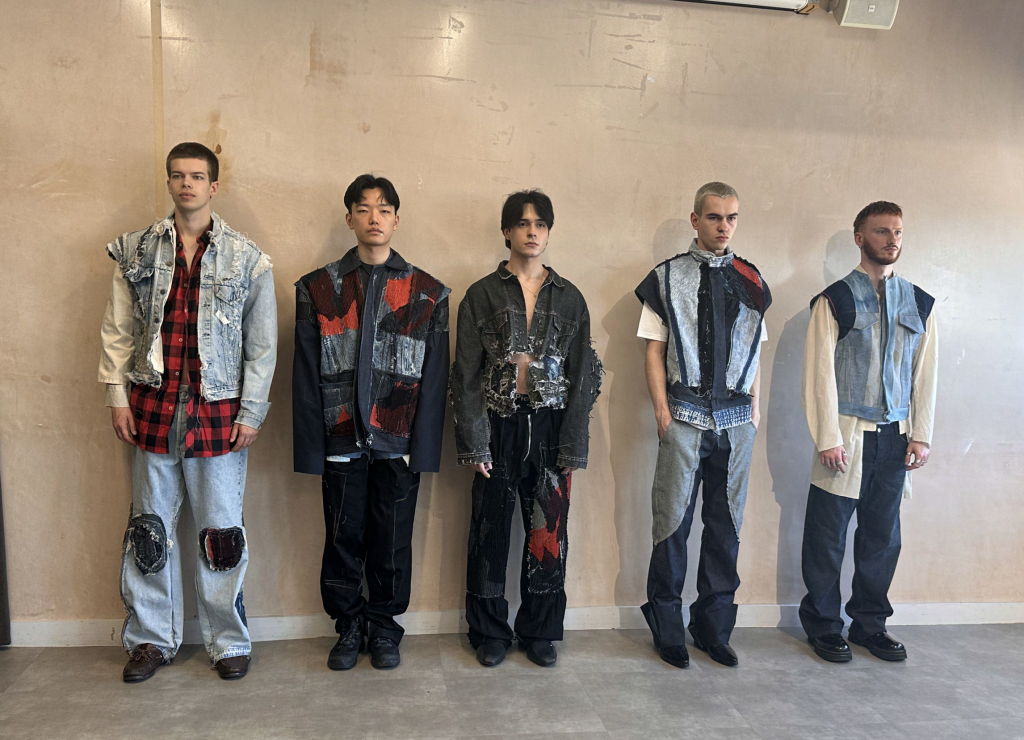
Chetane: My final collection, After Crash, explores the contradictions of masculinity in contemporary youth through themes of destruction, vulnerability, and physical distortion. Inspired by working-class youth, vehicle wreckage, and the emotional intensity of collision, the project visualises internal conflict and fragile defence mechanisms built under social pressure.
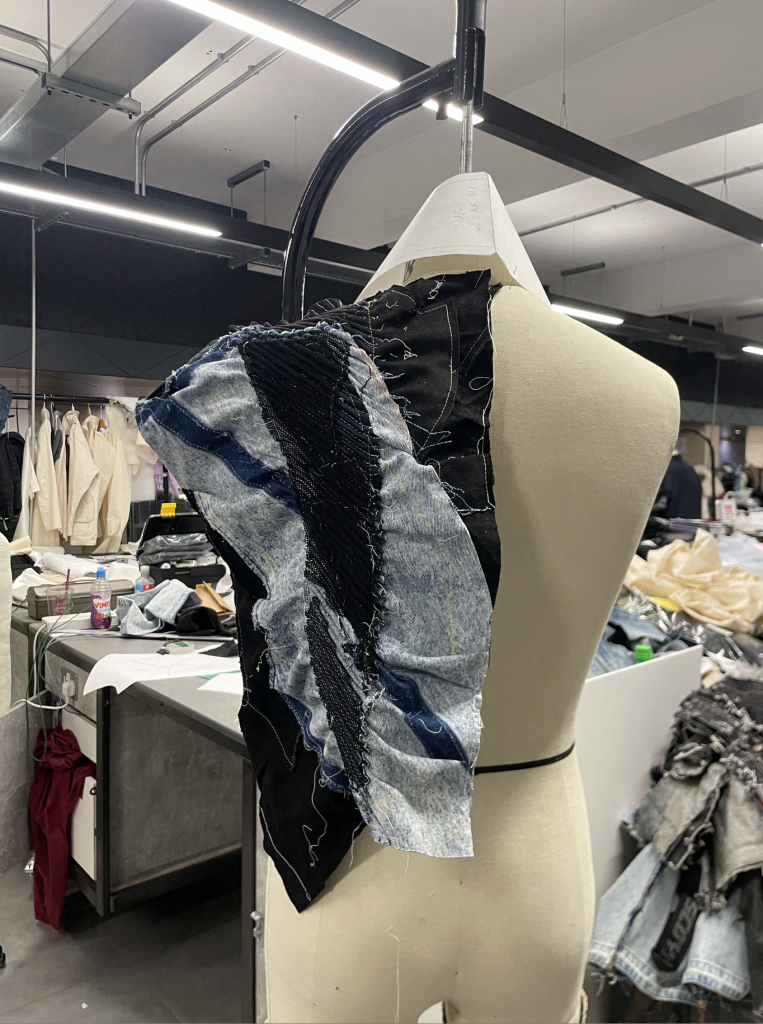
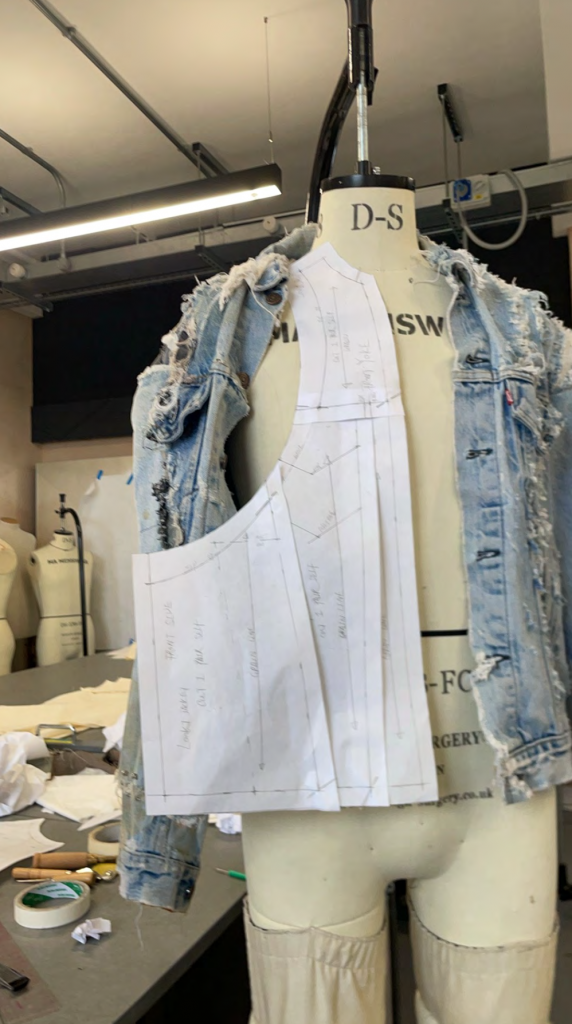
The garments combine recycled and raw denim to create tension between unstable structure and surface compression. Drawing from the elastic panel structures of motorbike clothing, I manipulated fabric to construct broken, armour-like silhouettes. These forms reflect how young people, especially men, often present toughness while suppressing confusion, anxiety, and fragility.
The project was shaped by my ongoing interest in how identity and masculinity are formed and challenged in contemporary society. My personal experience growing up between rural and urban China and later studying abroad has influenced the way I observe and reflect on these issues. While not the direct inspiration, this background has informed the questions I wanted to explore through the collection.
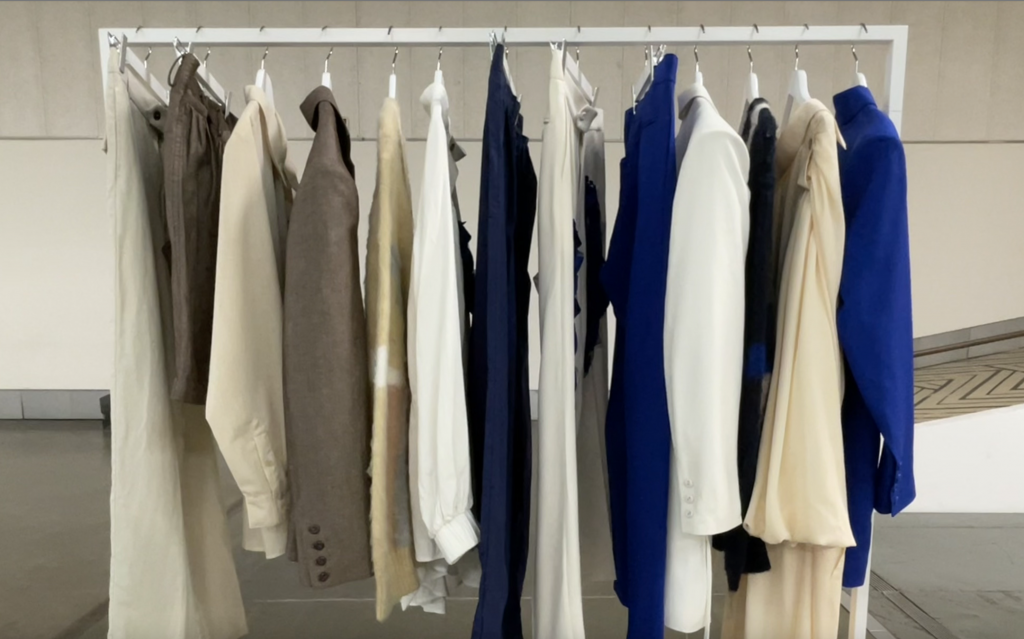
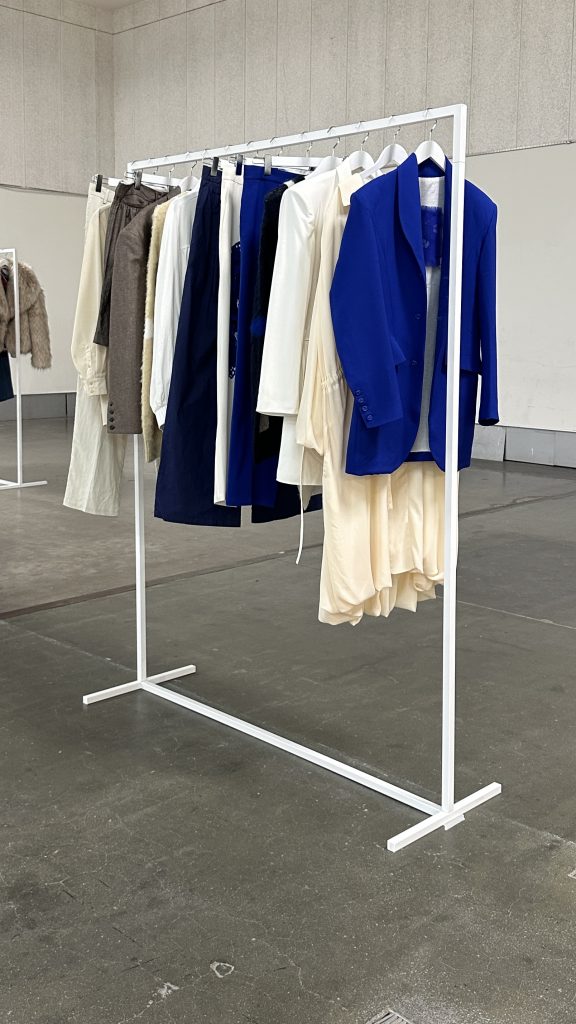
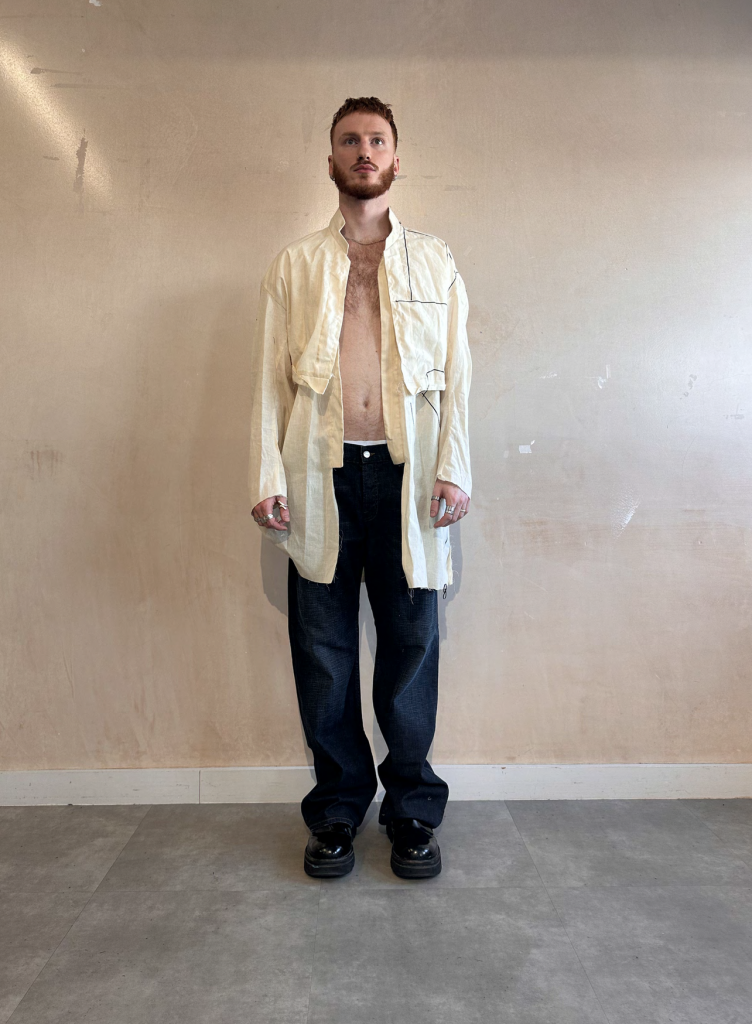
Zoey: My final collection is called What Artists Wear, inspired by my observation and research on the everyday clothing of artists. I chose a few iconic artists: Francis Bacon, Agnes Martin, and Yves Klein to explore the intimate relationship between clothing and the body. The project references Charlie Porter’s book of the same name and looks at themes such as function, memory, and daily rituals.
By combining traditional tailoring with the spirit of contemporary artists, I aimed to create garments that reflect a minimalist and structured design language. The collection is a tribute to those who “live for creation”, expressing a quiet yet resilient kind of masculinity.
What inspired your creative thinking and work towards your final collection?
Chetane: My final collection was shaped by a deeply personal journey of exploration during my two years at Westminster. Through continuous reflection and support from my tutors, I began to understand my background, creative interests, and design language more clearly. I became particularly interested in themes of youth identity, masculinity, and the tension between expression and suppression—ideas that felt both personal and socially relevant. These reflections naturally led me to focus on night-time motorbike racing culture, something deeply connected to the environment I grew up in.
At first, the project was overloaded with ideas and emotionally dense, making it hard for others to fully grasp what I was trying to say. My tutors helped me see the importance of clarity, encouraging me to simplify the narrative without losing its meaning. I started to ground my concept in a broader social and menswear context, using materials like denim and distressed workwear to express themes of pressure, restraint, and vulnerability. The design process became a way to externalise internal conflict through visible construction and fragmentation. This wasn’t about one big breakthrough, it was a gradual transformation through weekly feedback and self-reflection, helping me find a visual voice that’s both honest and communicative.
Zoey: For me, personal experience and long-term interests are always the best sources of inspiration. Living in London gave me many memories and moments that stayed with me.
Within the course, several modules and tutors had a strong impact on my development. The most important one was the tailoring workshop. During that week, I gained a deep understanding of men’s suit construction and found myself truly drawn to tailoring, something I now hope to explore further in the future.
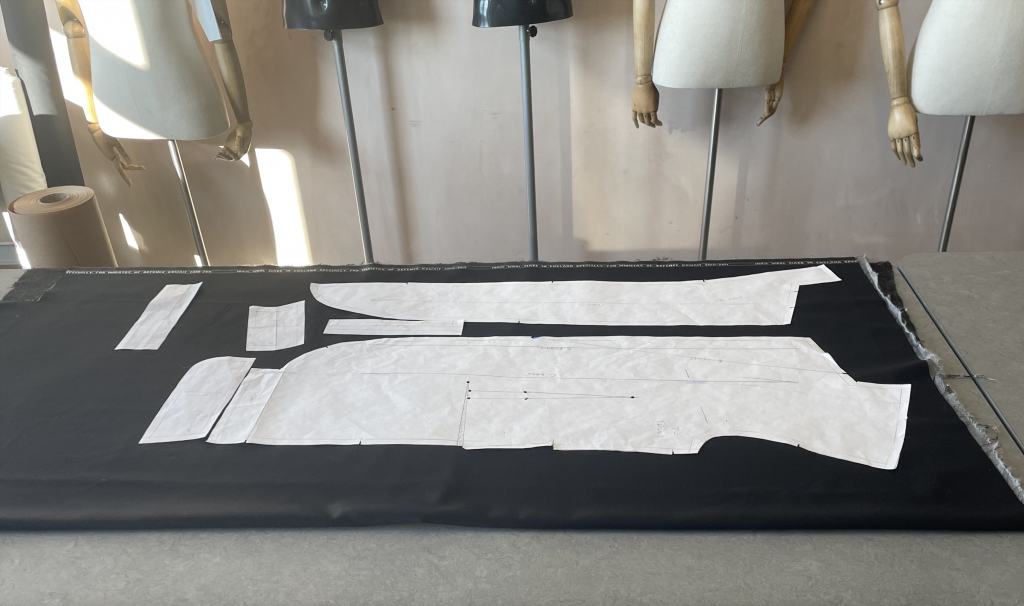
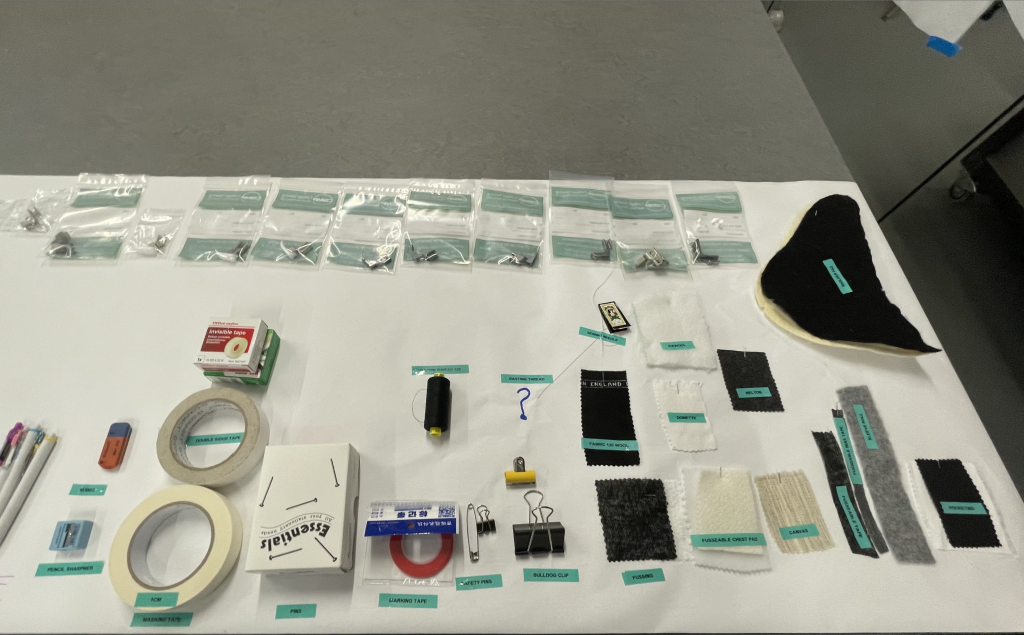
The Westminster Menswear Archive also gave me the chance to research silhouettes, structures, and details more closely, helping me build a more mature understanding of how clothing connects with art and narrative.
How did it feel to show at Men’s Fashion Week – Milan as a student?
Chetane Presenting my work at Men’s Fashion Week – Milan felt both surreal and deeply meaningful. Milan is one of the most respected and professional platforms for menswear globally and having the opportunity to show my collection there was incredibly exciting.
At the same time, I felt a lot of pressure and uncertainty. It was my first time showing on such a major stage, and I wasn’t sure how people outside would respond to my work. I questioned whether my ideas would be understood or appreciated in a different cultural context.
But once we arrived, everything came together. We had a beautiful space and a highly professional setup. It was inspiring and incredibly rewarding to see people from various backgrounds—both within and outside the fashion industry engage with our collections and share their thoughts.
This experience not only gave me more confidence in my work but also expanded my perspective on the fashion world. It made me feel more ready to enter the industry and more connected to the global design community.
Zoey: It was an incredibly exciting experience. It gave me a chance not only to present my work but also to step into the real fashion world, outside the classroom. I had the opportunity to talk to guests, clients, and media, it felt like a big step forward from being a student.
One of the most meaningful moments was seeing people wear my garments and feel comfortable in them. That is what matters most to me. I truly believe clothing can nurture people, not just visually, but physically and emotionally. This experience made me feel more connected to that belief than ever before.
What has been the highlight of your time at Westminster?
Chetane: The most meaningful highlight of my time at Westminster has been the constant push to grow both conceptually and professionally. The tutors were extremely demanding in the best way possible. They challenged me to question my assumptions, refine my ideas, and go much deeper into every detail of my work. This level of rigour helped me build a stronger foundation and become much more confident in my design identity.
But what shaped me just as much as the tutors was the atmosphere in the studio. The entire environment staff, technicians, students carried a clear sense of professionalism and forward momentum. Everyone around me was working with seriousness and intensity, fully committed to their practice. That energy created a kind of collective pressure, even when things felt overwhelming, it pushed me to operate at a higher standard. It was never easy, but it felt meaningful.
Another important part of the course was the Westminster Menswear Archive. Being able to physically study garments from different eras and brands gave me a deeper understanding of construction, proportion, and how menswear has evolved. It also helped me place my own work in relation to the wider history of the field.
Throughout the MFA, the school also brought in industry professionals to review our work and give feedback. These sessions were intense but eye-opening, and they helped me see my collection from new perspectives.
Looking back, what I’m most grateful for is that sense of seriousness both from the staff and from my peers. It created a space where pressure became productive. That’s rare, and it stays with you.
Zoey: One of the most valuable parts of my time at Westminster has been the support from tutors. They helped guide me through early research, encouraged me to build narrative through visuals and text, and always reminded me to return to the core of menswear: structure, proportion, and function.
The school also regularly invited industry professionals to give talks and workshops. One of the highlights was the collaboration with Alexander McQueen. It gave us the chance to work with real fabrics and receive direct feedback from the team, which helped me understand how the fashion industry works and what it expects from designers.
In addition, the open access to different studios, such as the 3D workshop and 2D print and embroidery spaces allowed us to experiment beyond our main discipline. I really appreciated the freedom to try new techniques and explore ideas outside of traditional menswear, which expanded my thinking and enriched the creative process.
What are your plans for the future?
Chetane: After graduation, my plan is to work in the industry while simultaneously developing my own brand. I want to gain firsthand experience of how fashion businesses operate, build professional connections, and grow as a designer within real-world systems—while also taking time to gradually shape and refine my personal vision. Eventually, once I feel ready and have built enough foundation, I hope to transition into focusing on my brand full-time.
Westminster has provided strong support in preparing us for life after the course. From building CVs and professional portfolios to offering interview training and application advice, the school helped me navigate the transition from study to work. We were also regularly encouraged to apply for competitions, internships, and job opportunities.
For those interested in starting their own brand, the tutors offered practical insights into pricing, branding, and business planning. During the course, we also had opportunities to collaborate with industry professionals and visit brands, which gave me a clearer understanding of how the fashion world operates. These experiences have been invaluable in shaping my career direction and mindset.
Zoey: I plan to stay in London and work for a brand I admire, either through an internship or full-time position. I want to be involved in the full design process and find ways to contribute meaningfully.
Westminster has been very supportive, from teaching us how to write CVs and create portfolios, to offering great resources and opportunities to connect with the industry. What I appreciate most is how the course is not only focused on creativity but also prepares us for real careers. It helped me think seriously about who I want to be as a designer, and how I want to grow.
About Westminster
As one of the most diverse universities in the UK, we are a global university with London energy, with more than 19,000 students from 169 countries. Visit our website to find out more about our Fashion courses.

- Architecture BA – Your Path to Becoming an Architect - March 5, 2026
- Creative Computing at Westminster: Inside the Immersive Development Lab - February 26, 2026
- T26gether Again: Celebrating 26 Years of Illustration BA at Westminster - February 26, 2026