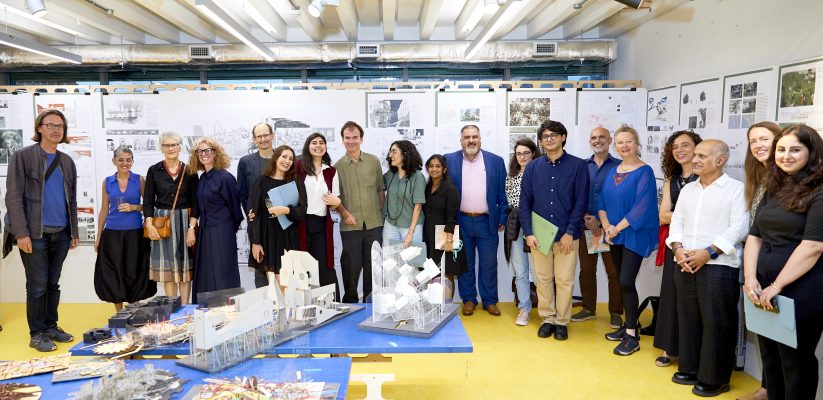
Each year, our MORE exhibition celebrates the achievements of our postgraduate students from the School of Architecture and Cities. The event provides a platform for students to present their work, connect with industry professionals, and demonstrate how design can engage with today’s most pressing global challenges.
This year’s degree show, titled Every Fraction of a Degree Matters, reflected the Schools’ ongoing commitment to tackling climate injustice. Projects were designed to be intensely local yet globally connected, reframing living in London, the UK and beyond.
Held both in-person and online, MORE reflects the diversity of disciplines within the School and reaches an international audience, reinforcing Westminster’s global reputation.
Students received awards sponsored by leading industry organisations, recognising work that exemplifies originality, impact, and purpose.
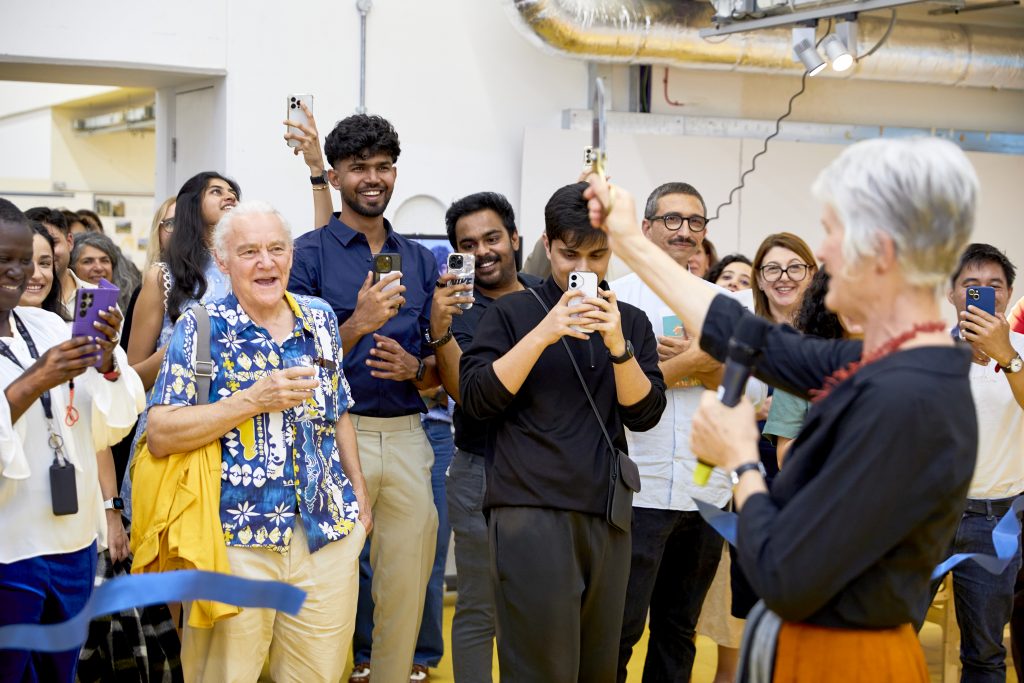
The Event was opened by Sarah Wigglesworth, Architect and Professor of Architecture.
We spoke with some of this year’s winners about their projects and ambitions for the future.
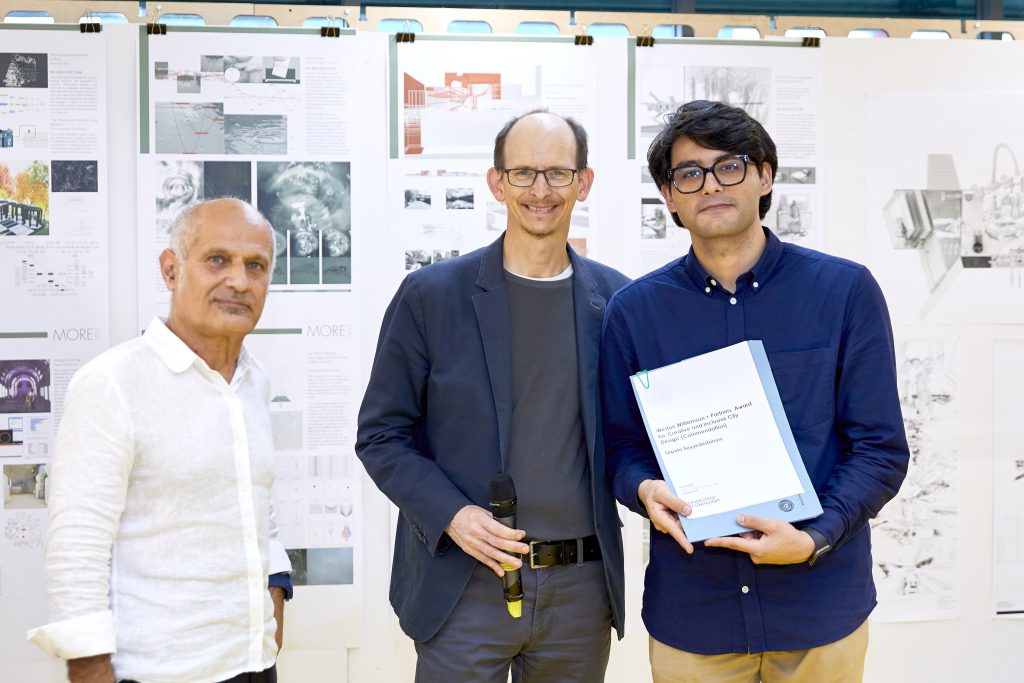
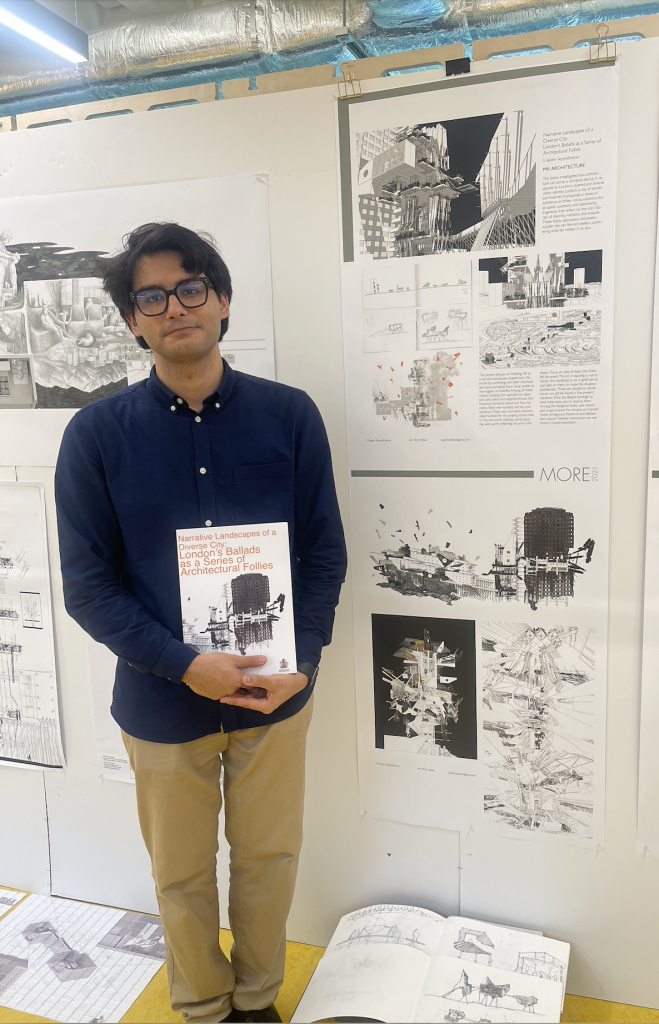
Narrative Landscapes of a Diverse City: London’s Ballads as a Series of Architectural Follies
Seyyed Sepher Esfahani – Architecture MA
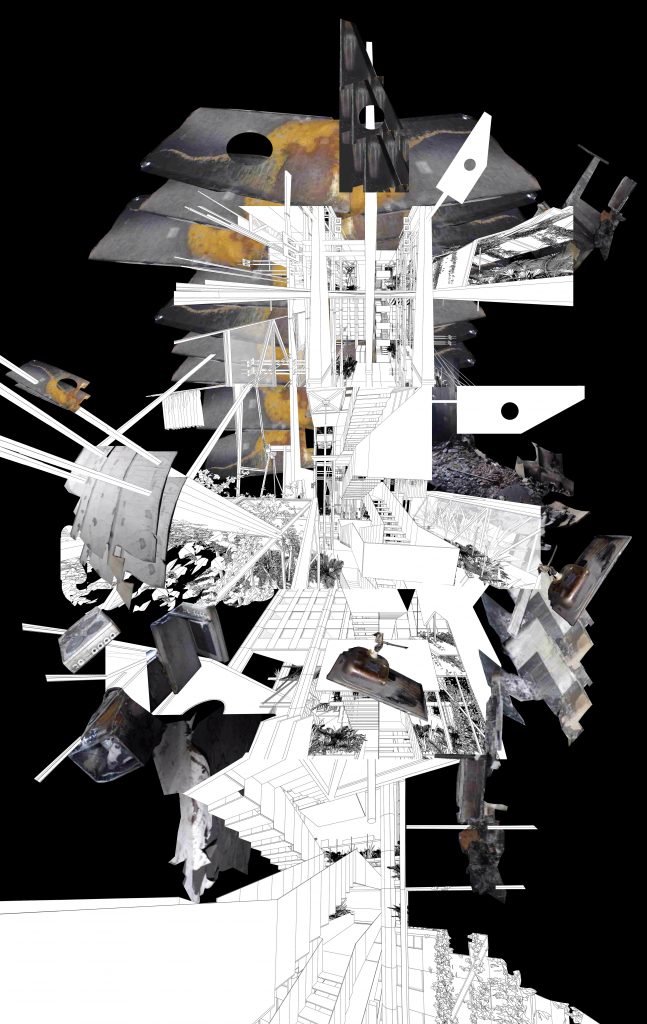
Seyyed’s thesis explores how architecture can act as a narrative device, reflecting London’s layered and diverse identity. Inspired by John Hiddock, it proposes a series of architectural follies, that ask open-ended questions rather than provide definitive solutions.
Set in Notting Hill, a neighbourhood shaped by a history of resilience and conflict, from racial riots to the tragedy of Grenfell, the project examines how architecture can hold space for trauma without monumentalising it. Designed as inhabitable, walkable structures dispersed across the area, the follies create a quiet “parade” of reflection. One encircles Grenfell Tower, intentionally ambiguous and unresolved, inviting contemplation rather than closure.
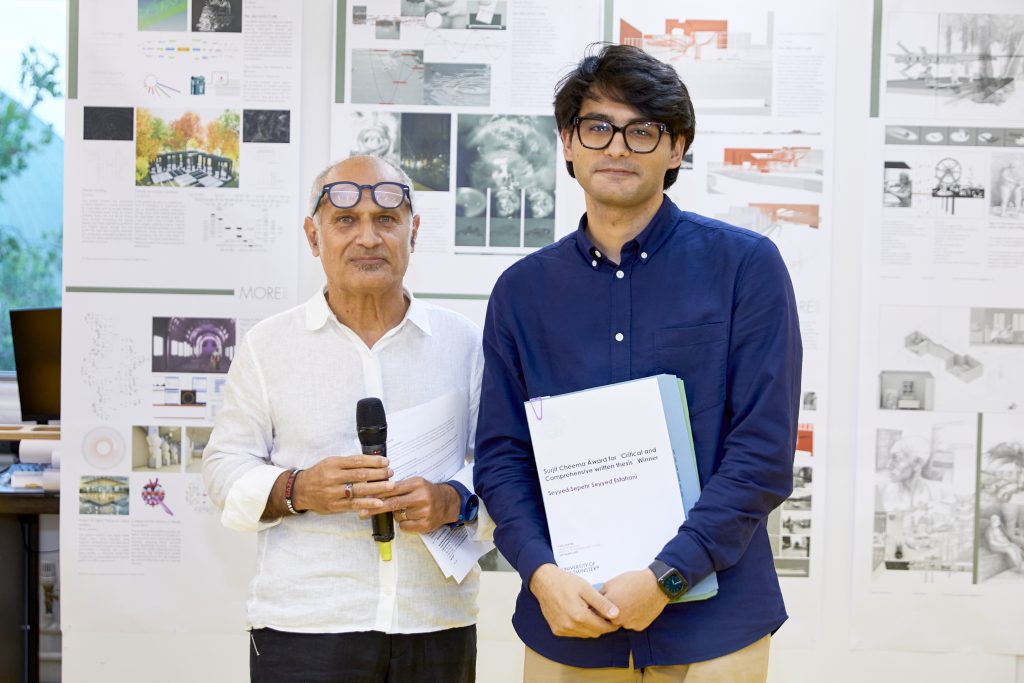
Seyyed’s project won three awards, the Weston Williamson + Partners Award for Creative and Inclusive City Design, the Jila Golzari Award for Engagement with and contribution to the Course and the Surjit Cheema Award for Critical and Comprehensive written thesis.
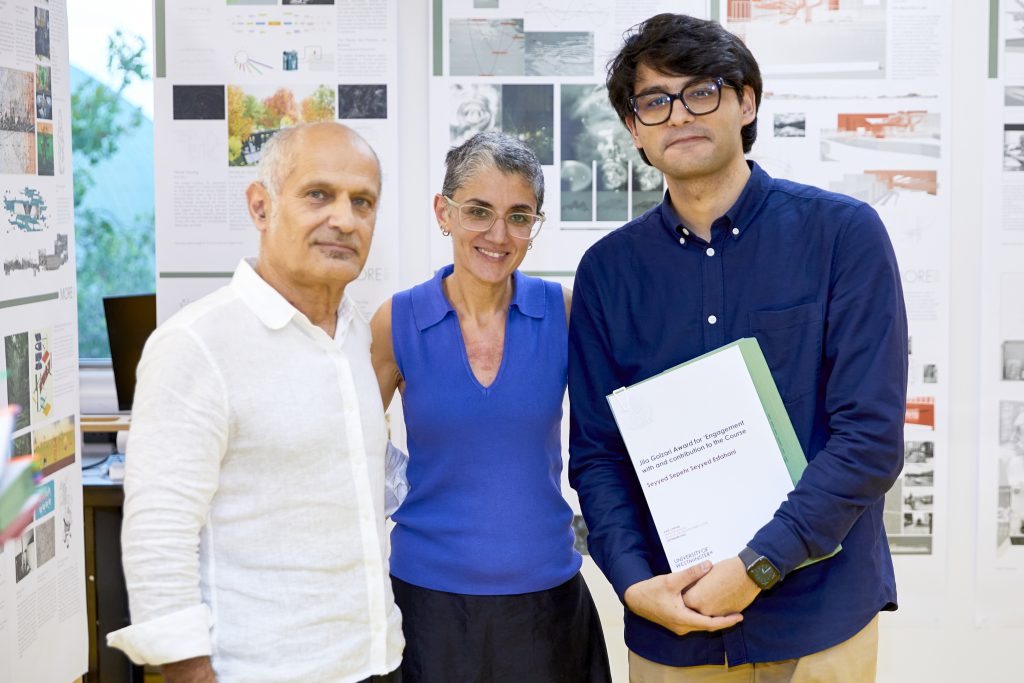
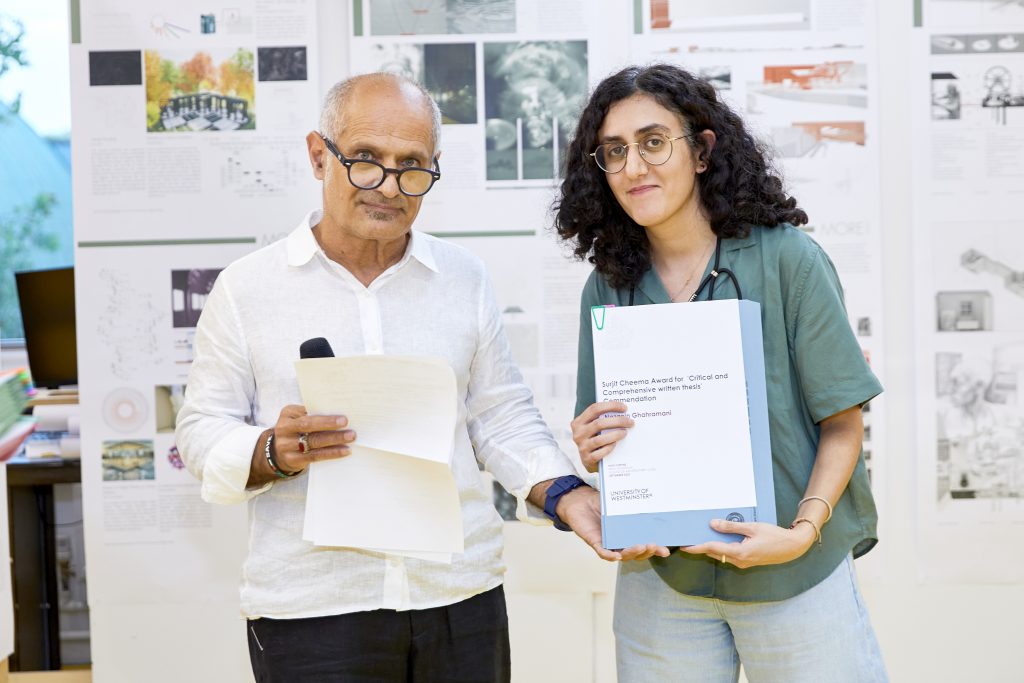
Impossible Woman, Impossible Space, Impossible Time
Nazanin Ghahramani – Architecture MA
Through theory and autoethnography, Nazanin thesis explores the intersections of female identity, space, and resistance. The “Impossible Woman” is framed as one who resists societal norms, embodying acts of rebellion that appear unlikely or impossible within given constraints.
Her study unfolds in two phases. First, it defines the concepts of the Impossible Woman and Impossible Space-Time. Second, she examines her own life as a case study, identifying moments of identity formation, contradiction, and resistance. Through architecture, she reconstructs these memories into spatial experiences, turning the personal into the political.
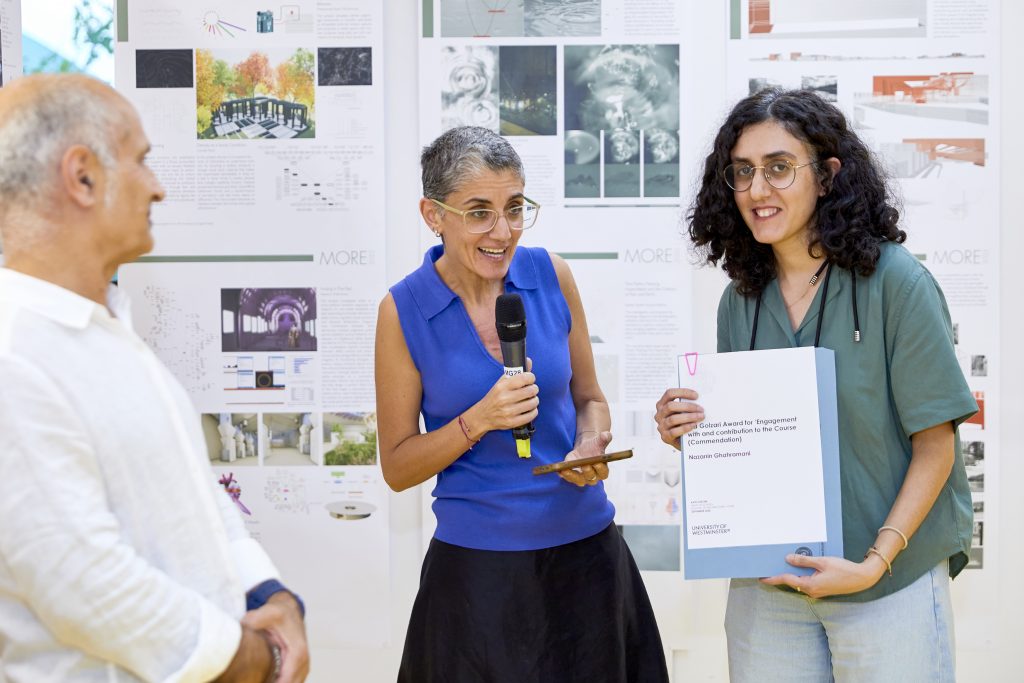
Nazanin’s project won two awards, the Jila Golzari Award for Engagement with and contribution to the Course and the Surjit Cheema Award for Critical and Comprehensive written thesis.
A friend recommended Westminster to Nazanin, highlighting the Architecture MA’s theoretical emphasis, which closely aligned with her ambition to continue into PhD research. Reflecting on her time at Westminster, she was inspired by the work of her course tutors Dr Nasser Golzari and Dr Yara Sharif. Looking forward, Nazanin would like to pursue a PhD in this subject.
Bridging the Void: Connecting Urban Communities and Global Science Research
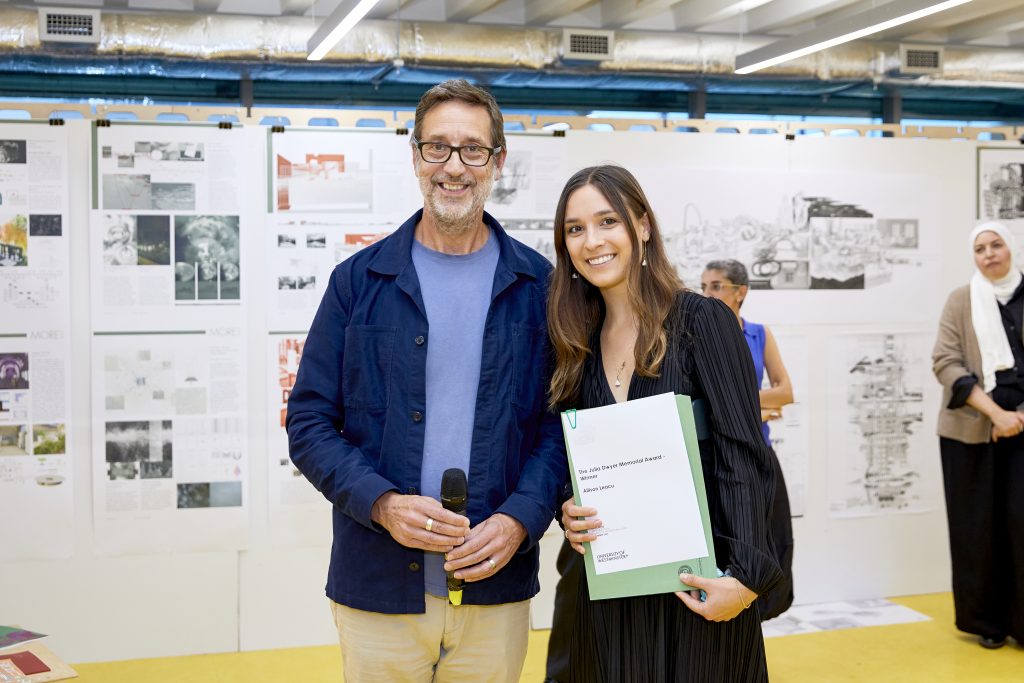
Allison Leacu – Interior Architecture MA
Responding to the future Fleming Centre at Paddington Basin, a hub for tackling antimicrobial resistance (AMR), this project proposes a bridge that spans Regent’s Canal and connects directly into the Centre. Both symbolic and functional, it seeks to close the gap between scientific research and public understanding.
Informed by site analysis and movement patterns around Paddington, the bridge is conceived as a sleek copper-clad structure. Copper’s natural antimicrobial qualities, combined with etching and patina treatments, narrate the history and future of antibiotics.
As a gateway to the Fleming Centre, the bridge becomes an immersive learning space, where materiality and design communicate urgent global health challenges to the public.
Alison’s project won the Julia Dwyer Memorial Award.
Beyond Easements: Designing Inclusive Waterfront Futures along the Pasig River
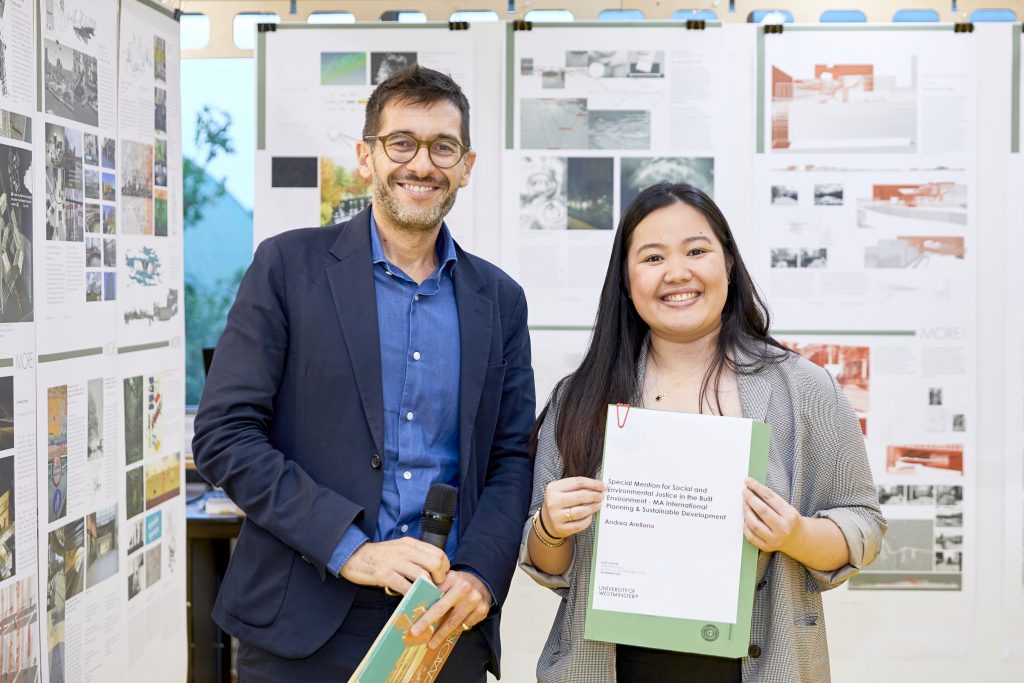
Andrea Arellano – International Planning and Sustainable Development MA
This dissertation envisions a regenerative future for Manila’s Pasig River, transforming degraded waterfronts into resilient civic spaces. A proposed masterplan combines environmental renewal, social inclusion, and economic development within a participatory planning framework. The project highlights how design and policy can restore waterways as public assets that serve communities equitably.
Andrea’s project received a Special Mention for Social and Environmental Justice in the Built Environment.
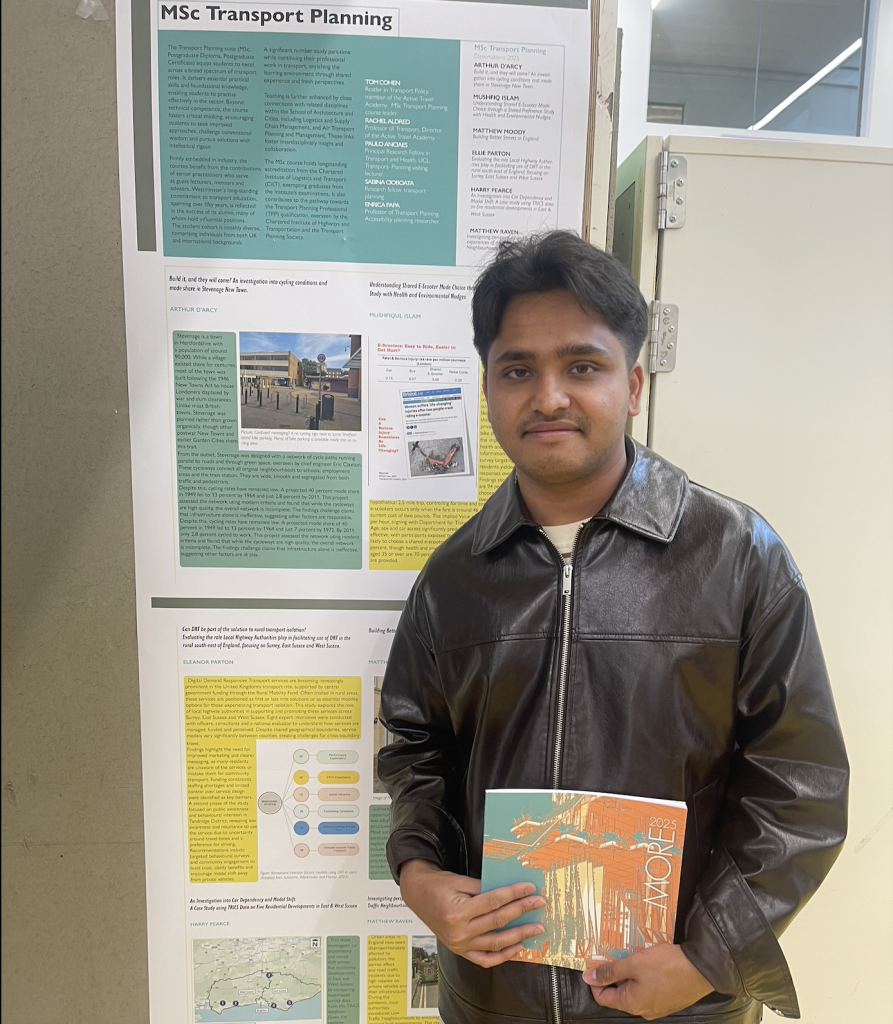
Understanding Shared E-Scooter Mode Choice in the UK
Mushfiqul Islam – Transport Planning MSc
Shared e-scooters are central to ongoing UK transport trials. Mushfiqul’s study uses a stated-preference survey of 220 respondents to analyse how cost, convenience, and behavioural nudges influence mode choice.
Findings show that, for a 2.5-mile trip, participants are 94% less likely to choose a shared e-scooter over a private car, unless fares drop significantly below current rates. However, exposure to positive health and environmental nudges increased willingness to switch, with participants up to 7.6 times more likely to choose an e-scooter.
The research highlights demographic divides in adoption and provides policy recommendations for integrating e-scooters into sustainable mobility strategies.
Mushfiqul studied for his bachelor’s in civil engineering in Bangladesh, as part of that course he was introduced to Transport Planning, and this inspired him to study this subject further. He chose Westminster because of the emphasis on careers and employability, the course content aligning with his goals and Course Leader Tom Cohen. Looking ahead, he would like to pursue a PhD in Transport Planning.
To explore the full range of postgraduate projects, visit the digital exhibition MORE 2025.
About Westminster
As one of the most diverse universities in the UK, we are a global university with London energy, with more than 19,000 students from 169 countries.
To find out more about our courses featured in the MORE exhibition, visit the Architecture, Interiors and Urban Design and Transport and Logistics pages.

- Architecture BA – Your Path to Becoming an Architect - March 5, 2026
- Creative Computing at Westminster: Inside the Immersive Development Lab - February 26, 2026
- T26gether Again: Celebrating 26 Years of Illustration BA at Westminster - February 26, 2026