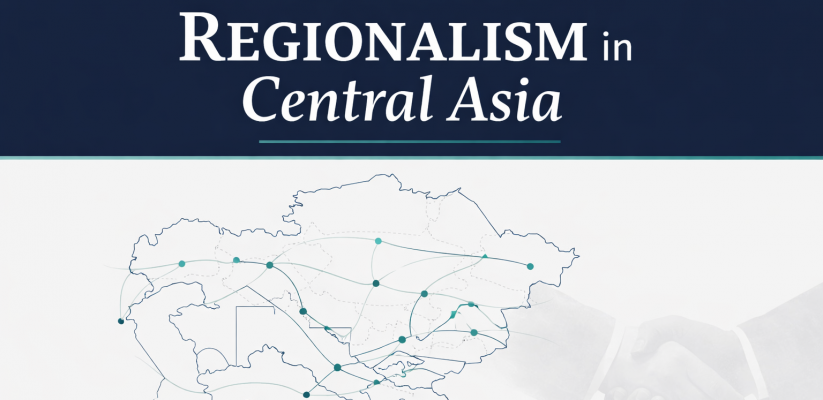
Dannreuther, R. (2026) ‘The revival of regionalism in Central Asia’, Central Asian Affairs, 13, pp. 92–111. doi:10.30965/22142290-bja10081.
For a long time, the aspirations for Central Asian regional integration failed to materialise. However, there has recently been evidence of a revival in the prospects for Central Asian regionalism, with increasing intra-regional trade, resolution of border disputes, development of trans-regional infrastructure, and more regular and substantive meetings between the five Central Asian leaders. Understanding the sources of this revival of regionalism is the focus of this article. First, it argues that the external environment has become more benign for Central Asian regionalism with China’s economic drive to connect West China with Europe facilitating connectivity in Central Asia. The Sino-Russian rapprochement over Central Asia also benefits regionalism compared to earlier periods of West-Russian competition. Second, the internal domestic conditions within the Central Asian states have favoured regionalism as a new generation of leader realise that economic autarchy is no longer a viable solution. This regionalism does not, though promote political liberalisation. It is a form of regionalism that seeks to preserve rather than supplant the authoritarian nation-state.
This paper was part of a project entitled Central Asian Integration: Obstacles and Opportunities funded under the WUIT-UoW joint research scheme.
For more details of the projects funded under this scheme: https://www.westminster.ac.uk/research/groups-and-centres/forum-for-uzbek-and-silk-road-studies/projects